Charles River to buy Frontage’s bioanalysis arm for $470m
The Charles River Frontage deal: a $470m cash purchase of bioanalysis and DMPK units, plus a separate $616m take-private of the rest of Frontage.
In this article 4 sections
Charles River Laboratories (CRL) has agreed to pay about $470m in cash for the bioanalysis and DMPK (drug metabolism and pharmacokinetics – testing that tracks how a drug is absorbed, broken down and cleared by the body) businesses of Frontage Holdings Corporation, based in Exton, Pennsylvania. The agreement, dated 9 November 2026, is laid out in a filing with the US Securities and Exchange Commission.
The purchase price can rise further: the contract includes up to $75m in additional payments tied to future performance, which would take total consideration to roughly $545m if fully earned out, according to citybiz. Charles River expects to fund the purchase and associated fees through its existing credit facility and cash on hand, per a reprint of the company’s release carried by Stockhouse.
Two Frontage transactions, not one
The Exton carve-out is the smaller of two deals Charles River has running against the same target. A consortium it leads has separately agreed to take the rest of Hong Kong-listed Frontage Holdings private for about HK$4.83bn, or roughly $616m, according to Finimize. The two transactions are structured independently – the US asset purchase closes on its own timetable, distinct from the Hong Kong buyout – but together they amount to Charles River absorbing most of what Frontage built as an independent contract research group.
What Charles River is actually acquiring in Exton is a meaningful slice of Frontage’s output. The bioanalysis and DMPK units represented roughly 40% of Frontage’s 2025 revenue of $256.7m, implying around $103m of annual sales changing hands, based on figures reported by GuruFocus. Charles River currently draws only about 15% of its own bioanalysis revenue from clinical-phase testing, and frames the deal as a way to build out that end of the business, per the company’s release.
The growth case
The strategic logic rests on a market that is still expanding, if not explosively. The global bioanalysis market is put at roughly $6bn in 2026, growing to somewhere between $8bn and $9bn by 2031 – an annual growth rate of 6% to 8% – cited as the rationale for the purchase, according to Seeking Alpha. The same reporting notes the deal is expected to be neutral to Charles River’s non-GAAP earnings per share in 2027 before turning additive thereafter – in other words, management isn’t promising an immediate lift to the bottom line.
A tax reversal is doing a lot of the recent heavy lifting
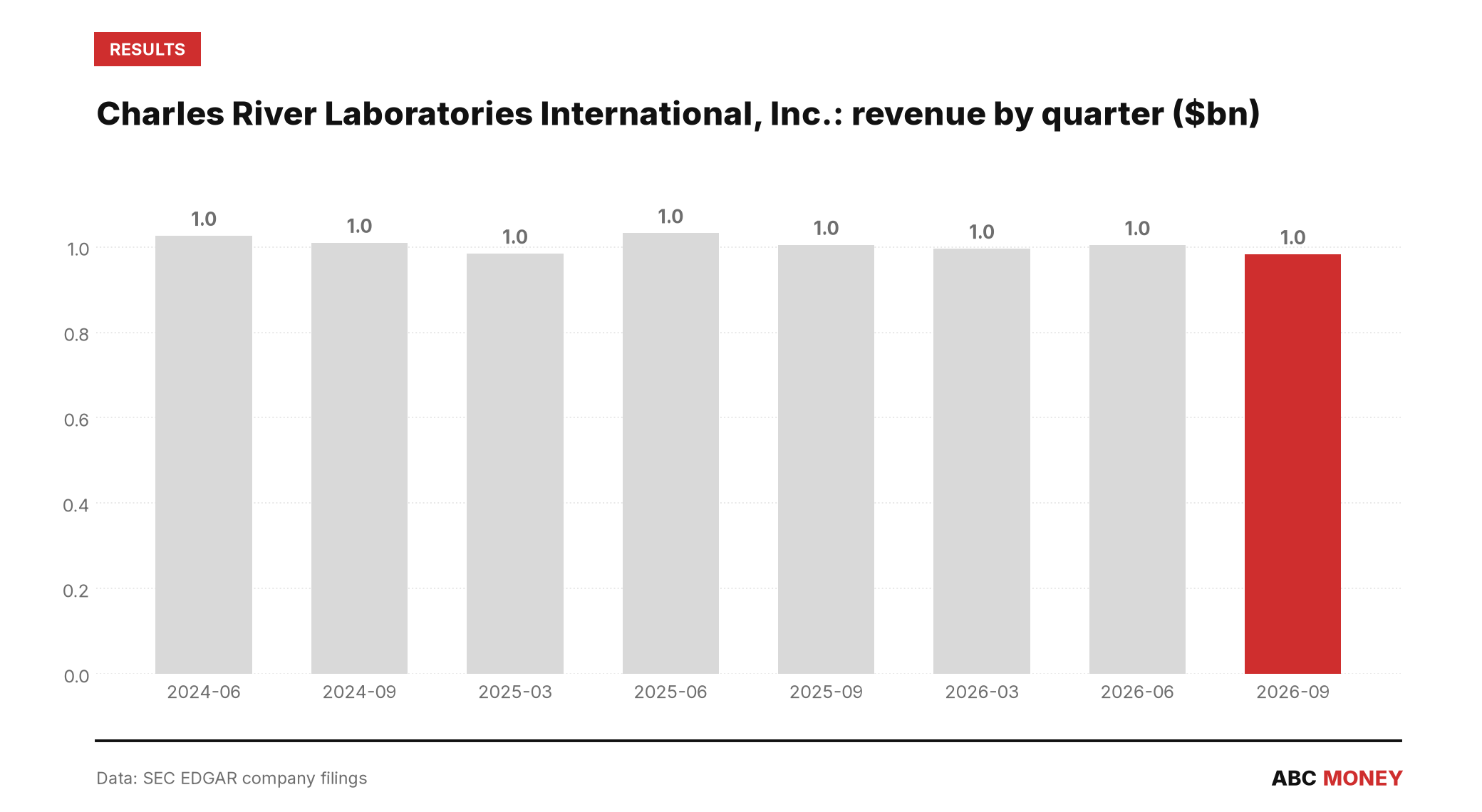
Investors reading across from Charles River’s recent earnings strength should treat the headline numbers with some care. The company’s third-quarter 2026 diluted earnings per share of $6.86 included a one-off benefit of $5.06 per share from reversing acquired tax reserves, not organic earnings growth, according to TradingView News. Net income for the quarter came in at $333.1m, filed with the SEC, against a run-rate that had sat between roughly $25m and $70m in the prior quarters stretching back through 2024 and into 2025. That gap is the clearest sign the quarter was an outlier rather than a new normal.
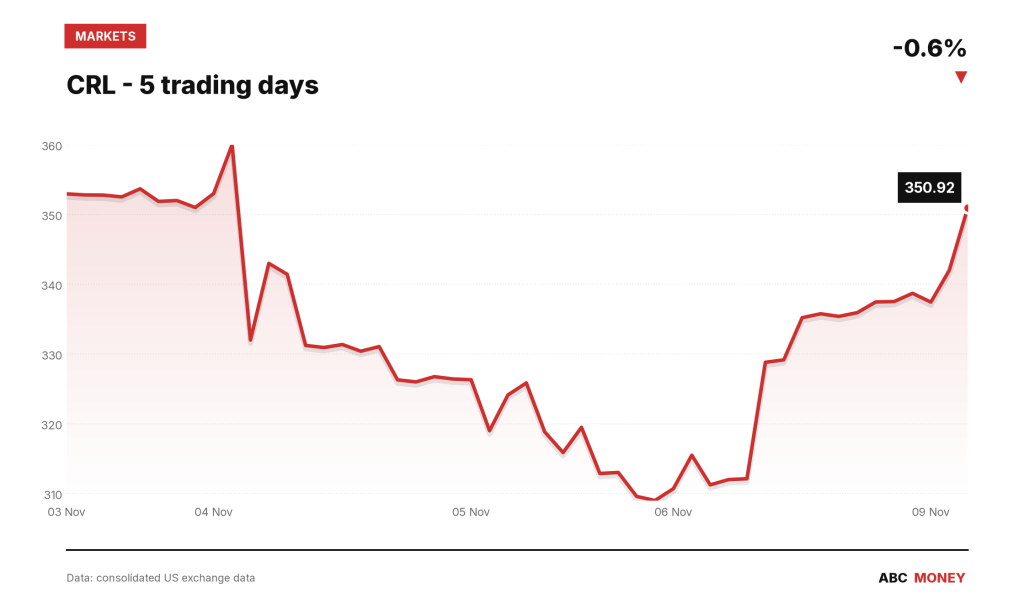
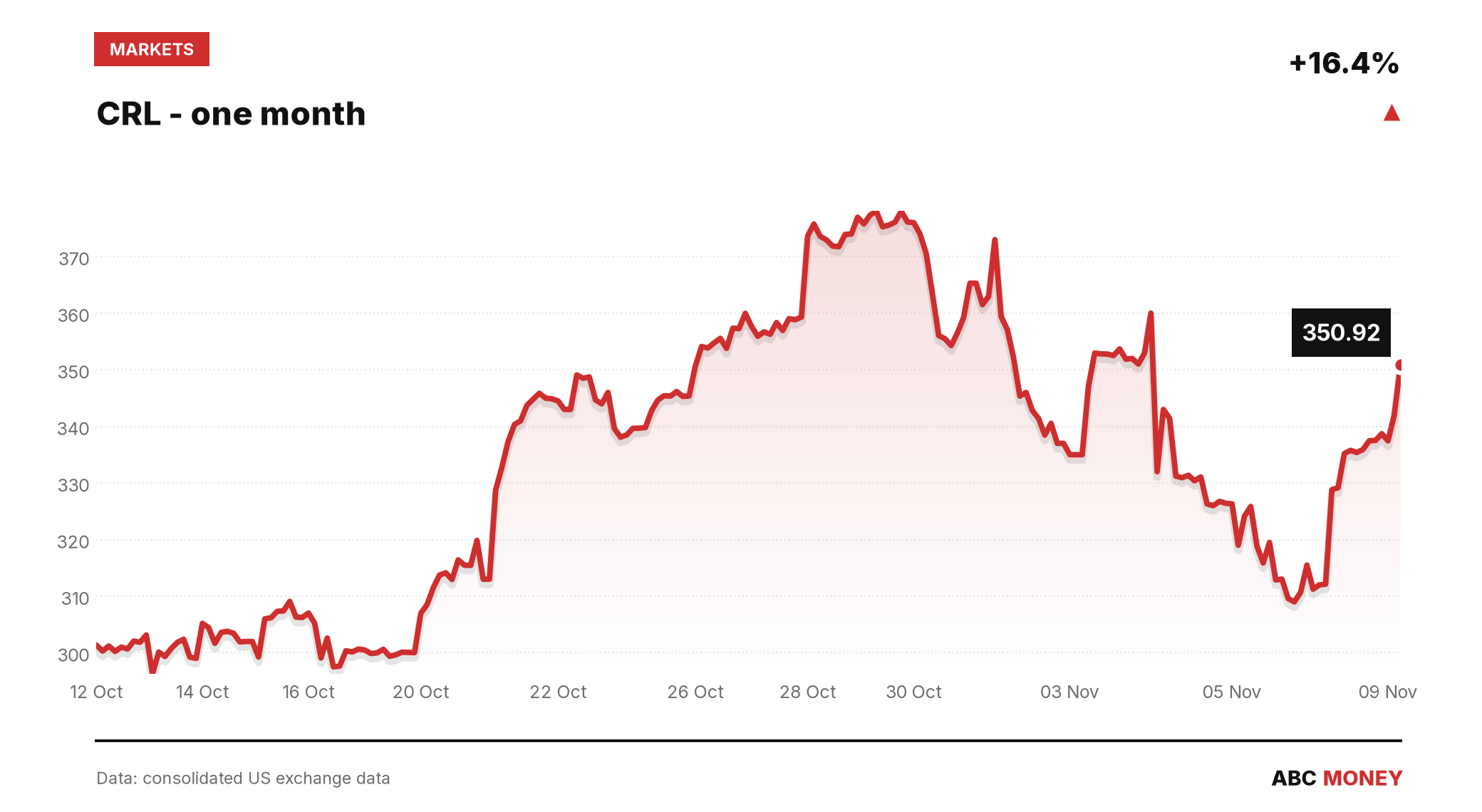
It matters for how the stock has traded. Shares had already jumped about 7.8% on 6 November 2026, to $337.52, after Charles River raised its 2026 guidance on the back of that same tax item – several days before the Frontage announcement, according to Morningstar’s quote data. By 9 November, with the acquisition news out, the stock was changing hands at $349.72, up 4.27% on the day and 16.33% over the preceding twenty trading sessions, having ranged between $299.38 and $378.03 in that window on consolidated US exchange data. Trading volume on the day sat at roughly 72% of its twenty-day average, suggesting the move was driven more by a repricing of expectations than by a crowd piling in on heavy turnover.
Short-sale activity around the announcement gives little indication of a positioning squeeze either way: FINRA’s daily short-sale volume ratio for Charles River bounced between roughly 0.31 and 0.64 over the fortnight leading into the deal, a range that looks more like routine market-making than a build-up of bearish bets ahead of the news.
What the deal still has to prove
The arithmetic that matters longer term is simpler than the headline price tag suggests. Charles River is paying roughly 4.6 times the acquired businesses’ estimated annual revenue of $103m for the Exton assets alone, before the Hong Kong take-private is folded in – a multiple that will only look reasonable if the promised earnings accretion beyond 2027 actually shows up, rather than being masked again by one-off items the way this year’s headline EPS figure was.
This article is for information only and is not investment advice or a recommendation to buy or sell any asset. Markets move quickly; figures are correct as sourced at the time of writing. Always do your own research before making financial decisions.