Meta Warns Midterm Results Threaten Data Centre Expansion
Meta's president says US data centre expansion will get harder after the midterms, even as the group posts its first negative free cash flow since its IPO.
In this article 3 sections
Meta’s president has told investors, bluntly, that building new American data centres is about to get harder – and the market is already pricing in the consequences. Dina Powell McCormick, appointed Meta’s (NASDAQ: META) president and vice chairman in January 2026, said at the Wall Street Journal’s Tech conference in Napa on 4 November that this week’s midterm results would make US data centre expansion harder going forward, telling the audience: “I think it’s going to be harder,” as Gizmodo reported.
That is a notable admission from a company whose entire AI strategy rests on pouring tens of billions of dollars a quarter into physical infrastructure. But the headline risks overstating the message. Powell McCormick drew a specific distinction, reported by Techmeme’s summary of the original WSJ account: breaking ground on brand-new US sites will face tougher local politics, but expanding campuses Meta already operates should, if anything, get easier. Meta currently runs data centres in 23 states and has five projects planned at 1 gigawatt or larger, including one in Texas, according to TechCrunch.
Why voters turned on data centre expansion
The political backdrop is concrete, not abstract. Across the midterms, 41 local ballot measures restricting data centres appeared across ten states, and voters backed restrictions in all but one – a single town in North Dakota – according to CNBC. Democratic gubernatorial wins in Texas, Georgia and Ohio arrived with explicit campaign promises of tighter scrutiny on AI infrastructure, per Yahoo Finance. Complaints about data centres tend to cluster around three things: electricity price increases passed on to local ratepayers, water consumption for cooling, and construction noise – none of which are abstractions to a newly elected state legislature facing re-election in two years.
Powell McCormick’s remarks included one piece of colour that cuts against the gloomiest reading: an unnamed governor-elect who had campaigned against data centre buildouts reportedly told Meta after the election that he still wanted to meet, worried about “losing” the investment once in office, according to Gizmodo. Political rhetoric and the reality of forgone tax revenue and construction jobs do not always point the same direction once the votes are counted.
The capex numbers that make this matter
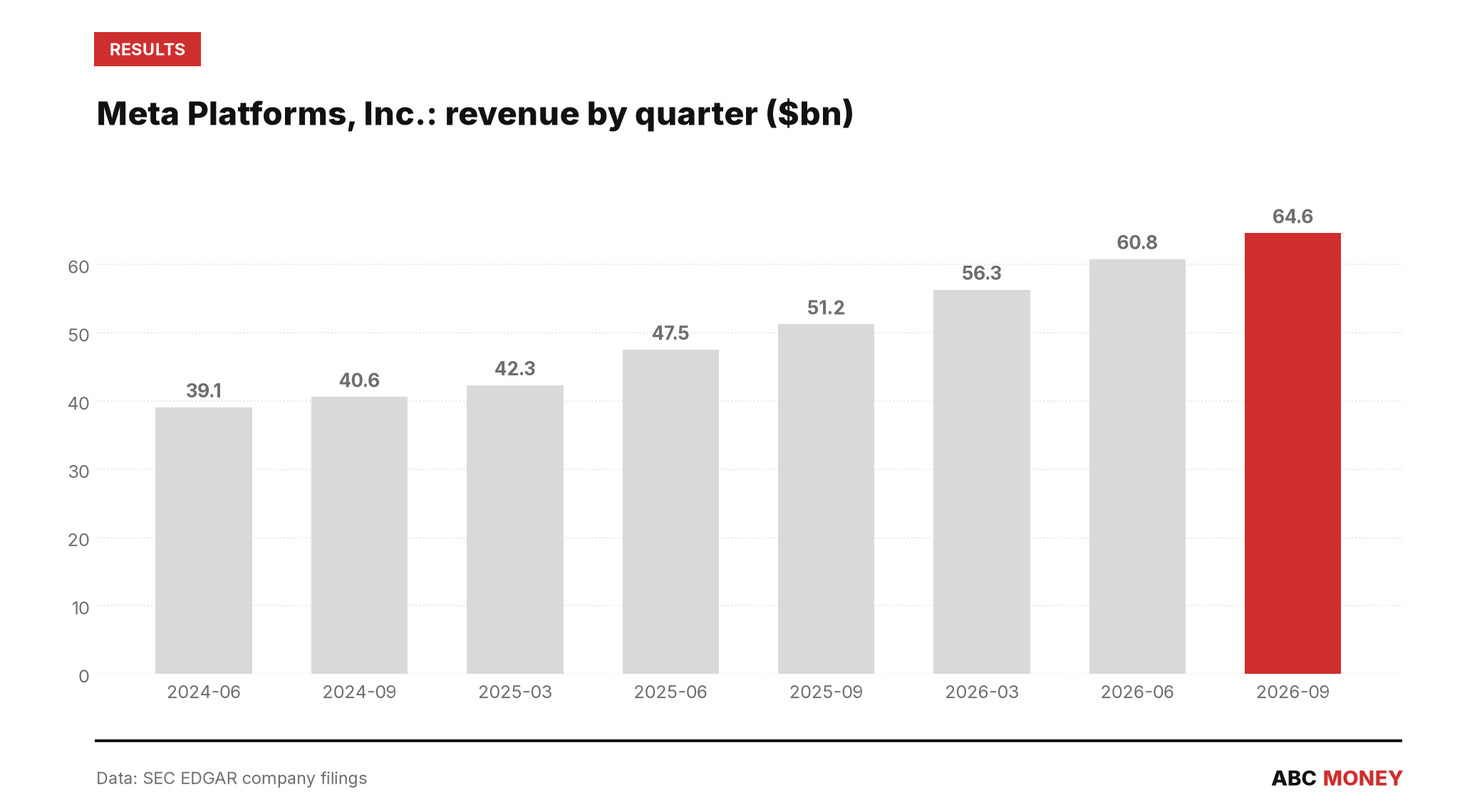
The timing sharpens the stakes. Meta’s third-quarter 10-Q filing showed revenue of $64.6bn and net income of $9.86bn for the quarter ended 30 September – solid by most standards, but a sharp drop from the $26.8bn and $15.8bn the company posted in the two preceding quarters. More striking is what sat beneath the headline figures: quarterly capital expenditure of $34.9bn drove Meta to a negative free cash flow of $2.1bn, the company’s first cash outflow of that kind since its IPO era, as first reported by The Motley Fool. In plain terms, Meta is now spending more on servers, chips and buildings each quarter than it generates in cash from the rest of the business – a position that makes the pace and location of future data centre expansion directly material to shareholders, not just a logistics question for the infrastructure team.
Against that backdrop, a political environment that slows permitting for new US sites – even while easing expansion of existing ones – changes the calculus for where the next tranche of that spending actually lands. Meta is reportedly exploring building more AI infrastructure outside the United States in response to the tougher domestic climate, according to Newsbytes – a shift that would carry its own costs in currency exposure, grid reliability and construction timelines, but one that at least avoids a 41-ballot-measure gauntlet.
What the share price is already saying
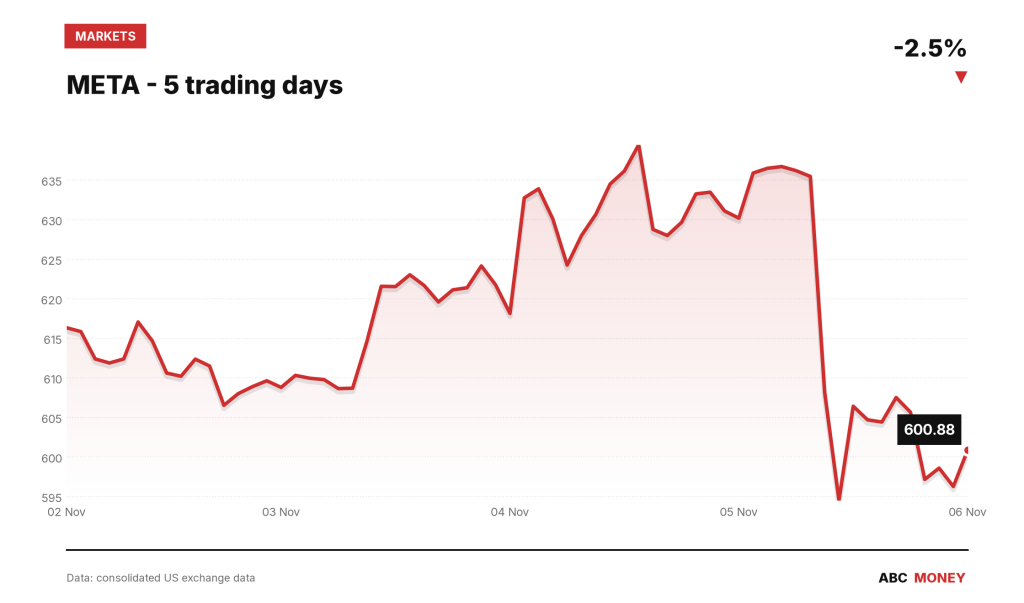
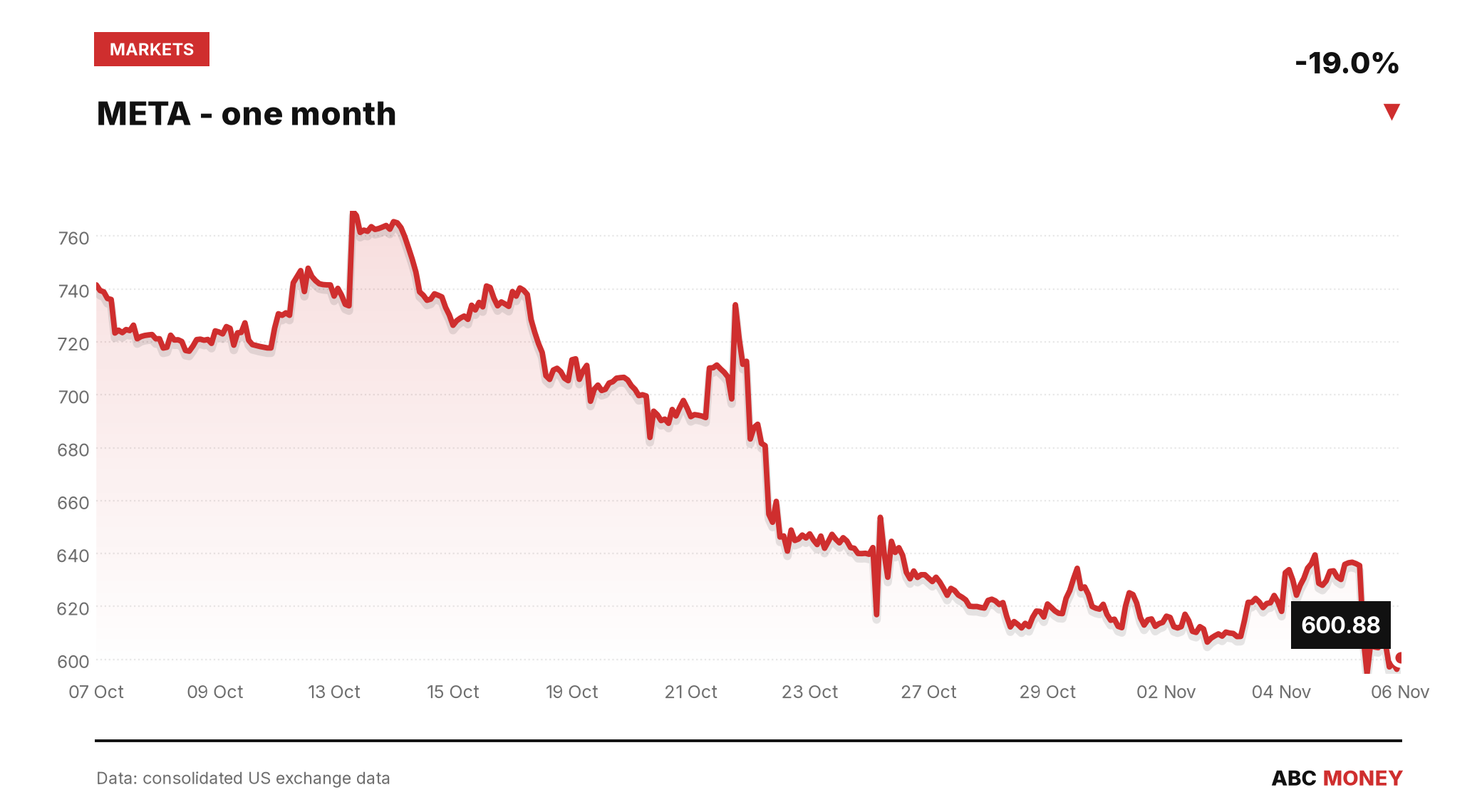
Markets had started pricing some of this in before Powell McCormick ever took the stage. Meta shares closed at $599.00, down 0.94% on the day and 18.94% over the prior 20 trading sessions, against a 20-day range stretching from $594.51 up to $740.35. Trading volume was broadly in line with the recent average, at roughly 1.01 times the 20-day norm, which suggests the decline reflects a genuine repositioning around AI capital-spending risk rather than a single panicked session. FINRA’s daily short-sale data shows the share of Meta volume sold short held in a fairly narrow band through late October and into this week, running between roughly 0.30 and 0.44 – not the kind of spike that points to a concentrated bet against the stock, more a market gradually marking down the multiple it’s willing to pay for an AI buildout that just got politically more complicated.
The next marker worth watching is less a date than a pattern: whether the governor-elects who campaigned against data centres follow through once the ribbon-cutting and tax-revenue arithmetic actually lands on their desks, and whether Meta’s quarterly capex figures, due with its next 10-Q, show the company redirecting spend toward expansions of existing US campuses – or further afield – rather than new ground-up sites.
This article is for information only and is not investment advice or a recommendation to buy or sell any asset. Markets move quickly; figures are correct as sourced at the time of writing. Always do your own research before making financial decisions.