MetLife Q3 2026 Earnings Call: Adjusted Profit Hits $1.8bn
MetLife's Q3 2026 earnings call touted record adjusted profit of $1.8bn, but the comparable GAAP figures tell a different story.
In this article 3 sections
MetLife (NYSE: MET) held its Q3 2026 earnings call on 5 November 2026, with executives telling analysts the insurer had just posted its highest adjusted earnings per share quarter ever. The company’s own materials, filed with the regulator a day earlier, put adjusted earnings at $1.8bn, or $2.78 per diluted share, for the three months to 30 September 2026, according to the Motley Fool’s transcript of the call.
The call itself is confirmed beyond doubt: MetLife’s own 8-K filing shows the earnings release, financial supplement, assets-under-management fact sheet and presentation materials were all issued on 4 November 2026, ahead of a 9am Eastern call the following morning – a cadence Seeking Alpha’s transcript corroborates. What’s worth unpacking is not whether the call happened, but what sits behind the headline number management chose to lead with.
Adjusted earnings versus the numbers filed with regulators
The $1.8bn figure is what’s known as “adjusted earnings” – a non-GAAP measure, meaning it’s calculated using the company’s own adjustments (typically stripping out items like net investment gains and losses, certain derivative movements, and one-off charges) rather than the standardised accounting rules that govern the net income figure in MetLife’s statutory filings. Insurers lean on adjusted earnings because insurance accounting under GAAP (Generally Accepted Accounting Principles) can swing sharply quarter to quarter on mark-to-market investment movements that have little to do with underlying business performance. That’s a reasonable argument – but it also means the number splashed across the earnings call isn’t directly comparable to the net income line investors will eventually see in MetLife’s 10-Q.
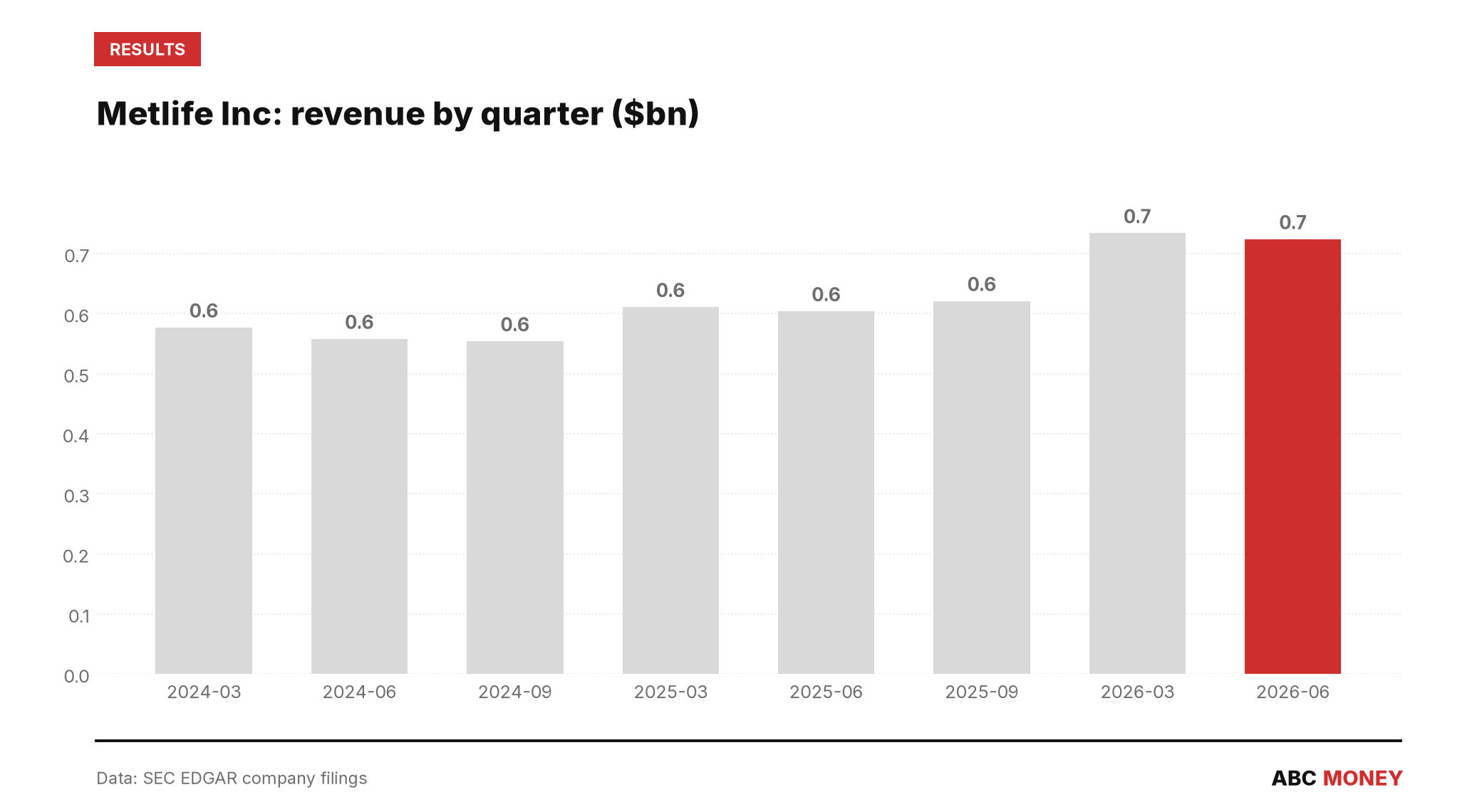
That GAAP line has been genuinely volatile. MetLife’s reported net income ran from $867m in the first quarter of 2024 up to $1.34bn by the third quarter of that year, before dropping back to $729m in the second quarter of 2025 and recovering to $1.19bn in the first quarter of 2026, according to filings with the SEC. The most recent GAAP figure on record, for the second quarter of 2026, was $736m in net income on diluted earnings per share of $1.09 – a fraction of the $2.78 adjusted figure management highlighted for the following quarter, as shown in MetLife’s second-quarter 10-Q. The company’s GAAP net income for the September quarter itself has not yet appeared in a filing; investors wanting the like-for-like comparison will need to wait for the 10-Q.
A steepening yield curve and what it means for the spread
The macro backdrop MetLife reported into is a gently easing but still elevated rate environment. The 10-year Treasury yield stood at 4.90% on 4 November 2026, edging down from 4.95% a day earlier, according to data from the Federal Reserve Bank of St. Louis. More notable for a life insurer that earns much of its profit from the spread between what it pays policyholders and what it earns reinvesting premiums, the gap between 10-year and 2-year yields widened to 0.38 percentage points on the day of the call, up from 0.32 previously. A steeper curve generally helps insurers reinvesting maturing bonds at better long-term rates, which is the kind of detail analysts typically probe for on calls like this one. September’s unemployment rate ticked up to 4.2% from 4.1%, a modest softening in the labour backdrop that bears on both group-benefits demand and underwriting assumptions.
The market’s reaction looked more cautious than the headline
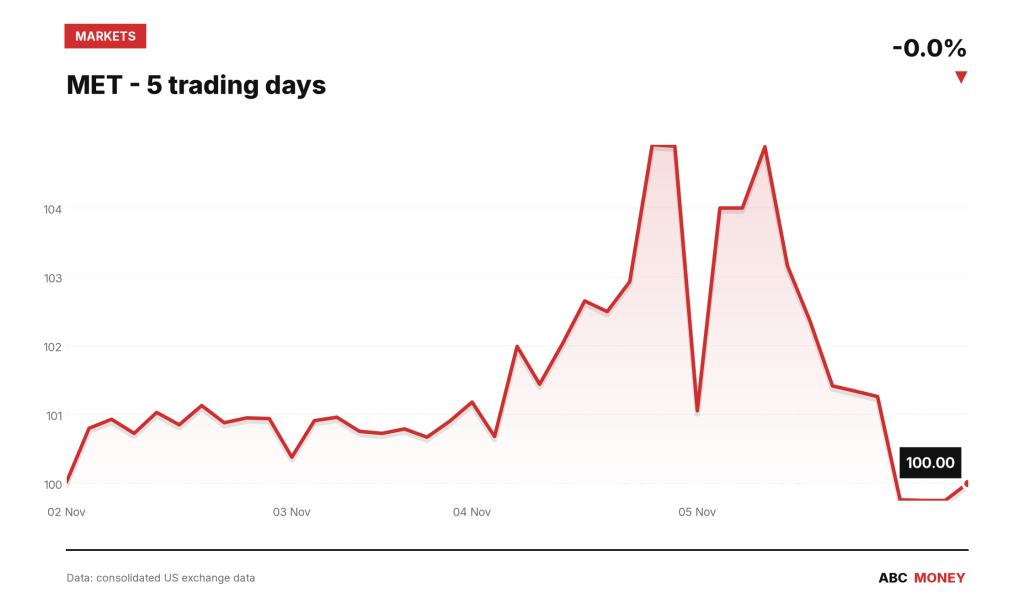
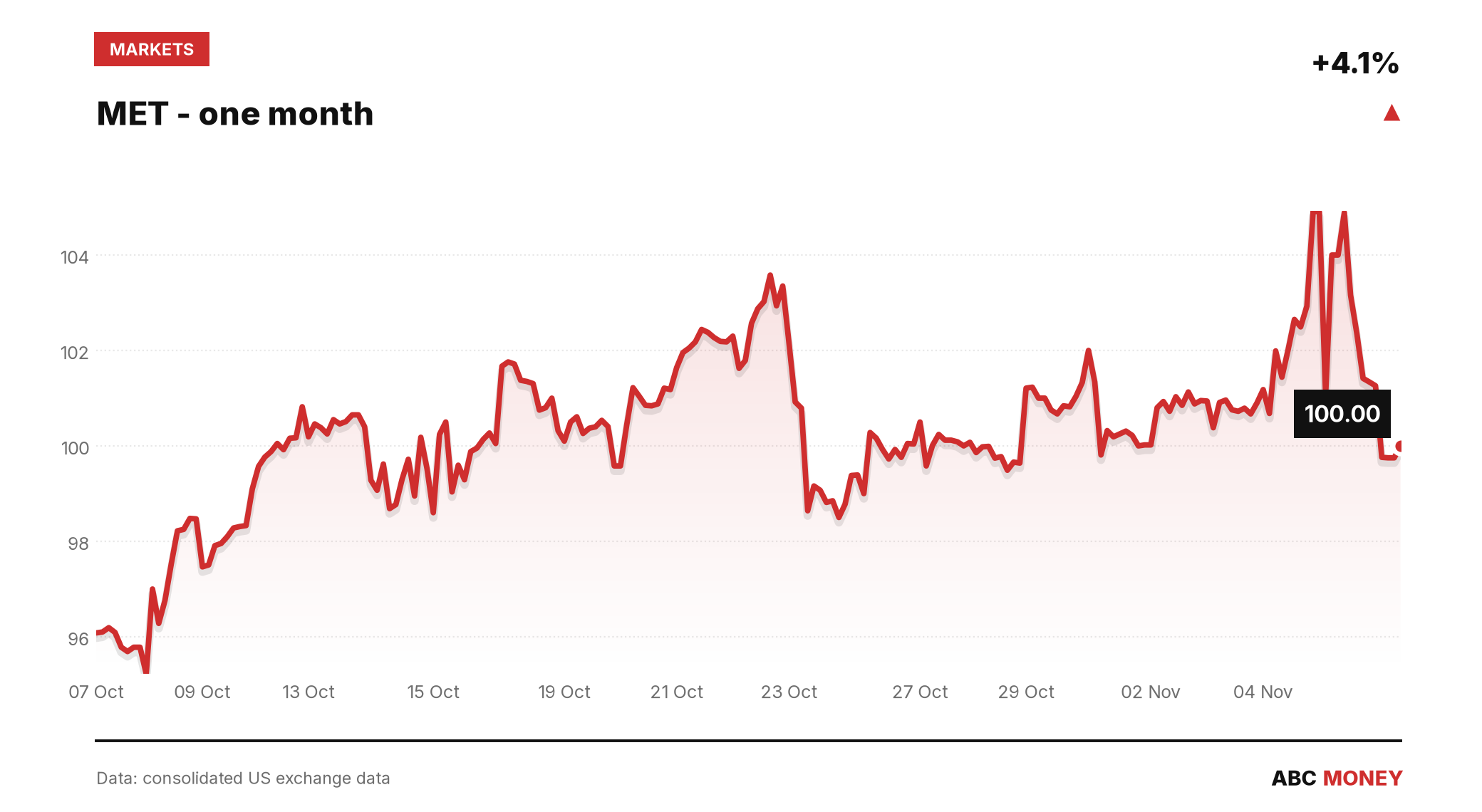
Whatever the framing on the call, MetLife shares closed 2.31% lower on 5 November, at $100.00, having traded in a 20-day range between $98.50 and $104.92. Trading volume ran about 23% above the 20-day average, suggesting the print drew more active positioning than a typical session. FINRA’s short-sale data – which tracks the share of daily trading volume executed as short sales, a rough proxy for bearish positioning – showed the short ratio on MET climbing from 0.503 on 4 November to 0.611 on the day of the call itself, the highest reading in the fortnight before results, per FINRA’s daily short sale volume data. None of that proves a view on the quarter either way, but it’s a reminder that not everyone in the market took the record-adjusted-earnings framing entirely at face value.
The real test comes when MetLife’s 10-Q for the quarter lands with the SEC, giving investors the GAAP net income and diluted EPS figures to set against the adjusted numbers management chose to headline on the call. Until then, the $1.8bn figure should be read as what the company wants to emphasise – not the full accounting picture.
This article is for information only and is not investment advice or a recommendation to buy or sell any asset. Markets move quickly; figures are correct as sourced at the time of writing. Always do your own research before making financial decisions.