Humana launches $1.5bn tender offer on eight bond series
Humana's $1.5bn tender offer targets eight note series as net income slides and Treasury yields sit near cycle highs.
In this article 3 sections
Humana (NYSE: HUM) has launched a cash tender offer for up to $1.5bn (£1.2bn) of its own debt, asking holders of eight different bond series to sell back their notes within a week. The insurer confirmed on 9 November 2026 that it had commenced the offers under terms set out in an Offer to Purchase dated the same day, with the window closing at 5pm New York time on 16 November and settlement pencilled in for 18 November, according to a summary of the release.
A tender offer, for readers who haven’t met one, is simply a company going to its own bondholders and offering to buy the debt back early, for cash, usually at a small premium to face value. Companies run them to retire debt ahead of schedule, often to manage how much they owe, when, and at what interest rate – as opposed to waiting for the notes to mature naturally.
Humana’s version is a broad one. The notes in play run from a 1.350% series due 2027 through to a 2.150% series due 2032, spanning eight separate coupons and maturities, according to the company’s own filing. The whole exercise is capped at $1.5bn in aggregate purchase price, excluding accrued interest, with the acceptance priority running in the order the notes are listed. One series gets special treatment: the 5.375% Senior Notes due 2031 carry their own $800m sub-cap, meaning Humana won’t let that single tranche eat the whole pot even if holders tender more than that.
Why the timing matters
The Humana tender offer lands at an awkward moment for the insurer’s earnings. Net income came in at $162m in the third quarter of 2026, down from $195m a year earlier, with diluted earnings per share falling to $1.33 from $1.62, according to its latest quarterly filing. That’s a real year-on-year decline, though the picture across 2026 has been choppier than a single quarter suggests. The first quarter of 2026 produced $1.186bn in net income, a step down from the $1.244bn generated in the same period of 2025. The second quarter, by contrast, moved the other way: $694m in 2026 versus $545m a year earlier – an improvement, not a decline. Put together, Humana’s quarterly profits have been swinging rather than sliding in a straight line, with the third quarter marking the weakest print of the year.
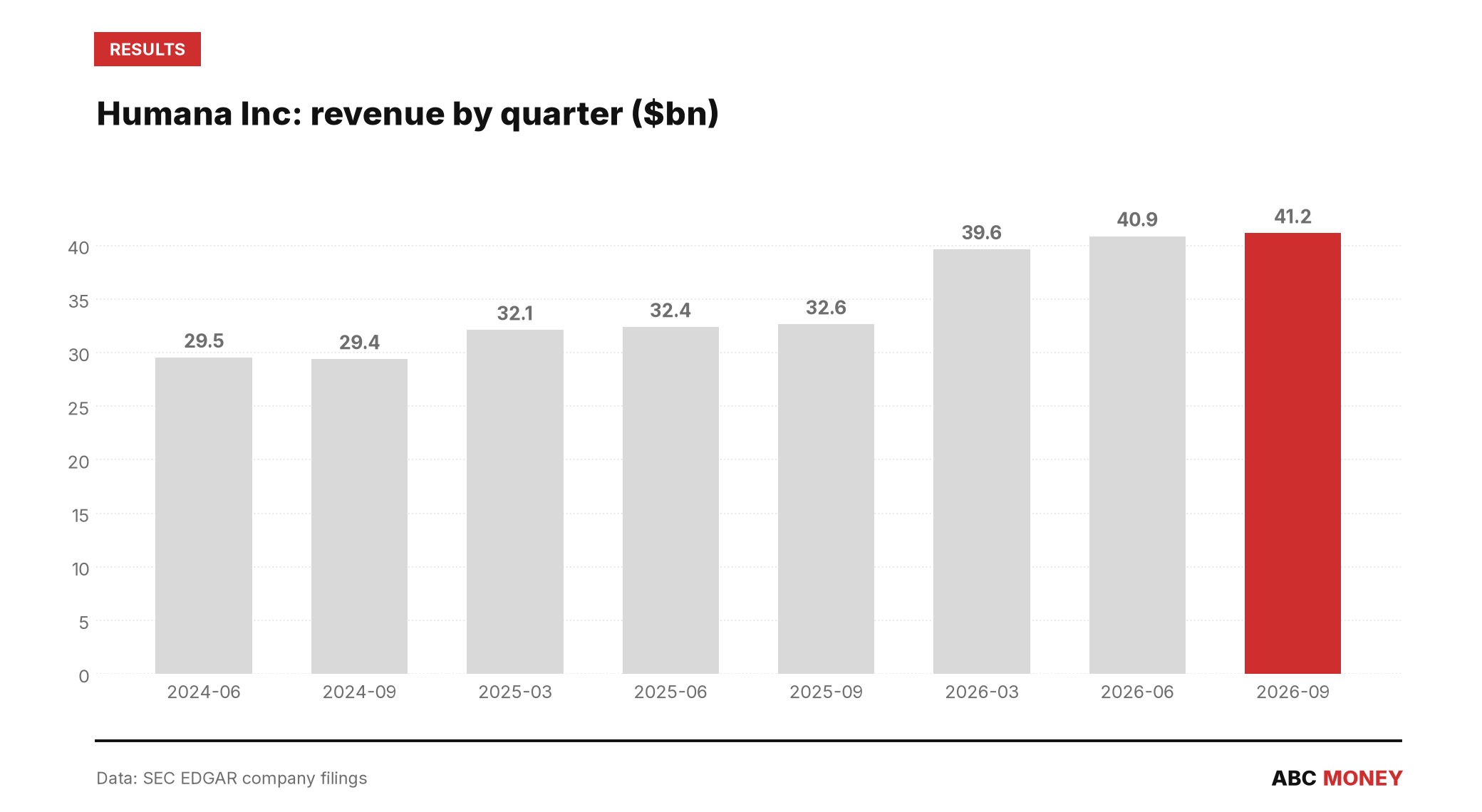
Revenue tells a steadier story. Humana booked $41.155bn in the third quarter of 2026, up from $32.649bn in the same period of 2025 and continuing a run of sequential increases through the year – $39.648bn in the first quarter, $40.867bn in the second. Top-line growth alongside thinner profit conversion is often the signature of an insurer absorbing higher medical costs or regulatory pressure on margins, though the filings don’t spell out the cause.
A balance sheet exercise, not a distress signal
None of this looks like a company under acute financial strain. Humana has form here: it priced a $1.35bn senior notes offering in November 2023 and completed a $1.25bn debt sale in March 2023, and in March 2026 it issued $1.0bn of 6.625% junior subordinated notes due 2056, whose prospectus allowed proceeds to be used for general corporate purposes “which may include the repayment of existing indebtedness,” according to the offering documents. Whether that issuance was earmarked for this specific tender isn’t something the company has said outright, but the sequence – raise long-dated capital, then retire shorter-dated, lower-coupon notes – is a familiar piece of liability management rather than a sign of cash-flow trouble.
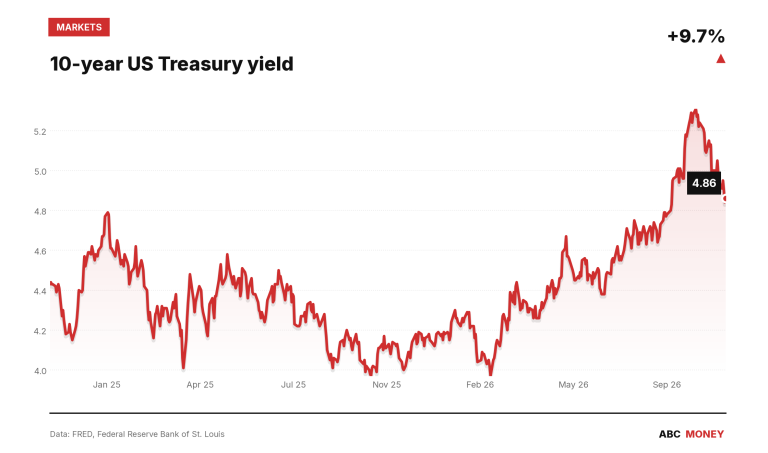
The backdrop for the decision is a bond market where borrowing costs have crept higher. The 10-year US Treasury yield stood at 4.86% as of 6 November 2026, up slightly from 4.84% the prior reading, while the 2-year sat at 4.51%, according to Federal Reserve data. With reference yields elevated, retiring low-coupon paper issued when rates were lower and replacing it, or simply paying it down, can make arithmetic sense for a borrower with the cash to do it – though Humana’s own statements don’t frame the move in those terms.
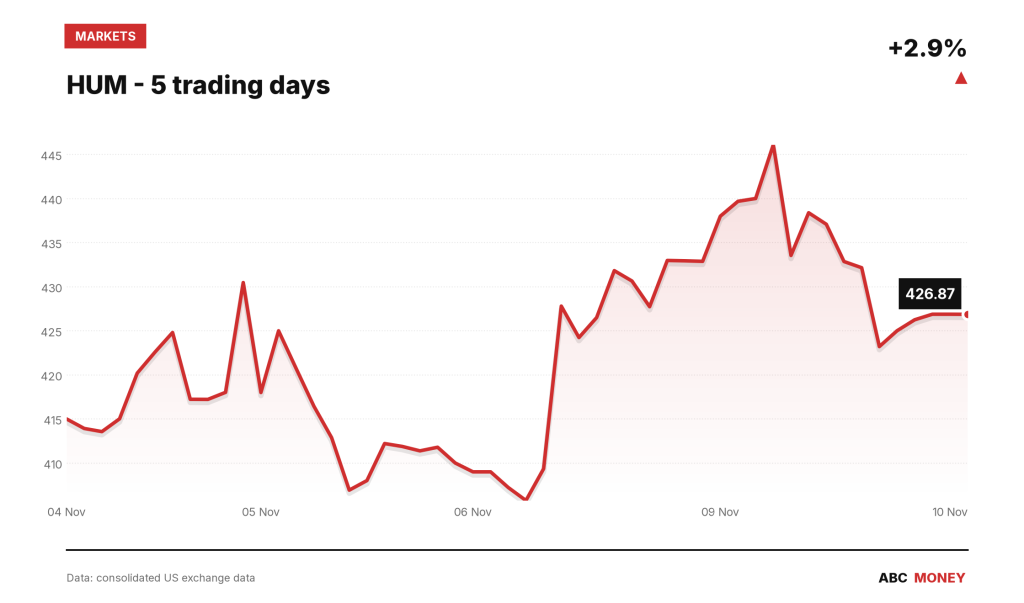
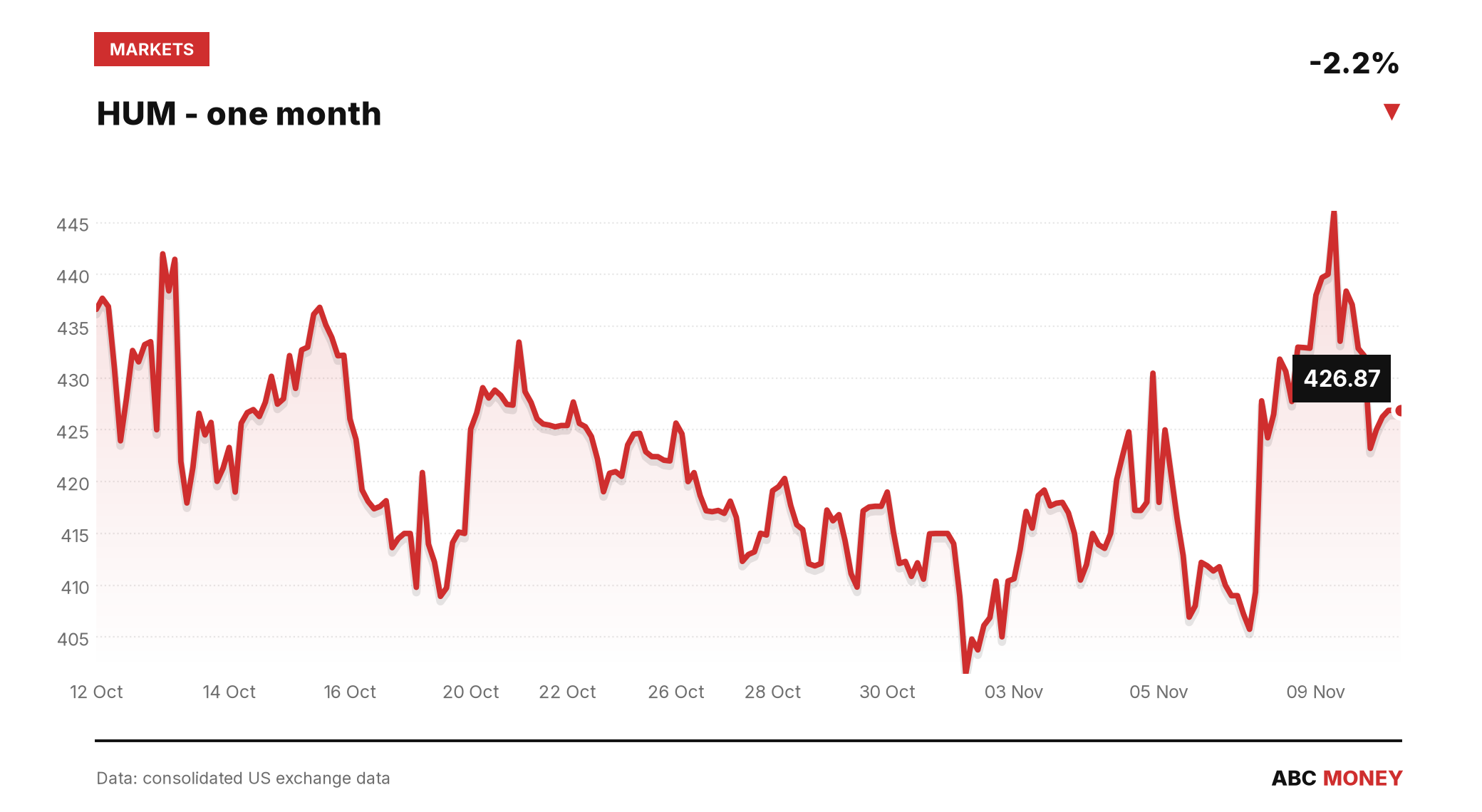
Shares in Humana last changed hands at $426.8687, down 1.38% over 24 hours as of 10 November, having traded in a 20-day range between $401.44 and $446.11. Trading volume ran slightly above its 20-day average, a modest uptick rather than anything resembling a rush for the exits. Short-selling activity around the announcement gives no indication of a market bracing for trouble either: FINRA’s daily short-sale data shows HUM’s short ratio – the proportion of daily trading volume attributable to short sales – bouncing between roughly 0.20 and 0.61 in the fortnight around the news, with no sustained spike coinciding with the tender itself.
What the mechanics mean for holders
For bondholders weighing whether to tender, the acceptance priority matters as much as the headline cap. Because purchases are capped at $1.5bn in aggregate and processed in the stated order of priority, noteholders further down the list – those holding the 2032s, which sit first in the queue by the company’s own ordering – face a different calculus to those holding series lower down, who could see their notes only partially accepted, or not at all, if the cap is reached first. The $800m sub-cap on the 2031 notes adds a further wrinkle, ring-fencing a limit within the limit for that single series regardless of how eager other holders are to sell.
Investors will get a clearer read on take-up once the offers close on 16 November, with settlement due two days later. Whether Humana opts to follow this round with further refinancing, or lets the retired debt simply reduce its overall load, is likely to come into focus alongside its next quarterly results.
This article is for information only and is not investment advice or a recommendation to buy or sell any asset. Markets move quickly; figures are correct as sourced at the time of writing. Always do your own research before making financial decisions.