Better Home & Finance earnings miss its own lowered bar
Better Home & Finance earnings missed guidance the company had already cut three weeks earlier, even as the quarterly loss shrank year on year.
In this article 3 sections
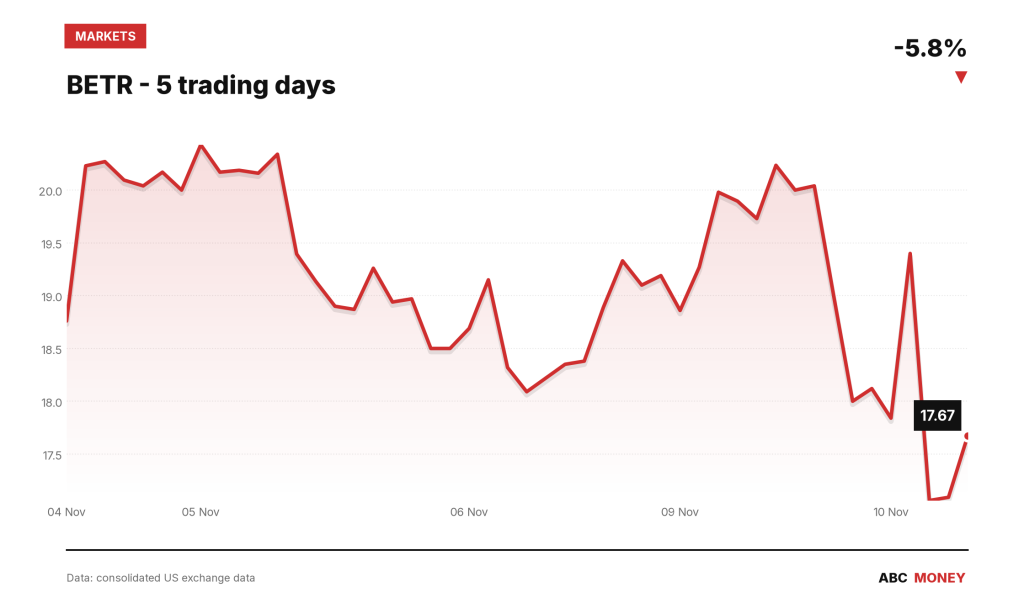
Better Home & Finance Holding Company (NASDAQ: BETR) reported a wider third-quarter loss than the company itself had guided towards just three weeks earlier, a detail that got lost in the market’s rush to call the result a miss. The AI-focused mortgage lender posted a net loss of $36.5m for the quarter ended 30 September, against diluted earnings per share of -$1.93, short of the -$1.44 analyst consensus. Shares fell 7.04% in the hours after the release, changing hands at $17.671.
That headline framing is accurate as far as it goes. But it skips over the more interesting part of the story: Better had already told investors to expect trouble. In an 8-K filed roughly three weeks before results, the company pre-announced a preliminary net loss range of $33.1m to $34.1m, explicitly blaming disruption tied to a shareholder proxy contest. The final figure of $36.548m came in worse than even that already-reduced bar, filed with the 10-Q on 9 November.
A bar lowered twice, then missed anyway
Total net revenue reached $45.1m, up roughly 9% year on year but still short of the company’s own guidance range, according to Benzinga’s account of the earnings call. For a lender whose growth story depends on convincing the market that its AI-native platform can scale originations faster than peers, missing a target it had only weeks earlier revised downward is the kind of detail that tends to matter more to analysts than the headline loss number itself.
Dilution – the effect of more shares being issued, which spreads losses across a larger share count and can shrink per-share metrics even when the underlying loss is flat – complicates year-on-year comparisons here, given how sharply Better’s diluted EPS has swung across recent quarters, from -$4.29 in the first quarter of 2026 to -$1.64 in the second. The comparison that actually holds up is on the loss itself.
The loss that got smaller, not bigger
Set against the preliminary guidance, the $36.5m loss looks like a fresh disappointment. Set against the prior year, it is an improvement: Better posted a net loss of $39.125m in the third quarter of 2025. The company is still losing tens of millions a quarter – this is the seventh consecutive quarterly loss in the figures on file – but the trend, inconvenient as it is for a “miss” narrative, points toward a narrowing rather than a widening deficit.
The proxy contest cited in the earlier guidance cut is the backdrop against which founder Vishal Garg returned this quarter, now styled Founder and Head of Product, Platform and Innovation rather than chief executive. In the results statement, Garg said he was “excited to be back and executing on our vision for Better 2.0”, framing the quarter as the opening stretch of a turnaround built on the company’s original growth playbook from 2019-2021. Investors will want more than a slogan before they buy that comparison; the company grew fast in that period partly because mortgage rates were near zero, a backdrop that bears no resemblance to the one it is operating in now.
Positioning ahead of the print tells its own story
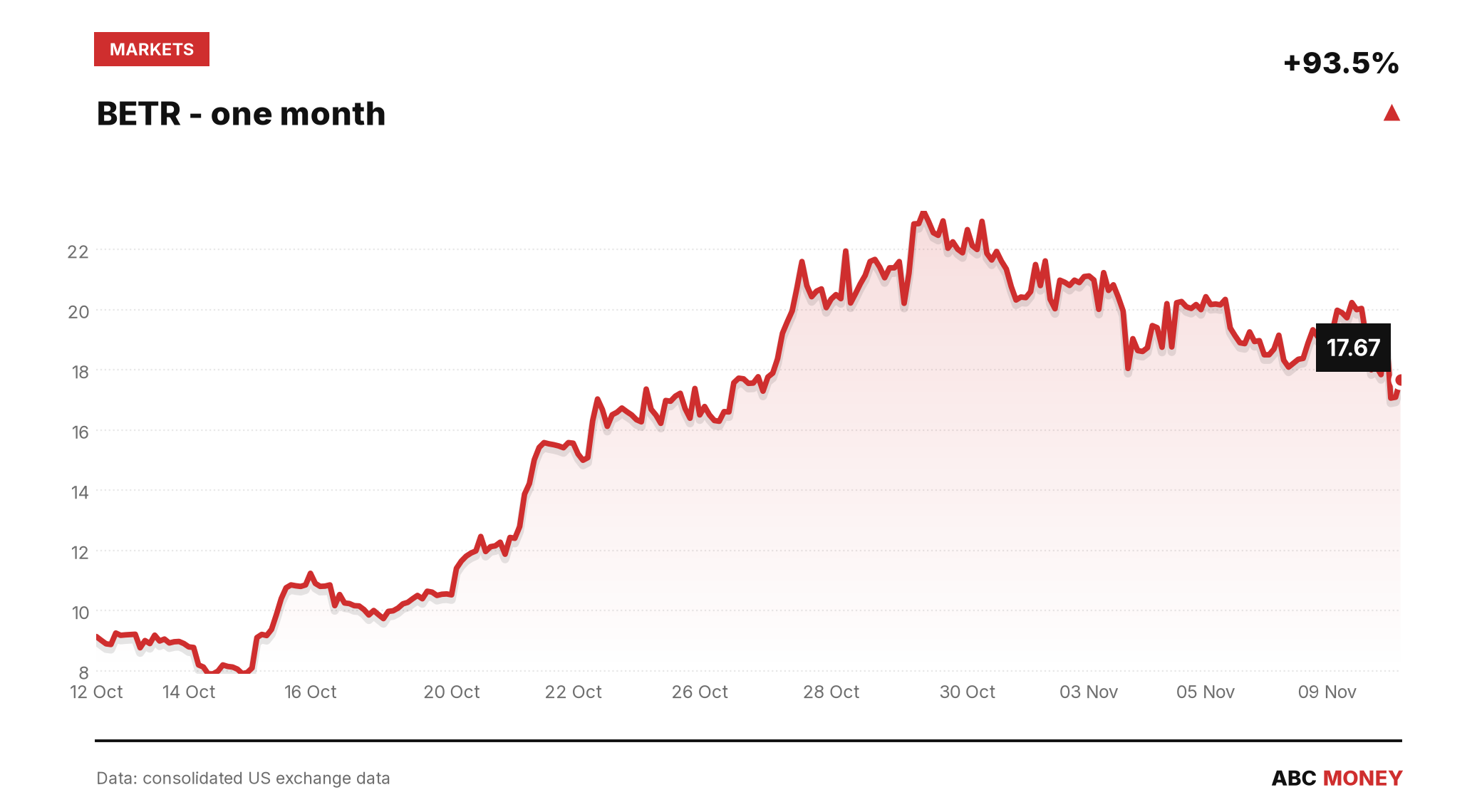
Shares had rallied 49.69% over the twenty trading days leading into the release, hitting a high of $23.275 before the print, which makes the post-earnings 7% pullback look at least partly like profit-taking after a sharp run rather than a pure reaction to the numbers. Short-side trading activity, as measured by the daily share of volume tied to short sales, climbed from 0.394 on 28 October to 0.67 on 9 November, the day results landed – a build-up consistent with traders positioning for exactly this kind of guidance shortfall, according to FINRA’s daily short sale volume data. Separately, BETR was flagged as the most shorted stock in the financial sector by longer-run short interest – the share of outstanding stock held short – at 25.25% of float as of 1 October, per GuruFocus.
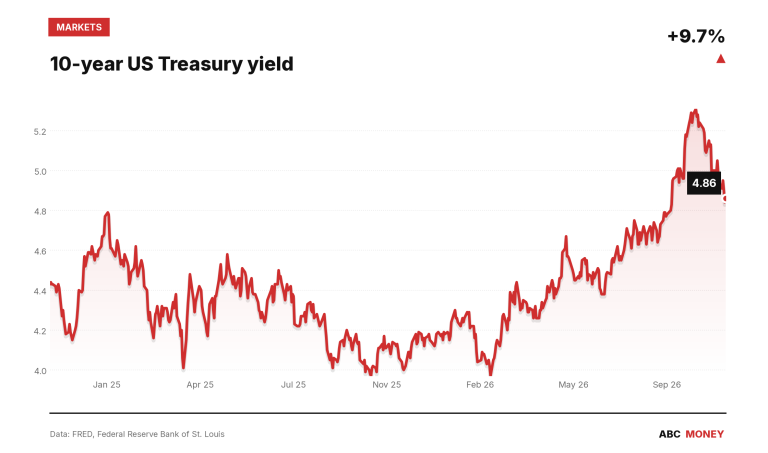
None of that happens in a vacuum. The 10-year Treasury yield sat at 4.86% as of 6 November, barely moved from 4.84% the prior reading according to Federal Reserve data, keeping mortgage rates elevated and origination volumes constrained across the sector Better operates in. A lender promising an AI-driven cost advantage has to prove that edge matters more in a high-rate market than it did when money was free.
What comes next is less about the quarter just reported than the one ahead. Garg’s “Better 2.0” pitch will be judged on whether fourth-quarter guidance – due alongside the next results filing – holds up better than the last one did, and whether the proxy dispute that forced a guidance cut mid-quarter has actually resolved or merely paused.
This article is for information only and is not investment advice or a recommendation to buy or sell any asset. Markets move quickly; figures are correct as sourced at the time of writing. Always do your own research before making financial decisions.