DoorDash Instacart Talks Send Shares Reeling
DoorDash Instacart talks are advancing, say WSJ and Semafor, but DASH fell sharply as investors price in deal risk and an unconfirmed $17bn price tag.
In this article 3 sections
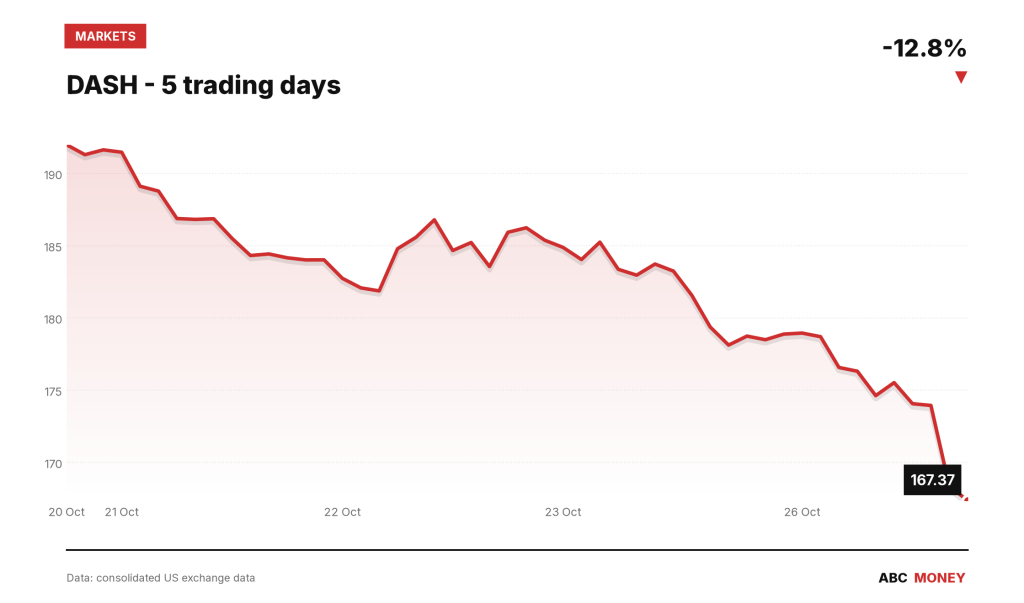
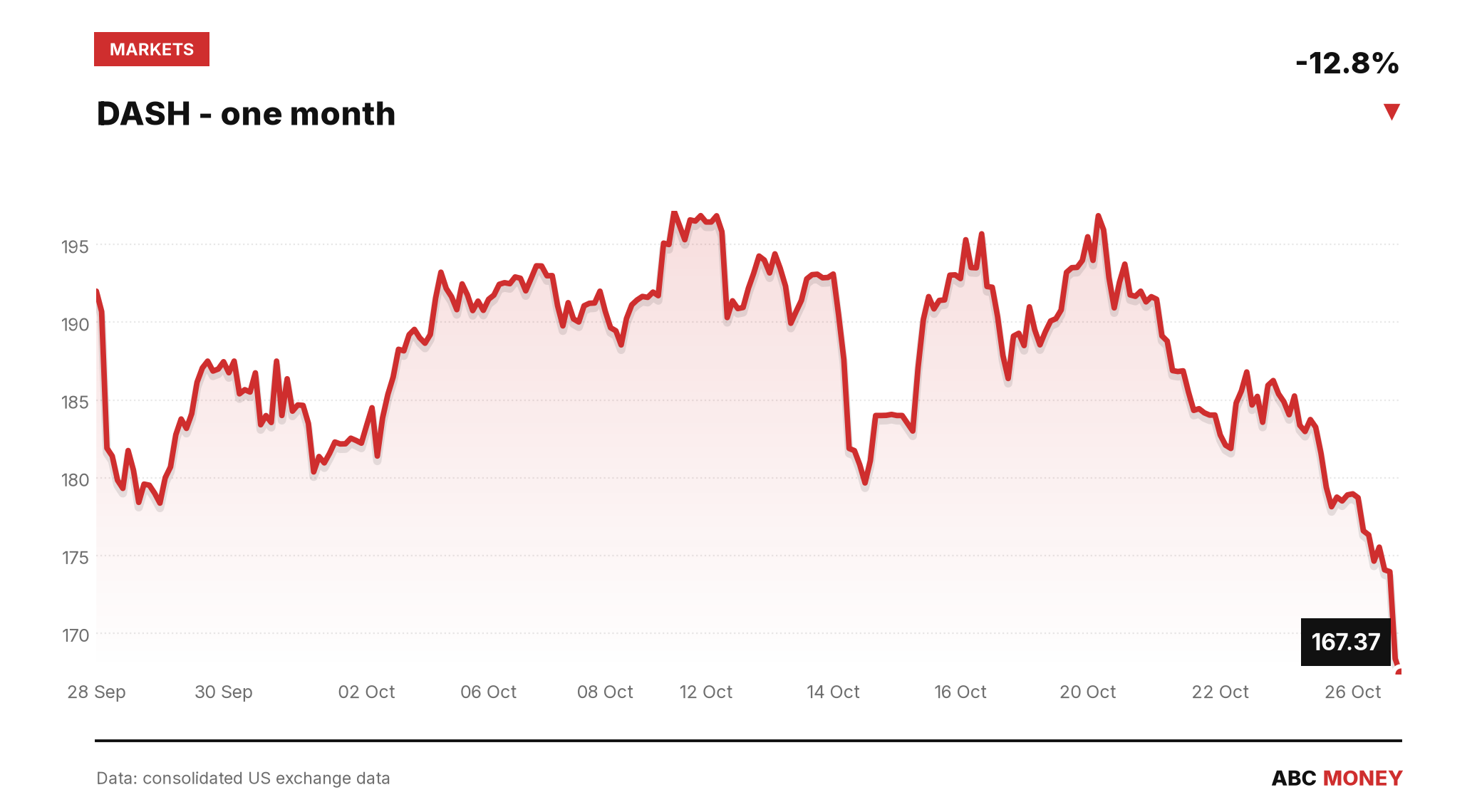
DoorDash Instacart talks are now in an advanced stage, according to the Wall Street Journal, which reported on 26 October that DoorDash (NASDAQ: DASH) is closing in on a deal to buy its grocery-delivery rival. Investors did not greet the news as good news for DoorDash: its shares fell 5.22% on the day to close at $167.37, extending a 20-day slide of 12.54% and trading at 3.63 times their average daily volume, according to consolidated exchange data.
That reaction tells you something the headline doesn’t. When a company is reported to be buying a target rather than being bought, the acquirer’s stock typically wobbles on financing and integration worries rather than celebrating. DASH’s fall, against a target that would reportedly command a double-digit-billion valuation, looks like exactly that kind of repricing of deal risk.
Who else is saying it, and how far it goes
The WSJ report did not stand alone. Semafor independently described DoorDash as being in “exclusive talks” to acquire Instacart the same day, while Reuters and CNBC both picked up and aired the story within hours, giving the core claim unusually broad, same-day corroboration across outlets with separate reporting lines. The Information went further, reporting DoorDash was nearing a deal valued at roughly $17bn — but that figure comes from a single outlet, and no company statement or regulatory filing has put a number on the table.
That matters because the paper trail that would normally settle the question isn’t there yet. A search of DoorDash’s filings on SEC EDGAR turns up no Form 8-K disclosing a signed merger agreement or even a confirmed negotiation — only the routine quarterly earnings filings investors would expect regardless. Neither DoorDash nor Instacart has issued a press release confirming talks, and as of the reporting date no final agreement had been reached. The claim that negotiations are advanced is well supported; the claim about price and terms is not yet verifiable from primary sources.
Context from earlier reporting suggests Instacart had been running a broader sale process with more than one interested party, and that Uber walked away from discussions before DoorDash emerged as the lead bidder — the kind of detail that, if accurate, would explain why talks have reportedly moved quickly once DoorDash became the frontrunner.
Why DoorDash can plausibly afford it
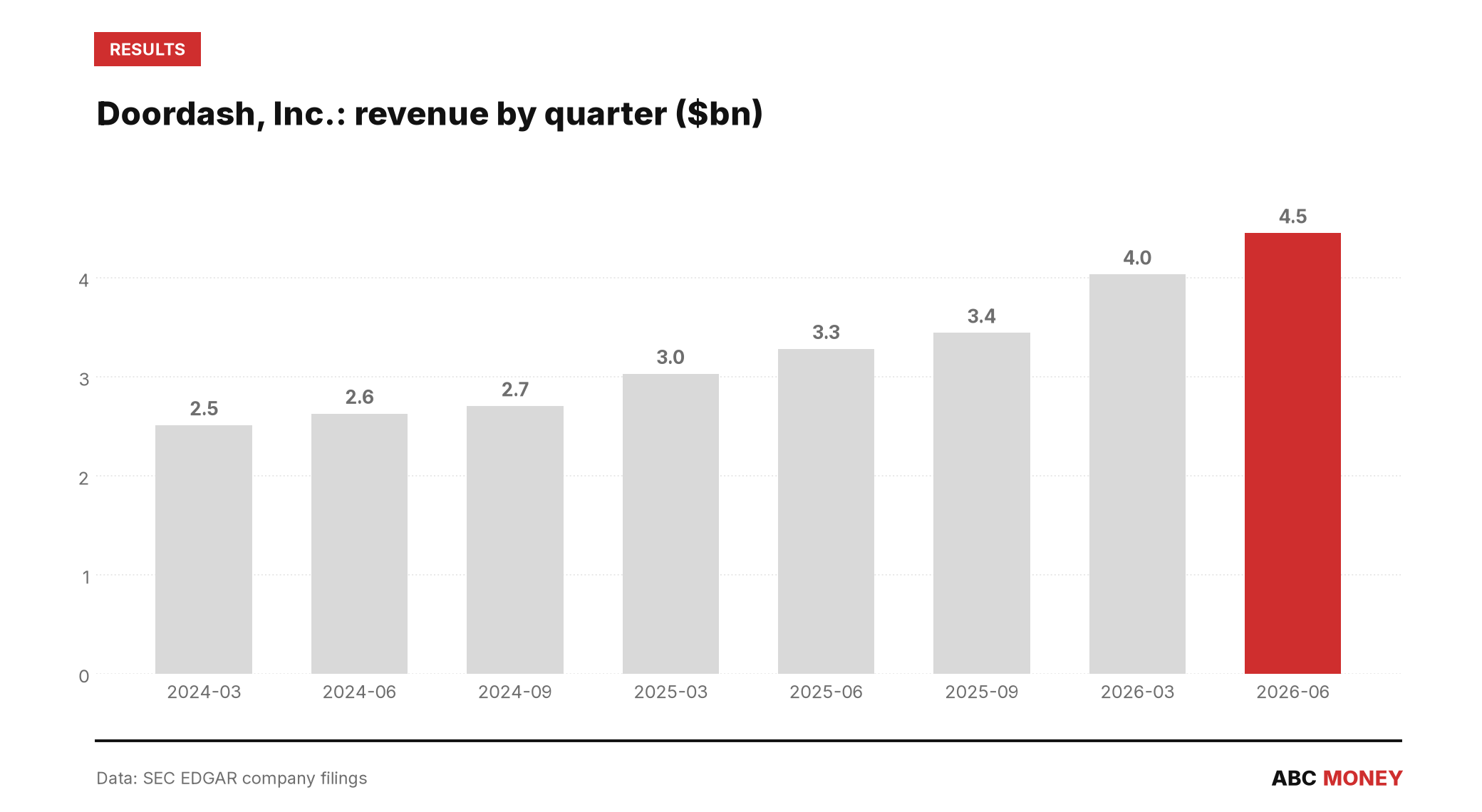
Whatever the final number, DoorDash’s balance sheet has the kind of earnings momentum that makes a large deal credible rather than fanciful. The company has now posted six consecutive profitable quarters: net income of $200m on revenue of $4,454m in the second quarter of 2026, following $184m in net income in the first quarter, according to its 10-Q filings with the SEC. That’s a sharp turnaround from losses of $23m and $157m in the first two quarters of 2024, and revenue has grown from $2,513m to $4,454m a quarter over roughly two years — the kind of trajectory that gives a board confidence to fund a sizeable acquisition with cash, stock, or both.
Positioning data adds a layer of nuance to the share reaction. FINRA’s daily short-sale figures show short volume as a share of total trading ranging between roughly 0.31 and 0.66 over the ten sessions before the news broke — a pattern that doesn’t suggest an unusually crowded short position was driving the sell-off. In other words, this looks like long-only investors reassessing the stock on the news itself, not a short squeeze unwinding or short sellers piling in after the fact.
What would need to happen next
For the DoorDash Instacart talks to crystallise into a transaction, the next concrete markers would be a definitive merger agreement, an 8-K filing disclosing its terms, and — given the scale of the combined business in grocery and food delivery — likely antitrust scrutiny given the overlap between the two platforms’ delivery networks. None of that has happened yet. Until it does, the market is left pricing a deal that multiple credible outlets say is close, on terms that remain, for now, a single unconfirmed estimate rather than a disclosed fact.
This article is for information only and is not investment advice or a recommendation to buy or sell any asset. Markets move quickly; figures are correct as sourced at the time of writing. Always do your own research before making financial decisions.