Oracle’s Snowflake OCI deal lands as stock slides 8.68%
Oracle's Snowflake OCI deal brings a rival cloud database onto its own infrastructure, even as Oracle shares sit 8.68% below their 20-day high.
In this article 3 sections
Oracle’s Snowflake OCI deal, unveiled at the company’s AI World conference in Las Vegas on 27 October 2026, will let customers run Snowflake’s AI Data Cloud as a native, first-party service inside Oracle Cloud Infrastructure (OCI) – rather than bolting it on through a third-party integration. The announcement, made jointly with Snowflake (NYSE: SNOW), was distributed via PRNewswire and mirrored word-for-word on Oracle’s own newsroom, which frames the tie-up as giving customers “greater flexibility to put their enterprise data to work” as they build AI applications.
That framing matters more than it might first appear. Snowflake and Oracle (NYSE: ORCL) have historically competed for the same enterprise data warehousing budgets. Folding Snowflake’s data cloud directly into OCI’s plumbing – rather than leaving customers to stitch the two together themselves – is Oracle conceding that many large customers want Snowflake’s tools regardless of whose infrastructure they sit on, and would rather Oracle made that easy than lose the underlying compute and storage spend to a rival cloud. Snowflake’s own newsroom carried matching language confirming the native-service arrangement, and independent outlets including Investing.com and Unite.AI reported the same details within hours of the Las Vegas unveiling.
A splashy deal, a wobbly share price
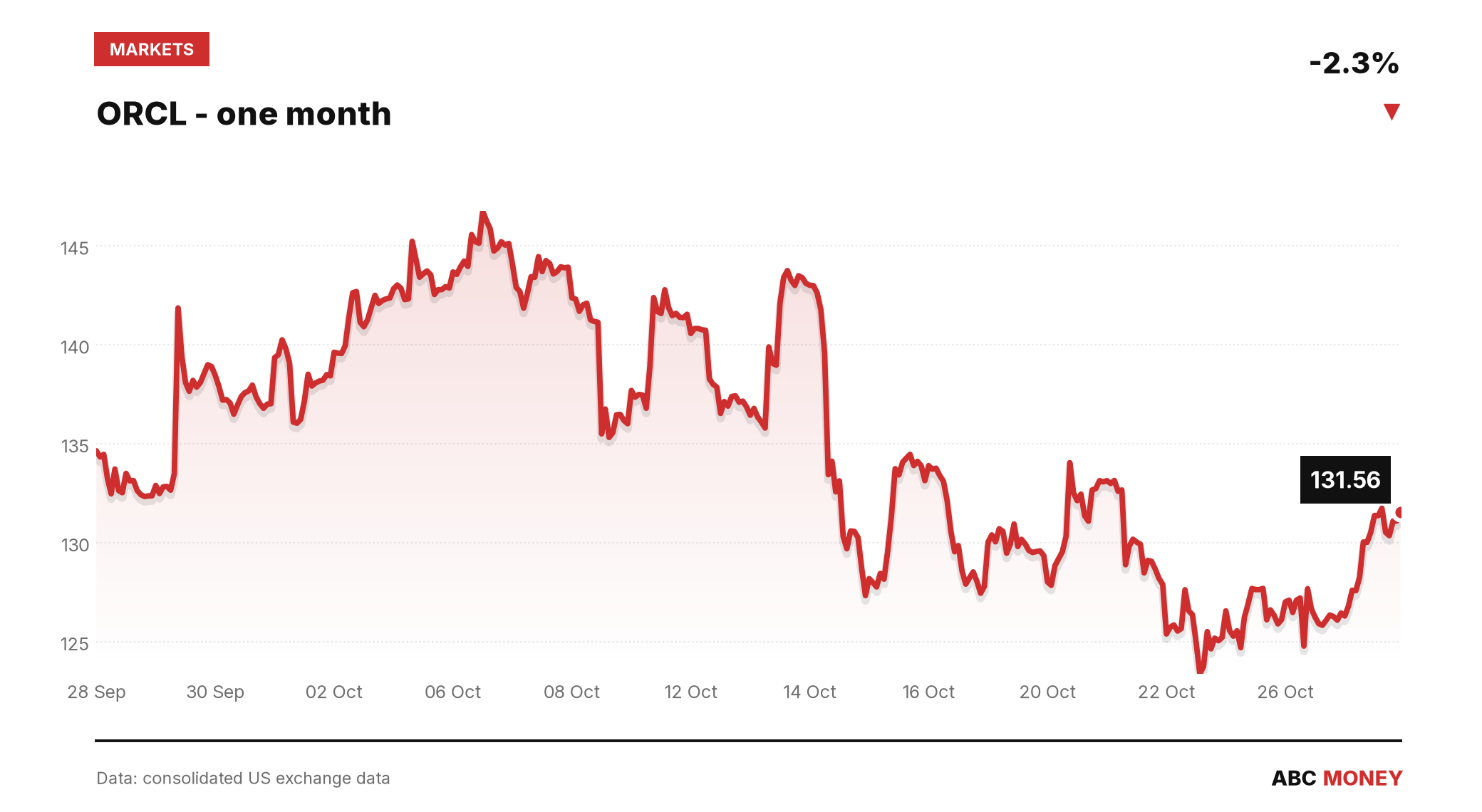
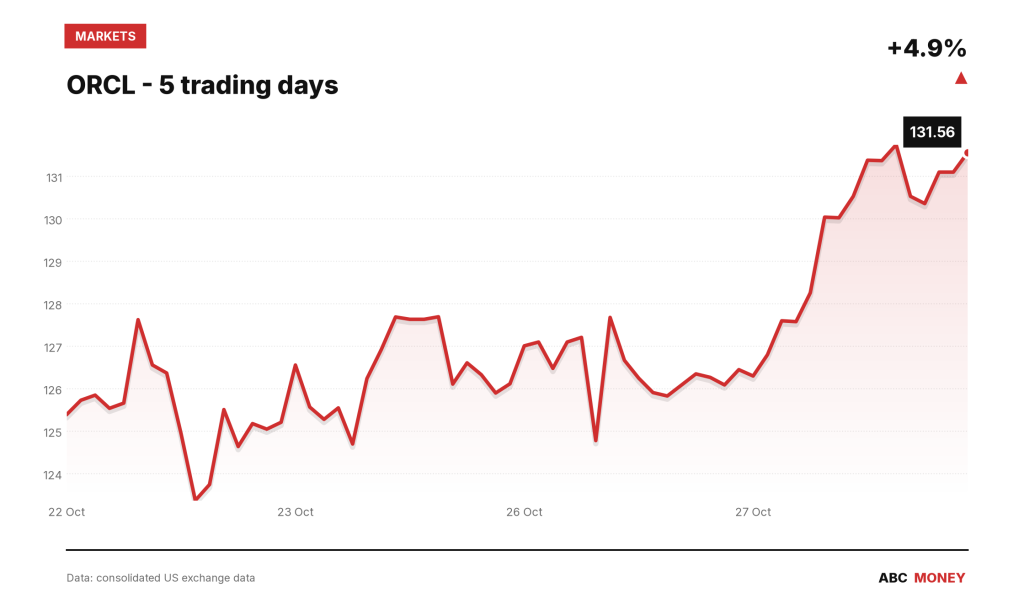
What the announcement did not do, at least immediately, was move the stock. Oracle shares closed at $131.56 on 27 October, up a negligible 0.14% on the day. The more telling number sits over a longer window: ORCL has fallen 8.68% across the trailing 20 trading days, with the stock ranging between $123.37 and $144.465 over that stretch. Trading volume on the day of the Snowflake news ran about 18% above the 20-day average, suggesting investors were paying attention even if they weren’t rushing to buy.
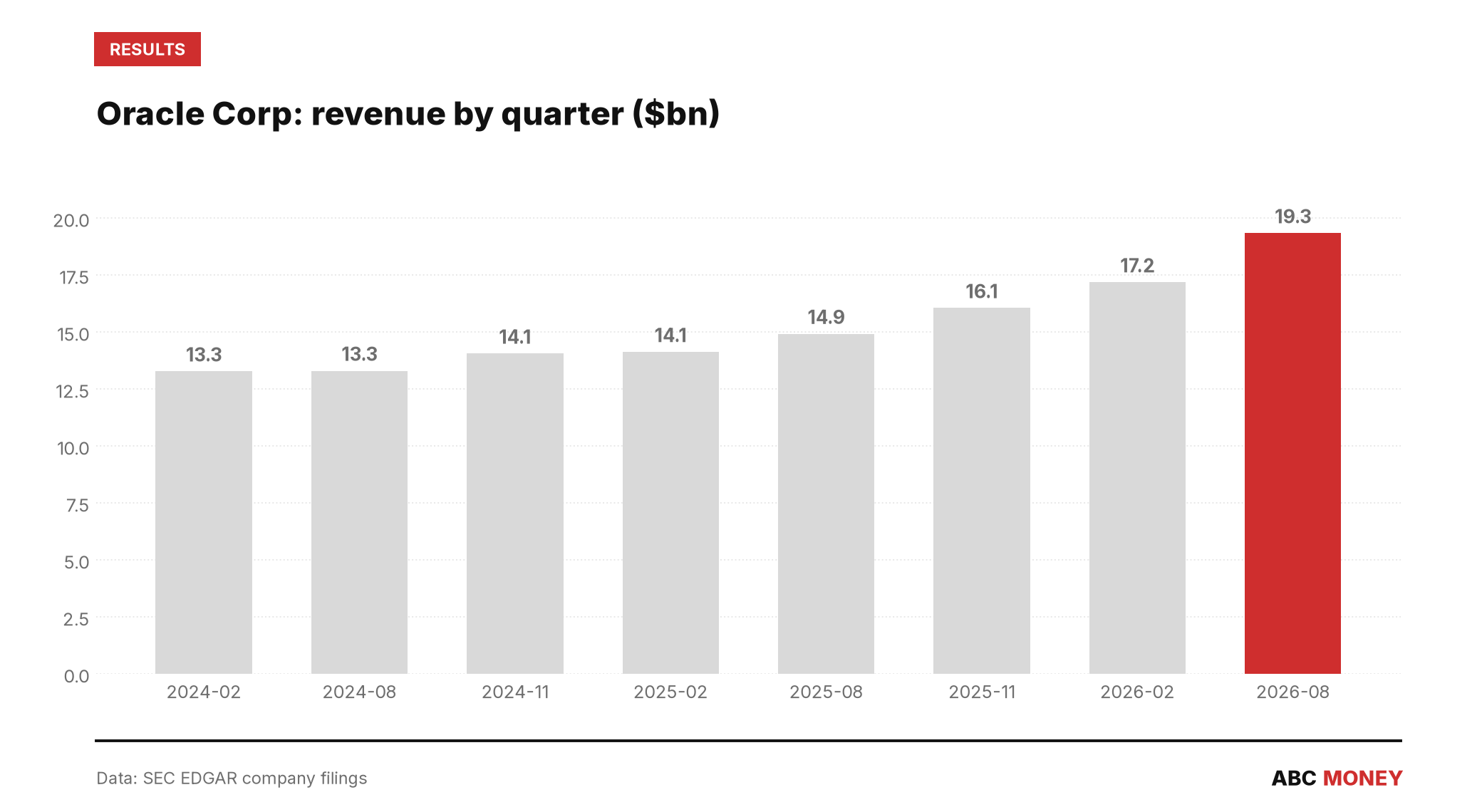
That gap – a headline-grabbing AI partnership landing into a stock that’s been sliding for a month – is the real story here. Oracle has spent much of 2026 pitching itself as a prime beneficiary of the AI infrastructure build-out, and the numbers back up a genuine growth story: quarterly revenue has climbed from $13.28bn in the quarter ended February 2024 to $19.345bn in the quarter ended August 2026, according to Oracle’s most recent 10-Q filing. Net income, though, has been lumpier – $6.135bn in the quarter ended November 2025 against $4.76bn for the quarter ended August 2026 – a reminder that Oracle’s AI capital spending is squeezing margins even as the top line grows. Investors appear to be weighing that capex burden against the promise of deals like this one, and for now the balance is tilting cautious.
Short interest was already easing
One data point argues against reading the sell-off as a bet against Oracle specifically. FINRA’s daily short-sale data shows the share of ORCL volume attributable to short sales – trades betting the price will fall – easing to 0.225 on 27 October from a recent peak of 0.347 on 16 October. If anything, bearish positioning was fading into the announcement rather than building, which points more towards broad profit-taking or sector rotation than a concentrated wager against Oracle’s AI strategy.
The macro backdrop gives some context too. The 10-year US Treasury yield sat at 5.0% as of 26 October, with the 10-year/2-year spread narrowing slightly to 0.29 percentage points from 0.32, according to Federal Reserve data. Higher-for-longer yields have made investors choosier about paying up for capital-intensive growth stories, and Oracle – which has committed heavily to data centre and chip spending to support its cloud ambitions – sits squarely in that category.
What the filings don’t tell us
Four Oracle insiders, including Maria Smith and Stuart Levey, filed Form 4 disclosures with the Securities and Exchange Commission on the evening of 27 October, the same day as the Snowflake announcement. The filings themselves carry no share counts or transaction values in the disclosed record, so there’s no basis for reading anything into their timing beyond routine reporting cadence around a high-profile corporate event.
For customers, the practical change arrives whenever Oracle flips the switch on general availability – a date neither company specified in Tuesday’s release. For shareholders, the more immediate question is whether partnerships like this one are enough to arrest a month-long slide, or whether the market wants to see the AI infrastructure spending translate into steadier earnings before it rewards the next OCI announcement.
This article is for information only and is not investment advice or a recommendation to buy or sell any asset. Markets move quickly; figures are correct as sourced at the time of writing. Always do your own research before making financial decisions.