Meta Infrastructure Head Santosh Janardhan to Depart in 2027
Meta's infrastructure head Santosh Janardhan is leaving in early 2027, with AWS veteran Dave Brown taking over amid a costly AI build-out.
In this article 4 sections
Meta Platforms (NASDAQ: META) confirmed on Wednesday that Santosh Janardhan, its long-serving head of infrastructure and co-head of engineering, will leave the company in early 2027, closing out a run that began when he joined the social media giant back in 2009. The move was first disclosed through an internal memo and has since been verified by Reuters and TechCrunch.
Janardhan will stay on through the first quarter of 2027 to help steer the handover, according to CNBC, which reported that he told staff in the memo it was “time to pass the baton.” His successor is Dave Brown, who joined Meta earlier this year as vice president of infrastructure after nearly 19 years at Amazon Web Services, where he held the rank of senior vice president, per AI Weekly.
Why the Meta infrastructure head matters now
This is not a routine reshuffle. The Meta infrastructure head oversees the physical and operational backbone – data centres, networking, power procurement – on which the company’s entire artificial-intelligence strategy now depends. Brown’s arrival carries an added dimension: according to CNBC, he will also serve as chief technology officer of Meta’s newly formed “Meta Compute” initiative, an effort spearheaded by Dina Powell McCormick and Daniel Gross. Installing a two-decade AWS veteran in that seat, just as Meta races to build out AI capacity, reads less like a retirement party and more like a deliberate swap of in-house institutional knowledge for hyperscale cloud-operator discipline.
There is also a pattern worth noting: The Next Web has reported this is the second senior Meta departure pencilled in for 2027, hinting at a wider executive reshuffle rather than one leader simply moving on.
The costlier backdrop: capex and cash flow
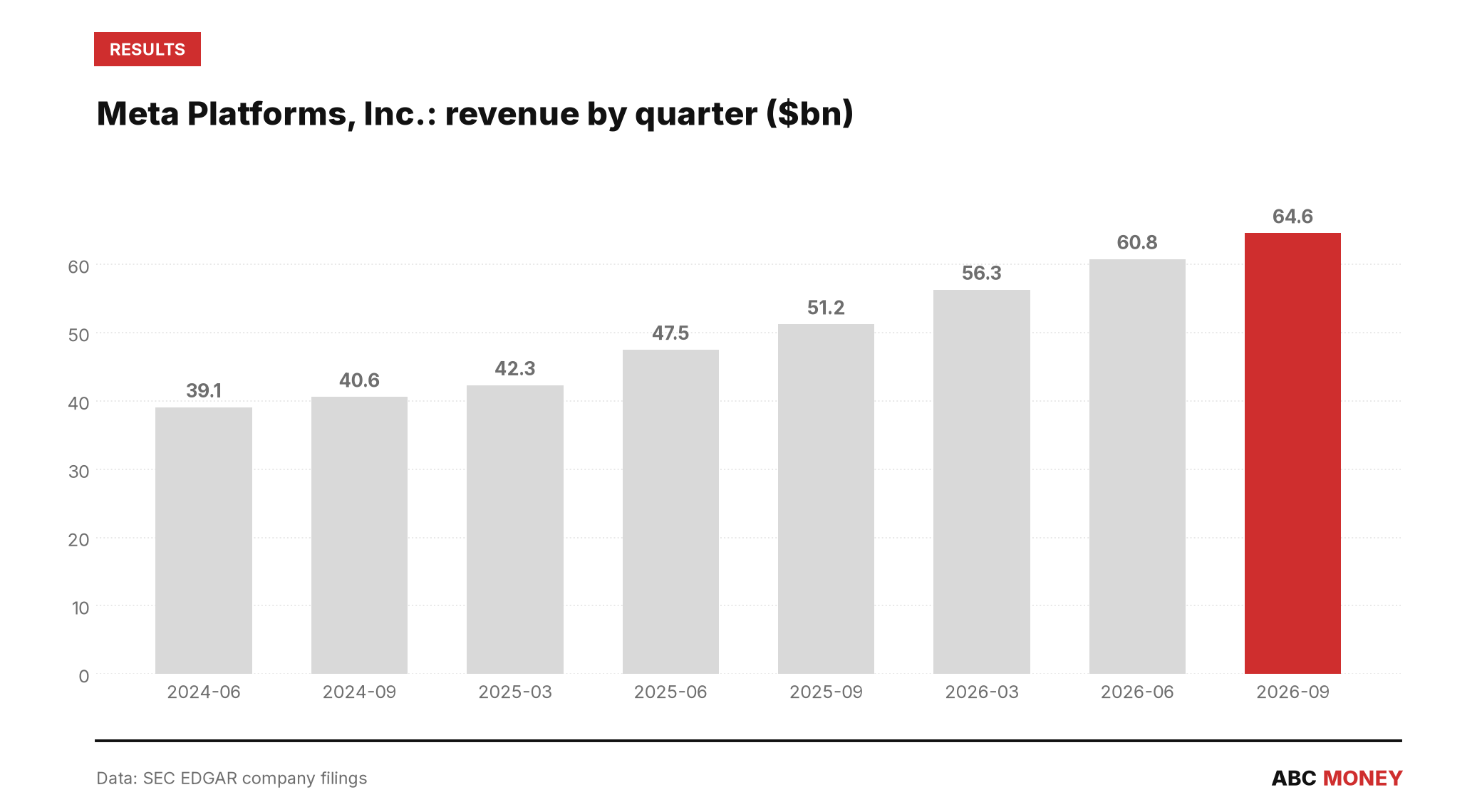
The timing matters because the infrastructure Janardhan built is now the single biggest swing factor in Meta’s financial story. The company’s most recent quarterly filing, covering the three months to 30 September 2026, showed net income of $9.86bn and diluted earnings per share of $3.83, filed with the Securities and Exchange Commission on 22 October. Revenue in that quarter came to $64.6bn, continuing a steady climb from $39.1bn two years earlier – but the profit line has been considerably choppier along the way, including a sharp dip to $2.7bn in the third quarter of 2025 before rebounding above $26bn in the first quarter of 2026.
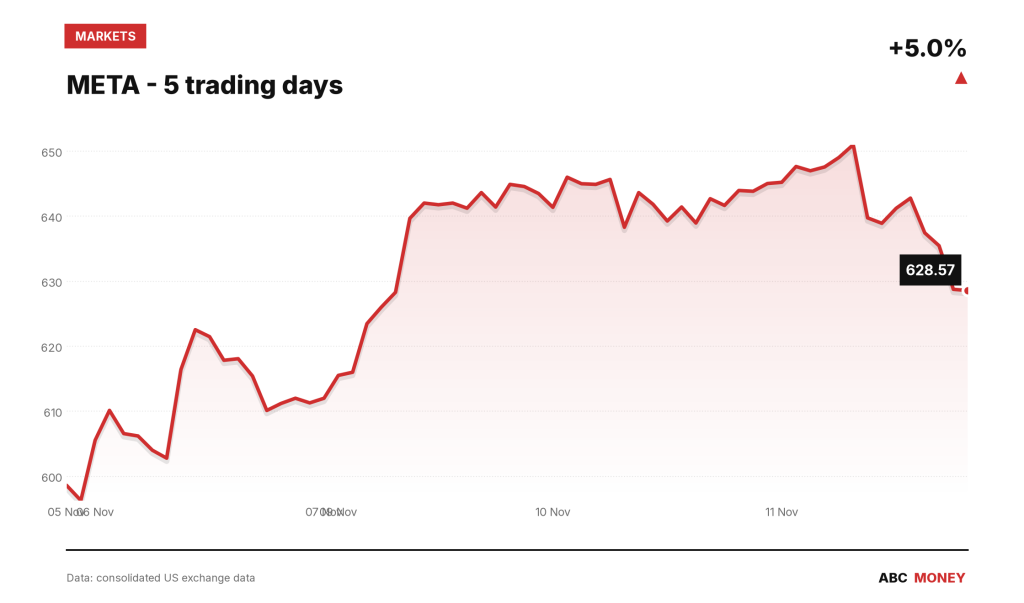
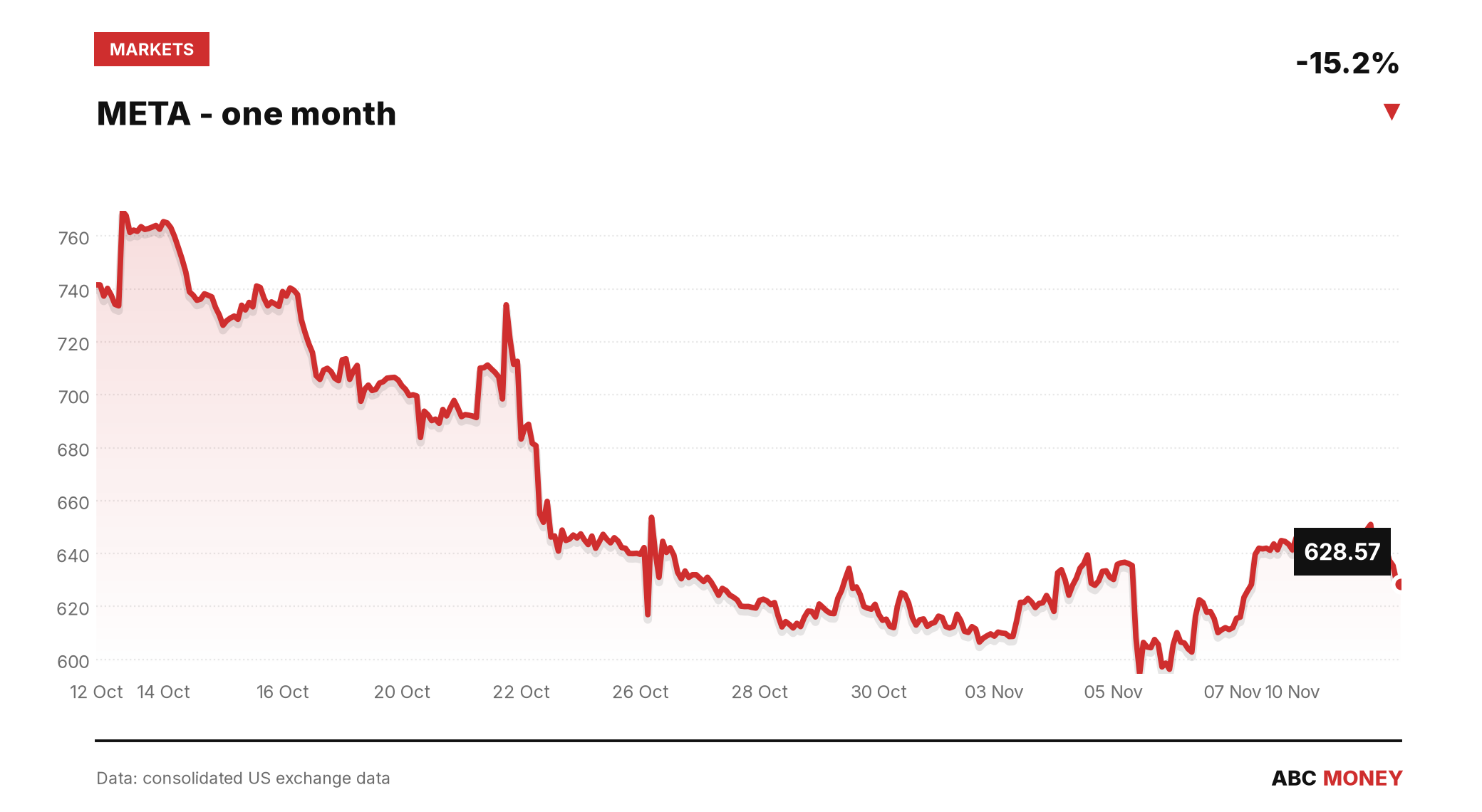
The real story investors have been digesting, though, is cash. Meta’s capital expenditure, including finance-lease principal payments, reached $34.91bn in the third quarter of 2026 against operating cash flow of $32.79bn, according to Yahoo Finance – meaning the company is now spending more on AI infrastructure than its operations generate in cash. That dynamic, laid bare in the October earnings release, sent the stock down nearly 7% on 22 October, as CNBC reported at the time, after Meta also raised the floor of its expected 2026 capital spending. Shares closed at $628.76 on 11 November, down 3.4% on the day and 11.6% over the preceding month – a decline that predates and is unrelated to the Janardhan news, but which frames exactly why his successor’s cloud-economics pedigree matters to the market.
Positioning tells its own story
Trading data around the period shows the bearish undertow building before the personnel news even broke. FINRA’s daily short-sale ratio – the share of reported volume tied to short selling, where traders borrow stock to sell it in anticipation of a lower price – for Meta climbed from 0.30 on 2 November to 0.56 on 9 November, according to FINRA figures, before easing back to 0.46 the following session. That is a meaningful shift in a fortnight, consistent with a market still working through the implications of negative free cash flow rather than reacting to who runs the server rooms.
What the handover means for Meta Compute
Brown’s brief now stretches well beyond swapping out servers. As CTO of Meta Compute, he inherits responsibility for translating the company’s AI ambitions into physical capacity at a moment when every additional data centre adds directly to the capex figure markets are already fretting over. Janardhan, for his part, is staying only long enough to see the transition through the first quarter of 2027 – a narrow window in which Meta will also report full-year 2026 results and, almost certainly, update investors on where capital spending is heading next. The Information has characterised the move as part of a broader leadership change to Meta’s data-centre operation amid its AI build-out – language that suggests this is the first of several infrastructure-side changes still to come, rather than the last.
This article is for information only and is not investment advice or a recommendation to buy or sell any asset. Markets move quickly; figures are correct as sourced at the time of writing. Always do your own research before making financial decisions.