
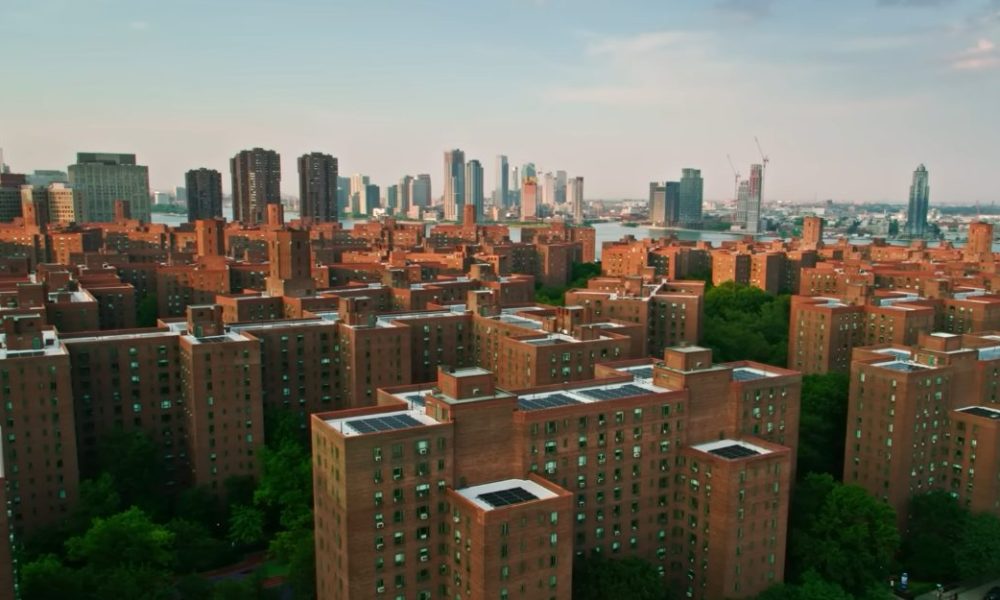
You begin to see a pattern when you drive through some Tampa or Atlanta suburbs on a Tuesday morning, past the rows of three-bedroom homes with the same tidy lawns and lockboxes on the front doors. No trucks that move. The windows have no personal touches. The houses are occupied, but they have a managed feel to them; they are uniform and well-maintained without showing affection, unlike most neighborhood homes. The landlord in many of these developments isn’t a small operator with a few units or a retiree collecting rent on an investment property. With a trillion dollars in assets under management, the company’s business strategy is based on the notion that a significant portion of Americans will never be homeowners.
Technically speaking, Blackstone is not a sovereign wealth fund. However, the analogy isn’t wholly incorrect. With over $1 trillion under management, an ownership stake in about 274,000 rental units nationwide, and a strategy that entails large-scale residential property acquisitions in high-growth markets, it functions with a reach and enduring power that most sovereign funds would recognize as familiar. The company has amassed what is most likely one of the biggest landlord portfolios in American history, and it did so remarkably quickly and with comparatively little public scrutiny until the repercussions were too great to ignore.
The origin story continues until 2008. Blackstone started buying single-family homes at a rate that no individual investor could match in the aftermath of the financial crisis, with foreclosed homes lying empty throughout Sun Belt subdivisions and prices at levels not seen in a generation. The company and similar businesses created portfolios that would have taken individual landlords decades to put together by purchasing in bulk, sometimes entire streets and other times entire developments. Blackstone used that buying spree to start Invitation Homes, which he later sold to become the biggest single-family rental business in the nation. The idea was simple: in a post-crisis market where lending standards had drastically tightened, buy distressed properties at a low cost, renovate them, and rent them to the increasing number of families who were unable to obtain mortgage credit.
Key Reference Data: Institutional Real Estate Buying
| Indicator | Detail |
|---|---|
| Key Institutional Player | Blackstone (NYSE: BX) — world’s largest alternative asset manager |
| Assets Under Management | $1 trillion+ |
| Rental Housing Units (Blackstone) | ~274,000 (apartments, single-family, mobile home parks, student housing) |
| Single-Family Homes (Blackstone) | ~58,000 homes |
| Institutional Share of SFR Market (2022) | ~5% of 14 million single-family rentals |
| Projected Institutional Share (2030) | 40%+ of all single-family rentals (MetLife Investment Management) |
| Key Focus Markets | Sunbelt states: Texas, Florida, Georgia |
| Rent Increase (Tampa, 2020–2023) | +44% |
| Rent Increase (Phoenix, 2020–2023) | +43% |
| Rent Increase (Atlanta area, 2020–2023) | +35% |
| National Rent Increase (same period) | +24% |
| Origin of Strategy | Post-2008 foreclosure buying; Invitation Homes created in crisis aftermath |
| Legislative Response | Stop Wall Street Landlords Act; Trump executive order (Jan 2026) |
| Corporate Land Ownership (US Residential) | ~9% of all US residential land |
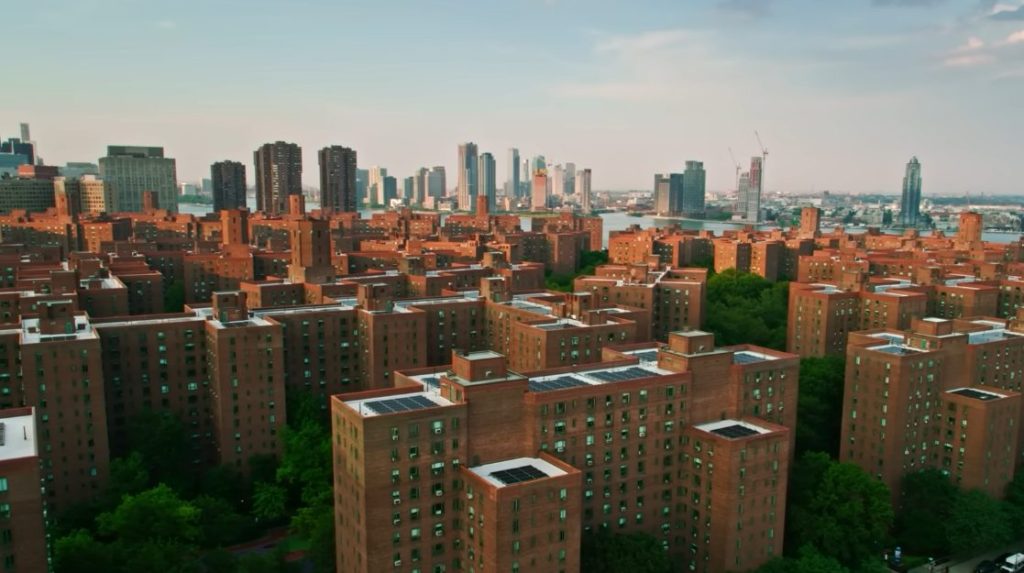
Although Blackstone eventually sold Invitation Homes, the strategy’s logic held up well enough for the company to reenter the residential market in 2021 and acquire Home Partners of America and Tricon Residential in 2024, adding tens of thousands of properties and regaining its position as one of the biggest residential landlords in the nation. Compared to 2008, the situation in 2021 was different: there was a shortage of supply rather than a foreclosure crisis, interest rates were still low, and construction could not keep up with population growth. The dynamic of prices was different. From the firm’s point of view, it didn’t seem to be the fundamental opportunity.
All sides vigorously debate what happened to rents in markets where institutional buying was most concentrated, but the figures are difficult to completely ignore. Rents for a two-bedroom detached home increased by roughly 44% in Tampa, 43% in Phoenix, and 35% close to Atlanta between January 2020 and January 2023, while the national average increased by about 24% during the same time frame. Industry supporters correctly note that in early 2022, institutional investors held only 5% of the 14 million single-family rentals nationwide, and they contend that this market share is insufficient to influence regional prices. MetLife Investment Management’s 2022 projection that institutions could control 40% of all single-family rentals by 2030 is a different, more sobering figure that pertains to a future that is just four years away.
The political reaction has been disjointed and mainly ineffectual. The Stop Wall Street Landlords Act was introduced by Congressman Ro Khanna. Tax penalties on hedge fund purchases have been advocated by Senators Van Hollen and Merkley. In January 2026, President Trump signed an executive order that prohibited private equity firms from purchasing homes in an effort to lower housing costs. However, the order’s actual scope and implementation details were still up for debate. The legal frameworks governing property acquisition are well-established, the firms involved have legal teams and lobbying operations that are skilled at navigating regulatory challenges, and the size of existing ownership is already significant. These factors all contribute to the legislative efforts’ shared problem.
Blackstone has a measured and well-crafted public persona. The company’s global co-head of real estate, Kathleen McCarthy, told CNBC that it owns less than 1% of all available housing in each market where it operates. Although it somewhat obscures the dynamics in particular neighborhoods and price points where the concentration is significantly higher, that is technically correct at the market level. The company also makes the reasonable claim that it renovates properties and that, given the state of the market, purchasing is frequently less expensive than building, a claim supported by data from the National Association of Home Builders. Renovation increases supply quality, if not quantity, and that’s not insignificant in a market that lacks both.
Before the 2030 projections come to pass, it’s still unclear if there is the political will to significantly change the course of institutional residential ownership. There’s a feeling that the window for a clean policy intervention may have already partially closed as different legislative proposals pass without bringing about long-lasting change. Approximately 9% of residential land in the US is currently owned by corporations. The acquisition pipeline is still open. Long investment horizons, patient capital, and the capacity to wait out policy cycles—which move far more slowly than real estate markets—are characteristics of the companies making these purchases.
It’s difficult to ignore the fact that those most impacted by this dynamic—families attempting to purchase their first Sunbelt suburban home, witnessing list prices remain high and available inventory vanishing into rental portfolios—also have the least influence over how this is resolved. They are not present at the table where acquisition strategies are decided. When businesses choose which zip codes to target next, they are not consulted. They are merely renting.



 Bitcoin
  Ethereum
  Tether
  BNB
BNB  USDC
USDC  XRP
XRP  Solana
  TRON
TRON  Lido Staked Ether
  Cardano
  Gram (prev. Toncoin)
  Avalanche