Bitcoin
  Ethereum
  Tether
  BNB
BNB  USDC
USDC  XRP
XRP  Solana
  TRON
TRON  Lido Staked Ether
  Cardano
  Gram (prev. Toncoin)
  Avalanche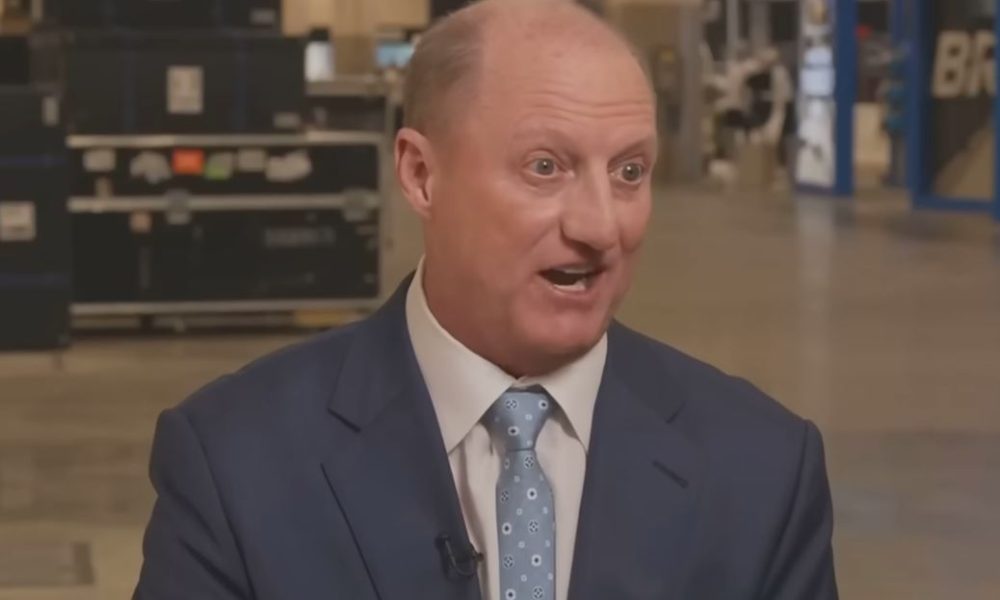
The moment Warren Buffett looked into a CNBC camera and acknowledged, almost casually, that he had made a mistake has a subtle significance. Not the kind of admission that causes market turbulence. Just a straightforward admission that he and Charlie Munger made a mistake by letting go of Google when it was still a scrappy, almost startlingly successful advertising machine.
Alongside that admission, it was revealed that Berkshire Hathaway currently owns about $31 billion in Alphabet, the parent company of Google. Additionally, Buffett clarified a crucial point, despite the fact that a large portion of the initial reporting believed this to be Greg Abel’s first major move as CEO. He was the one who started the position. After approving it, Abel, who became CEO on January 1, 2026, continued to make purchases.
That distinction is important, but maybe not in the way that people first thought. If anything, it shows something more intriguing than a smooth transition between generations. It implies that Abel and Buffett are working together more closely than most Berkshire observers anticipated. “I don’t do anything Greg doesn’t approve of, and he doesn’t do anything I don’t approve of,” Buffett stated. That kind of sentence carries a lot of weight for a company that relied almost solely on one man’s judgment for decades.
Abel approved a $10 billion private placement in June, which was a portion of Alphabet’s $80 billion equity raise designated for AI infrastructure, after purchasing 36.4 million Alphabet shares in the first quarter of 2026. When continuous accumulation is taken into consideration, Berkshire’s total Alphabet stake has now increased to approximately $41 billion, surpassing even the iconic Coca-Cola position to become the fourth-largest holding in the portfolio. With a valuation of about $76 billion, Apple remains at the top, but the Alphabet move is the topic of discussion. Now, Apple and Alphabet together make up almost 30% of Berkshire’s $348 billion stock portfolio.
It’s difficult to ignore how drastically different this Berkshire looks from the one based on consumer staples, insurance float, and railroads. Abel has reduced Berkshire’s public equity holdings to 29 companies and closed 16 positions, narrowing the portfolio overall. It’s obvious where to go. In contrast to Buffett in the past, he seems genuinely at ease managing sizable, technically challenging companies, and Alphabet, in his opinion, satisfies the traditional requirements sufficiently to support the concentration.
The confidence is explained by the numbers in the alphabet. Revenue for the first quarter of 2026 was approximately $110 billion, up 22% from the previous year. Google Cloud reported a backlog of more than $460 billion, while revenue increased by 63%. Compared to rivals who still primarily rely on Nvidia’s GPUs, the company has a significant cost advantage thanks to its unique chip architecture. These numbers are not conjectural. They show a company that generates significant, consistent cash flows from search, advertising, YouTube, and the cloud. This is the kind of long-term earnings profile that Berkshire has always sought, but it’s dressed up as a technology company.
It is worthwhile to focus on the deal’s private placement component. In contrast to competitors who relied on debt to finance the construction of data centers, Alphabet opted to raise equity. Buffett seemed to support that intuition. The appetite for hyperscaler debt in the bond market has reportedly decreased, with coverage ratios falling from approximately 5x in February to less than 2x by July. Short-term dilution results from issuing equity, but it avoids the debt service risk that could become significant if AI returns take longer than anticipated to materialize. Although it’s still unclear if the expansion of AI infrastructure will yield returns at the anticipated scale, Alphabet’s balance sheet is in better shape than most when that uncertainty arises.
Alphabet now seems to be seen by Berkshire as a long-term core holding that it has no intention of selling. The Greg Abel Google investment story appears to be more than a single trade based on this framing and Abel’s ongoing purchases after assuming the top position. It concerns Berkshire’s goals for the next ten years. The solution increasingly appears to be one that is prepared to maintain dominant technology platforms alongside the insurers and railroads that created the initial portfolio.
The real question is whether Abel will ever be able to make decisions of this magnitude all by himself, without Buffett still serving as chairman. The Alphabet position purposefully spans two eras. It serves as a helpful reminder that these kinds of changes seldom occur all at once. However, the trend is starting to become apparent, and the wager on Google is currently a reliable starting point.