Microsoft offers voluntary buyouts to 60,000 staff
Microsoft voluntary buyouts hit roughly a quarter of staff as record profits get redirected into AI capex, not cost distress.
In this article 3 sections
Microsoft (NASDAQ: MSFT) has put a voluntary exit offer in front of roughly 60,000 employees, close to a quarter of its global headcount, according to CNBC and corroborated by reporting that puts the eligible share at around 27% of the workforce, as AFP reported via France24. It is the software giant’s second voluntary departure programme this year, and by some distance its largest.
The company’s Chief People Officer, Amy Coleman, told staff the move “reflects an important part of how we’re evolving our approach to change,” according to CTV News. That is corporate-speak for a deliberate reshuffle rather than an emergency measure, and the detail of who qualifies backs that reading up.
Who’s eligible, and who isn’t
The offer is open to employees at level 70 and below in the US, Canada, UK and India, with no minimum age or tenure requirement, per GeekWire. Divisions including Xbox, Windows, Copilot and Finance are participating, while data-centre operations and the sales and marketing organisation have been carved out entirely, according to TechCrunch. That exclusion is the tell: the roles Microsoft most needs right now are the ones running and selling its AI infrastructure. Everything else is up for voluntary trimming.
This isn’t Microsoft’s first pass at the headcount this year. In April the company offered buyouts to around 9,000 of its US staff, roughly 7% of that population, and in July it cut about 4,800 jobs, close to 2.1% of its global workforce, concentrated in the Xbox business, per the same Reuters reporting carried by US News. Taken together, 2026 has been the busiest year for Microsoft workforce actions in its recent history, and this latest round dwarfs the earlier two combined.
Record profits, not retrenchment
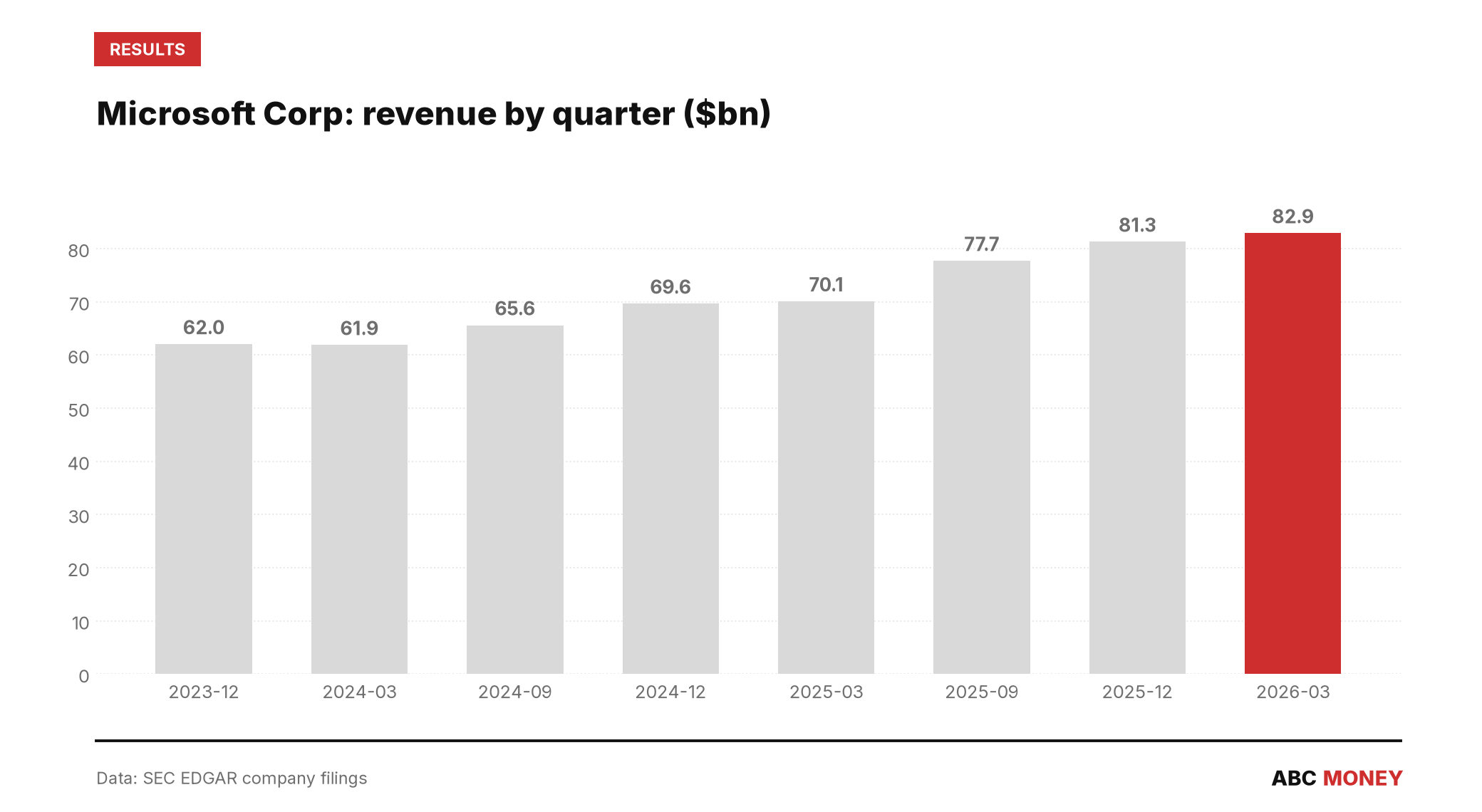
The framing matters because the numbers don’t support a distress narrative. Microsoft’s quarterly net income has climbed from $21.87bn in the quarter ended December 2023 to $38.458bn in the quarter ended December 2025, according to its own filings with the SEC. Revenue over the same stretch rose from $62.02bn to $82.886bn in the most recent reported quarter. Diluted earnings per share hit $5.16 in that December 2025 quarter, roughly double the $2.93 reported two years earlier.
So this isn’t a company cutting because it has to. It’s a company reallocating because it wants to pour more of a very large profit pool into AI infrastructure, and that means moving people out of legacy functions faster than it’s willing to keep paying for them. “Cost containment” in Microsoft’s own language is really capital reallocation: the voluntary exit offer frees up payroll budget that can instead chase the data-centre and compute build-out that increasingly defines its spending priorities.
How the market read it
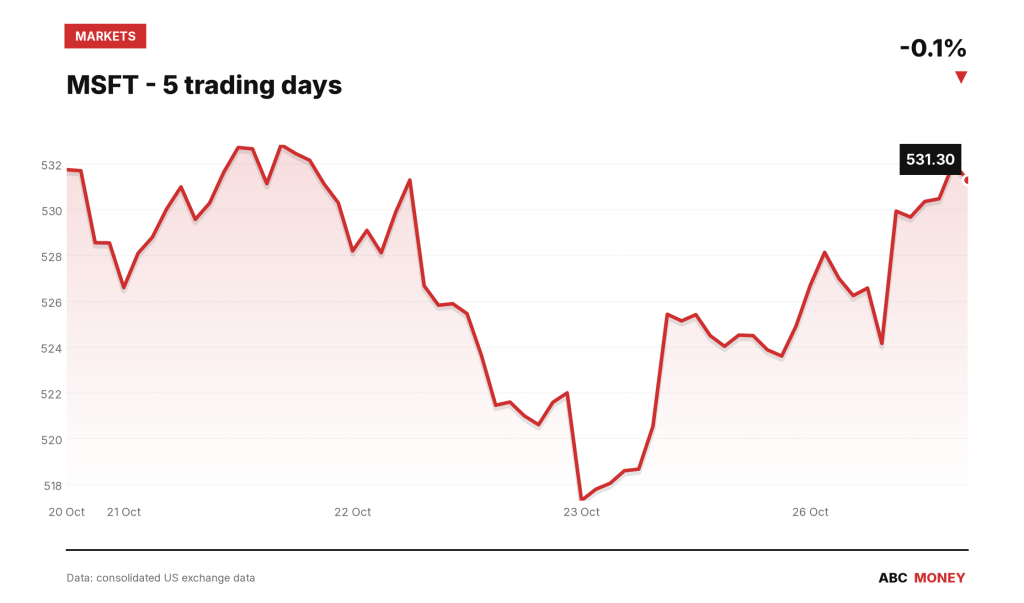
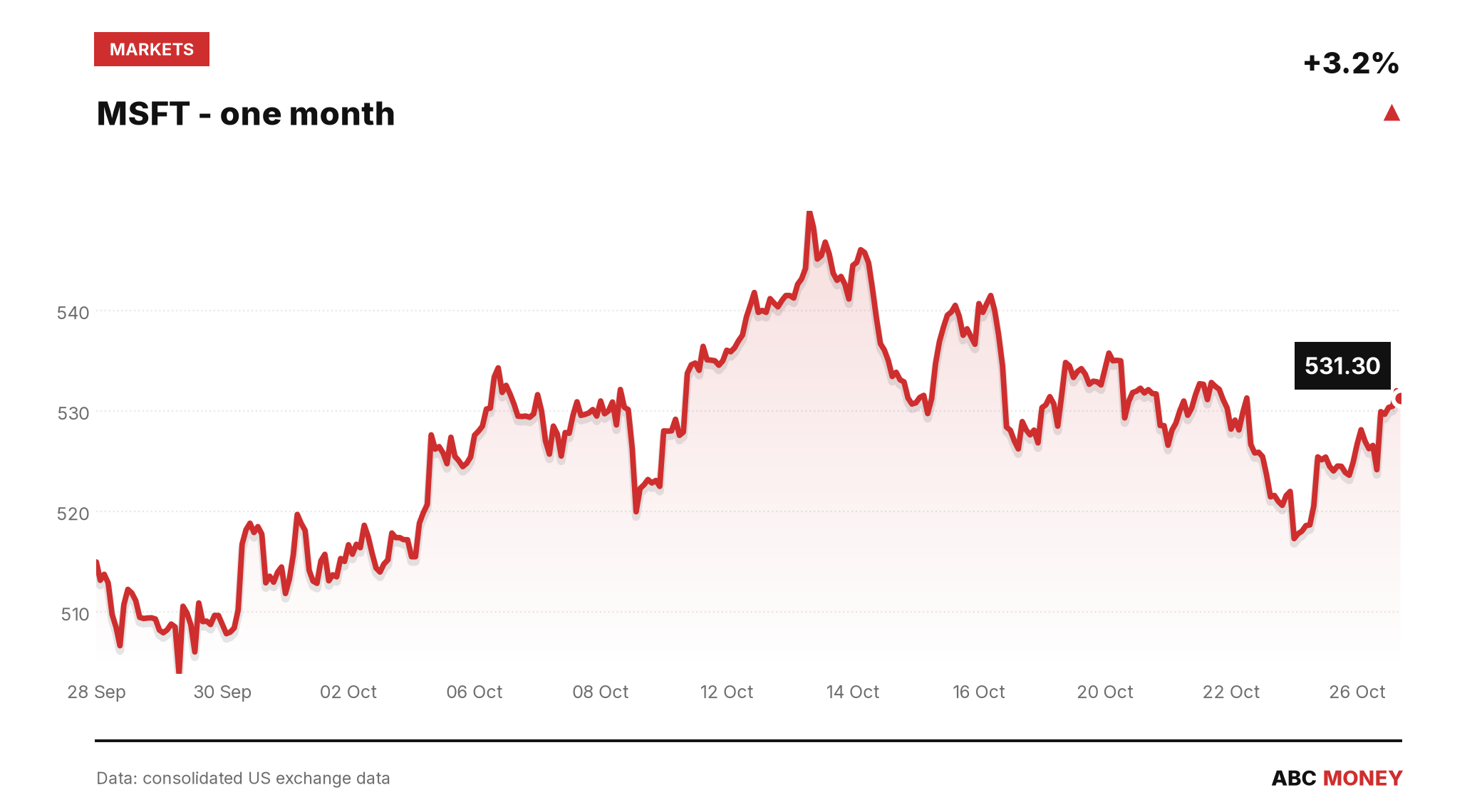
Investors treated the news as housekeeping rather than a shock. MSFT shares were trading at $531.62 at the time of the announcement, up 0.96% on the day and 1.25% over the preceding 20 trading days, comfortably within a 20-day range of $517.30 to $549.90. Volume ran at only 1.1 times the 20-day average – not the kind of spike that accompanies a surprise.
Positioning data tell a similar story. FINRA’s daily short-sale figures show the proportion of MSFT trading volume attributable to short sales sat in a narrow 0.37-to-0.51 band through the two weeks before the announcement, with no build-up of bearish bets ahead of the news. Traders, in other words, weren’t positioning for a negative surprise, and the share price reaction suggests they were right not to.
The bigger context is a softer rate backdrop that makes big, debt-funded capital programmes easier to justify: the 10-year US Treasury yield eased to 4.96% from 5.13% in the prior period, according to Federal Reserve data. Against that, the calculus for a company sitting on record profit is straightforward – redirect spending towards the infrastructure that’s driving growth, and trim everywhere else, even if that means asking a quarter of your workforce whether they’d like to leave.
What happens to the roughly 60,000 affected employees, and how many take the offer rather than wait to see if the alternative is a less generous involuntary round, will shape how this is remembered: as a tidy transition, or the first instalment of something harder.
This article is for information only and is not investment advice or a recommendation to buy or sell any asset. Markets move quickly; figures are correct as sourced at the time of writing. Always do your own research before making financial decisions.