General Motors Confirms Nasdaq Listing Transfer From NYSE
GM's Nasdaq listing transfer ends a 115-year NYSE run. Dates, the Nasdaq-100 angle and what shareholders need to do - or not.
In this article 3 sections
General Motors (NYSE: GM) is leaving the New York Stock Exchange after more than a century, confirming a Nasdaq listing transfer that will see its shares switch exchanges next month while keeping the same three-letter ticker, GM.
The board authorised the voluntary withdrawal from the NYSE and the move to the Nasdaq Global Select Market on 26 October 2026, a day before the announcement, according to the company’s filing with the Securities and Exchange Commission. GM shares are due to trade on the NYSE through the close of business on 16 November, before opening on Nasdaq the following trading day, 17 November, with no gap in dealing and no action required from existing shareholders. As the company’s own release puts it, the stock is “expected to continue to be listed under the NYSE ticker symbol ‘GM’ through market close on November 16, 2026” before the switch takes effect.
A 115-year relationship ends
GM’s NYSE listing dates back to 1911, and the company returned to the Big Board in 2010 after emerging from its government-backed bankruptcy – making this a far more symbolic break than a routine administrative shuffle, as CNBC noted in its coverage of the move. GM joins a run of large-cap names, including Walmart, DoorDash and Palantir, that have made the same switch in recent years, part of a broader drift of blue-chip and tech-adjacent companies towards Nasdaq.
The practical payoff for investors is eligibility: moving to Nasdaq opens the door to potential inclusion in the Nasdaq-100 index, a benchmark GM could not join while listed on the NYSE. Index inclusion itself isn’t guaranteed or scheduled by this filing, but it is the tangible mechanism analysts have flagged as the real-world consequence of the switch, alongside GM’s own positioning of the move as part of its push to be seen as a technology and autonomous-driving company rather than a legacy Detroit manufacturer.
Separately, GM’s board also approved bylaw amendments covering independent-director criteria, timed to take effect once the Nasdaq listing begins – a housekeeping change that typically accompanies an exchange switch but is worth flagging for anyone tracking governance documents filed alongside the 8-K.
Shares pop, and the numbers behind the move
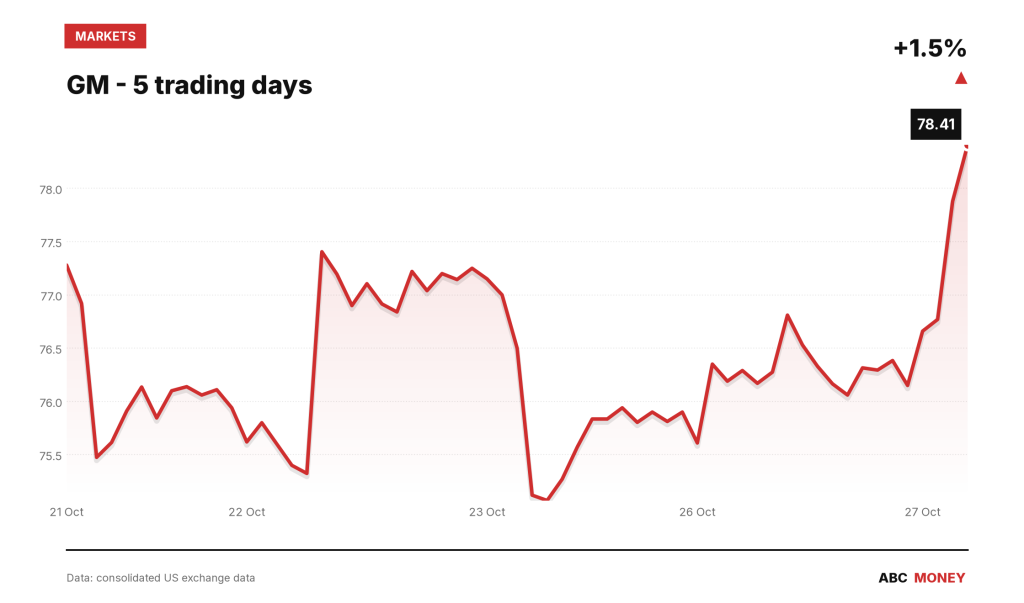
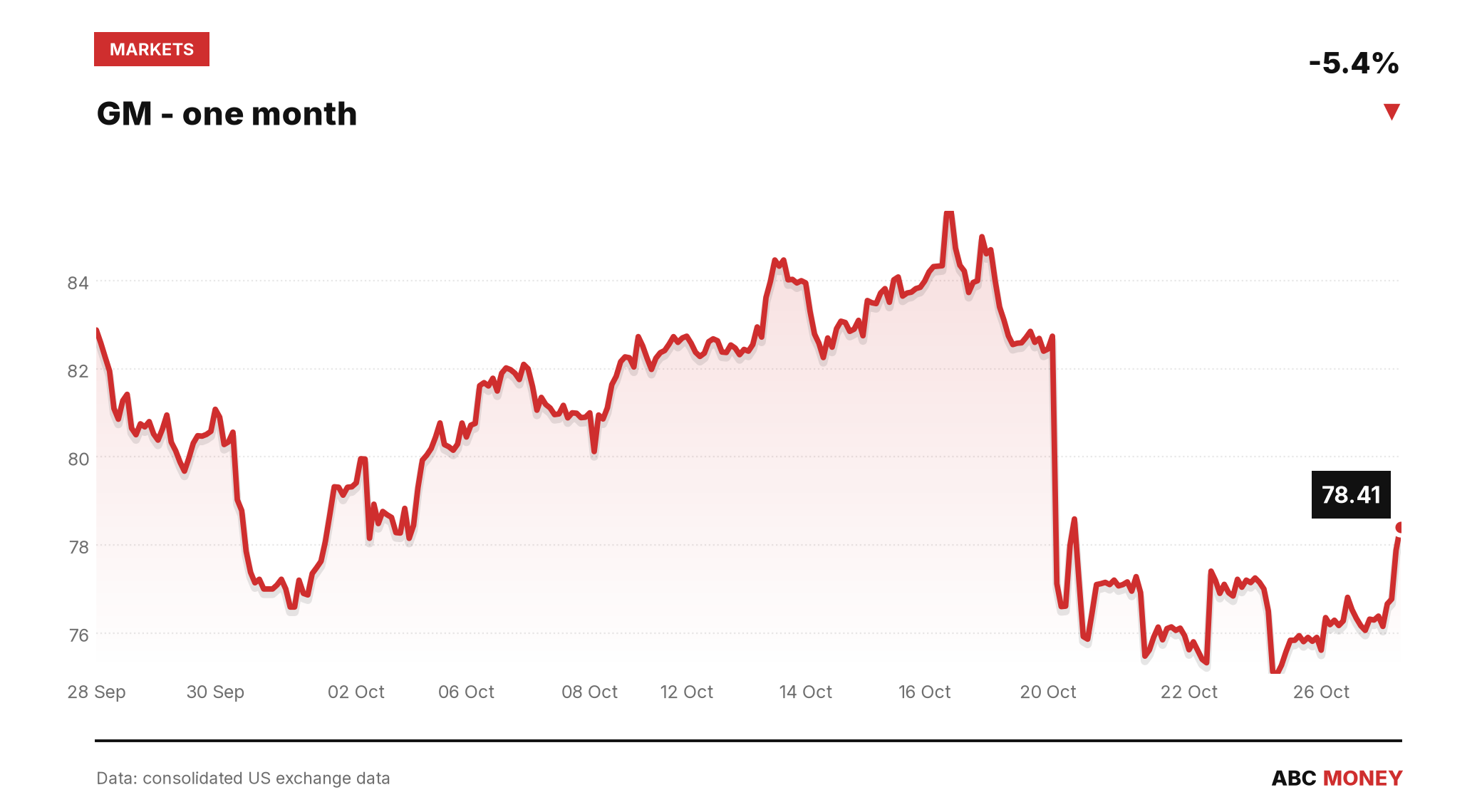
GM stock was changing hands at $78.21 as of 11:00 UTC on 27 October, up 2.48% on the day, a move Reuters linked to the listing news landing alongside a market capitalisation then estimated at around $64.4bn. That sits within a 20-day trading range of $75.07 to $85.58, and the stock remains down 3.16% over that same 20-day stretch – context that suggests the announcement is a catalyst on top of an already choppy month, not a rescue mission.
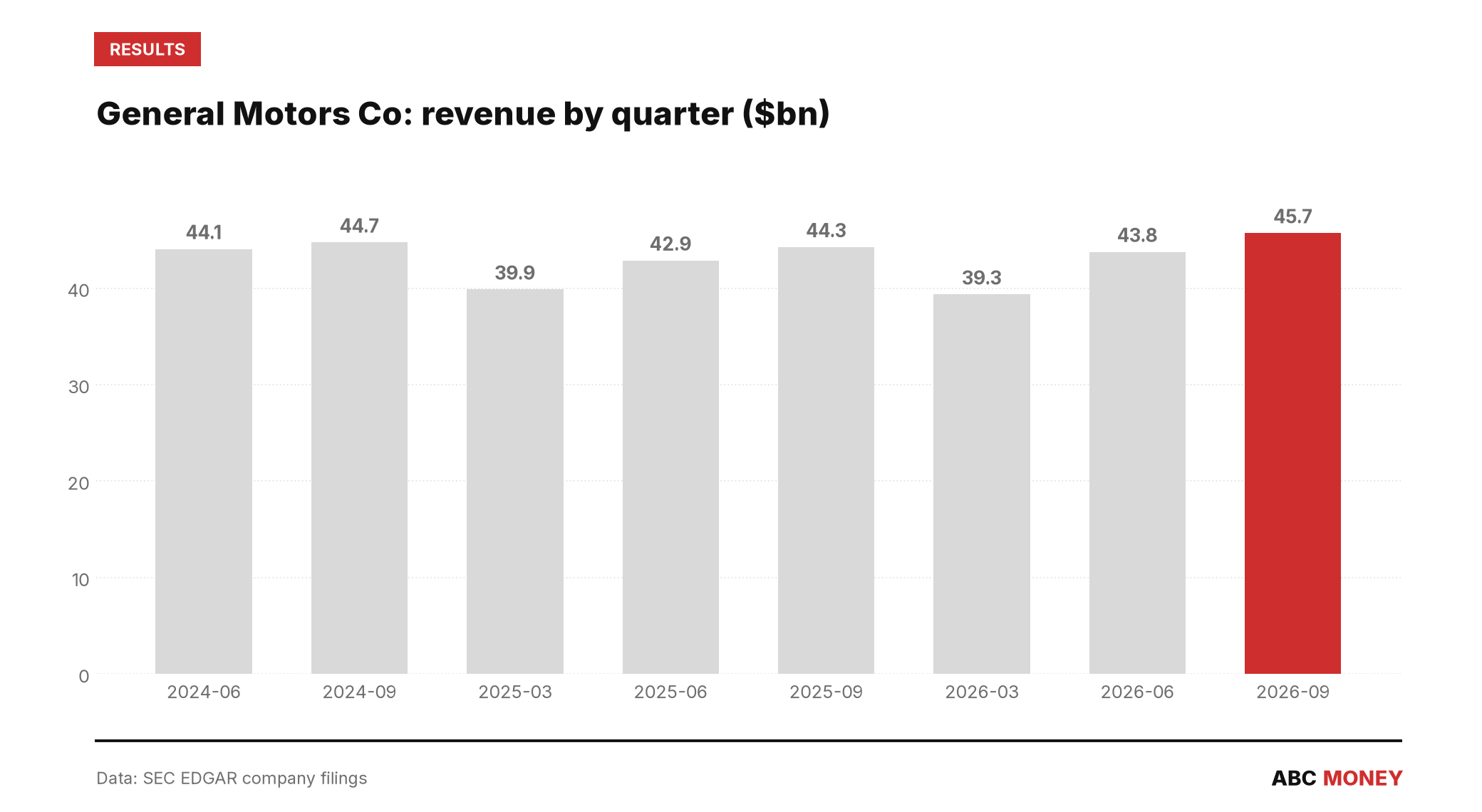
The timing is notable: GM filed its third-quarter results just a week before the listing news, reporting net income of $3,335,000,000 and diluted earnings per share of $3.73 on revenue of $45,706,000,000 for the three months to 30 September 2026, according to its 10-Q filing. That quarter marks the strongest revenue print in GM’s past nine reported quarters and a sharp recovery in per-share earnings after a rougher patch in 2025, when quarterly EPS dipped as low as $1.35. A listing switch timed to follow a strong earnings beat reads less like financial engineering and more like a company choosing a moment of strength to make its pitch to a different index and a different investor base.
Positioning ahead of the switch
Daily short-selling activity – the share of a stock’s trading volume accounted for by bets that the price will fall – offers a read on sentiment heading into the change. FINRA data show that share climbed as high as 60% of GM’s daily volume in the week of 19-20 October, before easing to 38.6% on 23 October and 42.2% by 26 October, the day before the Nasdaq announcement. That pattern points to short positioning cooling off rather than building into the news, though it is a single data point and not a verdict on where the stock goes from here.
What happens next is mechanical rather than discretionary: GM’s final NYSE trading session closes on 16 November, Nasdaq trading opens under the same ticker on 17 November, and shareholders need do nothing to retain their holdings through the switch. The bigger question markets will watch in the following weeks is whether Nasdaq-100 inclusion actually follows, and whether GM’s quarterly numbers keep building the case that this is a technology company’s listing, not just an automaker’s.
This article is for information only and is not investment advice or a recommendation to buy or sell any asset. Markets move quickly; figures are correct as sourced at the time of writing. Always do your own research before making financial decisions.