Why There’s No Kenvue Earnings Report Coming on Nov. 5
A Kenvue earnings report for 5 November isn't coming - Kimberly-Clark closed its $48.7bn takeover days earlier and delisted the stock.
In this article 3 sections
There will be no Kenvue earnings report on 5 November, and investors positioning for one are a few days too late. Kimberly-Clark completed its acquisition of Kenvue on 2 November 2026, Kenvue’s shares stopped trading on the New York Stock Exchange the same day, and S&P Dow Jones Indices removed Kenvue from the S&P 500 before the market opened on 4 November, replacing it with Okta. There is no standalone, earnings-reporting Kenvue left to watch.
That matters because the premise circulating – treat Kenvue (formerly NYSE: KVUE) as an investable stock heading into a quarterly print – doesn’t survive contact with the corporate record. The deal is real and well documented. The framing of what to do about it next is not.
How the Kenvue earnings report question got settled
Kimberly-Clark and Kenvue signed their Agreement and Plan of Merger on 2 November 2025, a year to the day before completion. Under the terms disclosed by Kenvue’s investor relations team, each Kenvue share converted into 0.14625 Kimberly-Clark shares plus $3.50 in cash, valuing the Tylenol and Listerine maker at an enterprise value of roughly $48.7bn. Shareholders of both companies approved the transaction at special meetings on 29 January 2026, according to a filing cited in Kimberly-Clark’s own 8-K. The closing itself, confirmed by Reuters’ wire report via Investing.com, made Kenvue a wholly owned subsidiary – since renamed Kenvue LLC – and triggered delisting via a Form 25 filing with the SEC.
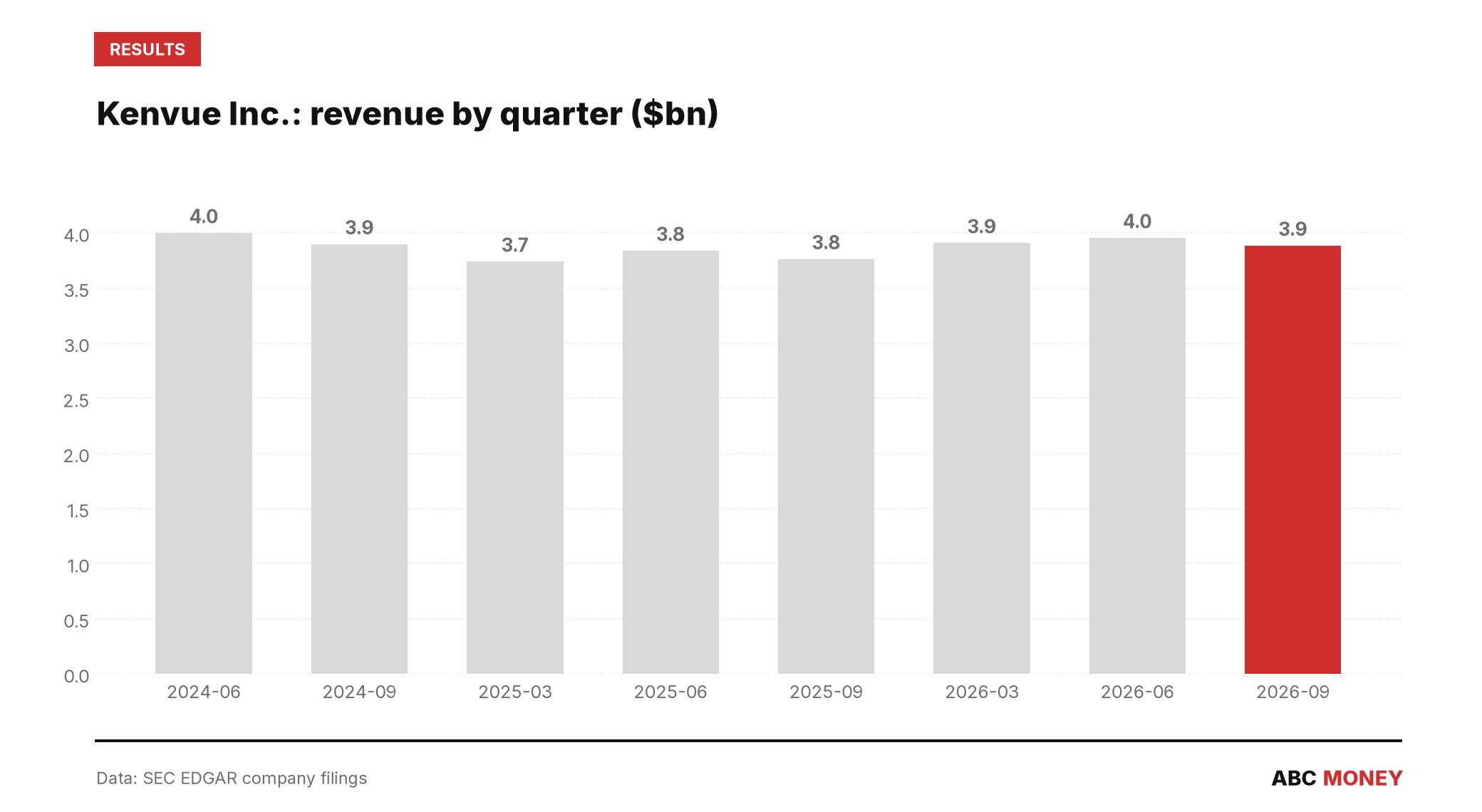
Kenvue’s last independent quarterly results, filed as a 10-Q on 30 October 2026, showed revenue of $3.886bn, net income of $430m and diluted earnings per share of $0.22 for the quarter ended 27 September. That followed a run of quarters in the $3.7bn-$4bn revenue band stretching back to mid-2024, with EPS bouncing between $0.17 and $0.25 – a steady, unspectacular profile typical of a consumer-health business, and now the final chapter in Kenvue’s standalone reporting history rather than a prelude to anything on 5 November.
What the trading tape actually showed
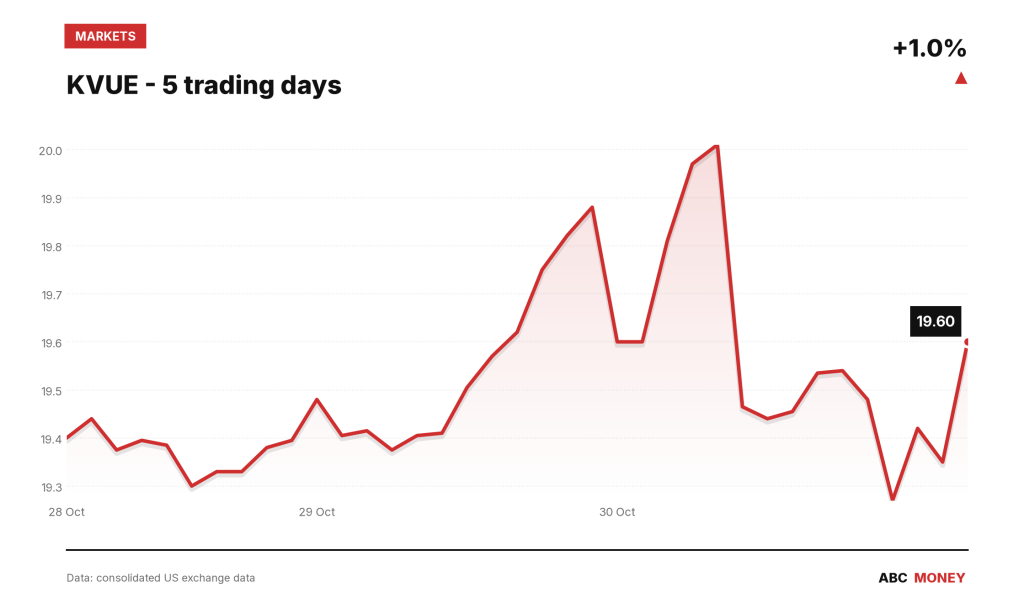
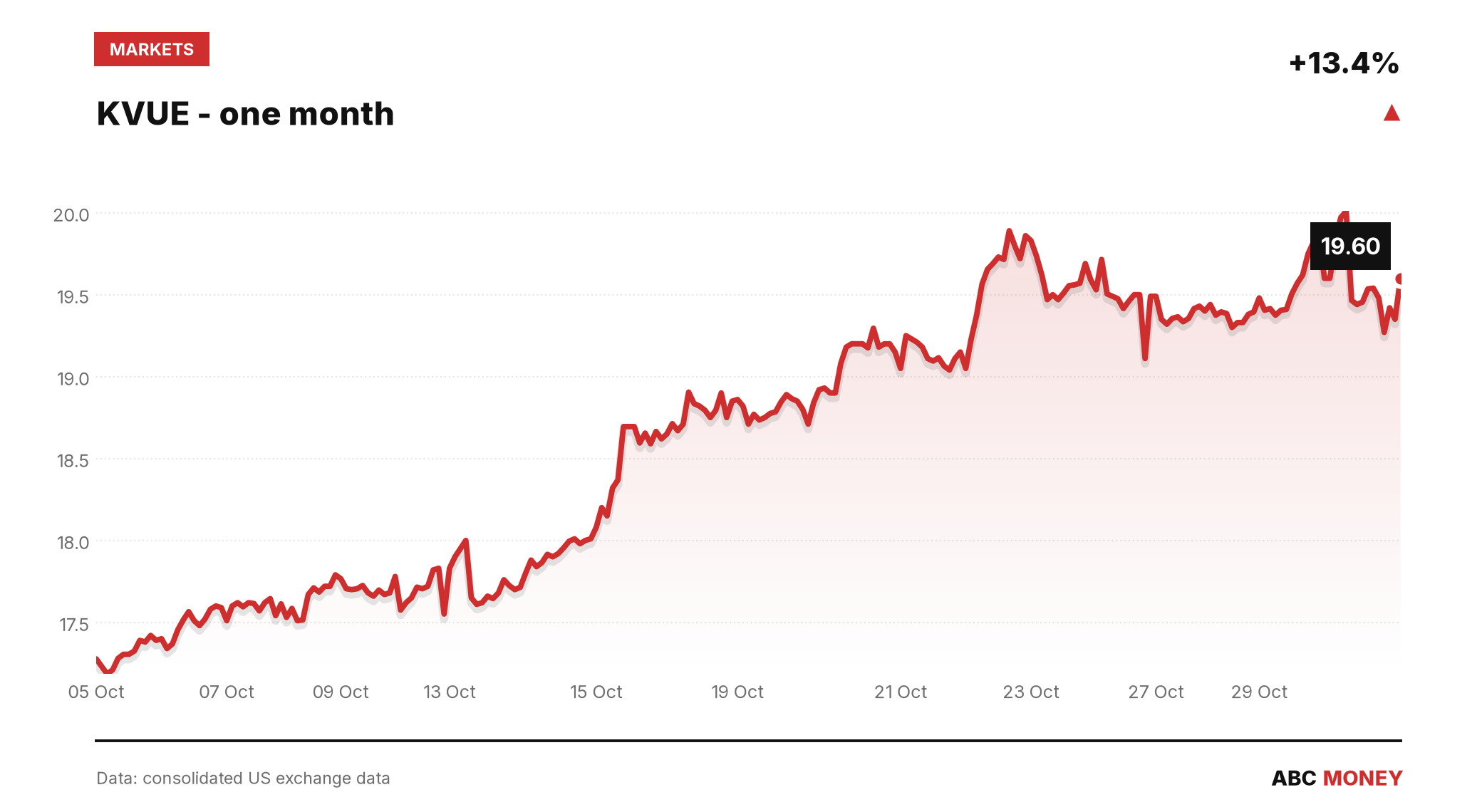
In the 20 trading days before the deal closed, Kenvue shares ranged between $17.61 and $20.01, with trading volume running about 4.1 times the 20-day average as merger arbitrage positions unwound into the close. Short-sale activity tracked by FINRA fell steadily through the final fortnight, with the daily short-volume ratio dropping from 0.474 on 21 October to 0.227 on 30 October – the last session before the stock stopped changing hands – consistent with arbitrageurs closing out bets that the deal would complete on schedule rather than bracing for a surprise.
The story that was actually worth watching
The more useful date for investors isn’t a phantom Kenvue print – it’s Kimberly-Clark’s own first post-merger results, expected around 5 November, which will show how integration is landing on the combined group’s books. Kimberly-Clark has reaffirmed expected run-rate synergies of roughly $2.1bn from the deal, split between about $1.9bn of cost savings within three years and around $500m of incremental revenue-synergy profit within four, net of reinvestment, according to njbiz.com’s reporting on the closing. Whether those targets look credible, and what they imply for Kimberly-Clark’s long-standing dividend, is the real near-term question for anyone who held Kenvue stock and now holds Kimberly-Clark shares and cash instead.
There’s also a liability changing hands alongside the brands. Kenvue’s Tylenol business carries ongoing litigation over pregnancy-related acetaminophen claims; a U.S. appeals court recently declined to reconsider an adverse ruling against the company, a risk CNBC’s Investing Club notes Kimberly-Clark now inherits in full. That’s a materially different risk profile from the one Kenvue shareholders were pricing before the takeover, and it sits inside a financing backdrop where borrowing costs remain elevated – the 10-year Treasury yield stood at 4.94% and the 2-year at 4.56% in the days before the deal closed, according to Federal Reserve data, a relevant constraint on how cheaply a roughly $48.7bn, partly debt-funded acquisition can be carried.
For readers still holding paper that says “Kenvue” on it, the practical next step isn’t checking an earnings calendar – it’s confirming through a broker statement how the cash-and-share conversion into Kimberly-Clark was processed, and watching Kimberly-Clark’s guidance for signs of how cleanly the integration, and the inherited litigation, is being managed.
This article is for information only and is not investment advice or a recommendation to buy or sell any asset. Markets move quickly; figures are correct as sourced at the time of writing. Always do your own research before making financial decisions.