Tesla Confirms Cybertruck Production Wind-Down for 2027
Tesla's Cybertruck production wind-down begins mid-2027 as Musk redirects Austin capacity to the Cybercab robotaxi, with shares barely moving.
In this article 3 sections
Tesla (NASDAQ: TSLA) will begin a Cybertruck production wind-down at its Gigafactory in Austin, Texas, around the middle of 2027, redirecting the plant’s capacity to the Cybercab robotaxi. The announcement came not through a press release or a regulatory filing but from Elon Musk himself, who posted on X that “Tesla will be winding down production of the Cybertruck at Gigafactory Texas around the middle of next year to make room for increased Cybercab production,” as first reported by the Austin American-Statesman.
Austin is the only site that builds the Cybertruck, so the move effectively ends the model’s manufacturing life, according to CNN. Tesla has said it will keep supplying spare parts and servicing for existing owners, and Musk has not said whether some smaller-scale assembly might continue alongside Cybercab lines rather than stopping outright. No 8-K or formal statement has followed the post, leaving the wind-down resting, for now, on a single social-media announcement from the chief executive rather than a filed disclosure.
A quiet death for a loud truck
The numbers behind the decision are not close. Tesla sold 20,237 Cybertrucks in the US in 2025, down from 38,965 the year before – a decline of roughly 48% – according to Kelley Blue Book and Cox Automotive data cited by CBS News. Sales over the first nine months of 2026 ran a further 28% below the same period in 2025. That is a steep fall from the ambitions Musk set out when the truck launched in late 2023, when he floated annual sales of 250,000 to 500,000 units – a target the Cybertruck never came close to reaching.
Pricing moved in the wrong direction as demand weakened rather than the usual discounting playbook: the cheapest available Cybertruck rose to $92,490 from $84,990 in August, per Fortune, after Tesla stopped taking orders for the entry-level dual-motor version and left only the pricier Premium trim on sale. Musk, for his part, seemed unwilling to let the model go without a send-off, calling it the “best vehicle Tesla has ever made” and the wind-down the “end of an era” in a reply on X, per Al Jazeera.
The market’s shrug
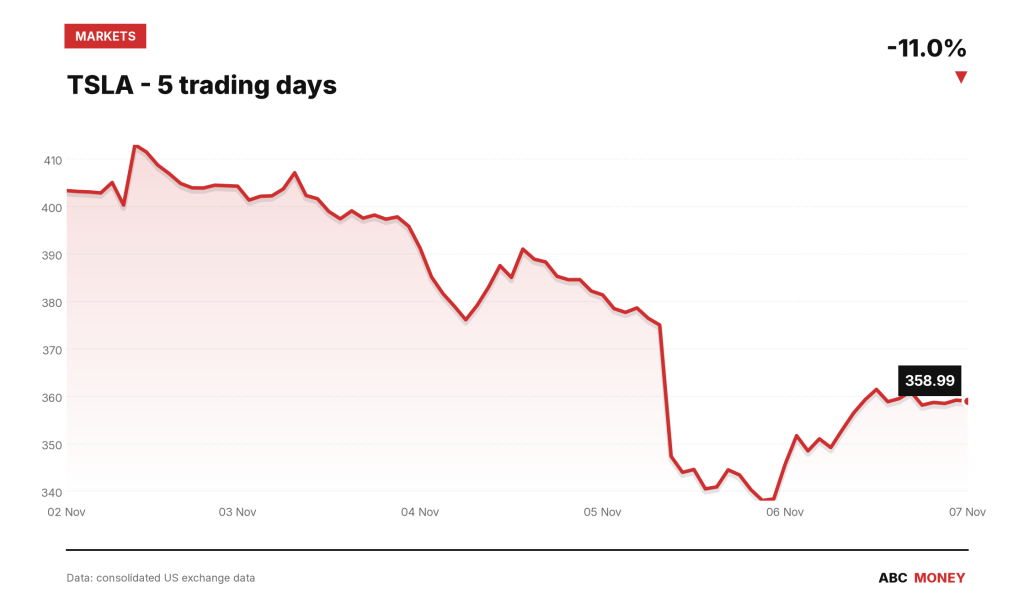
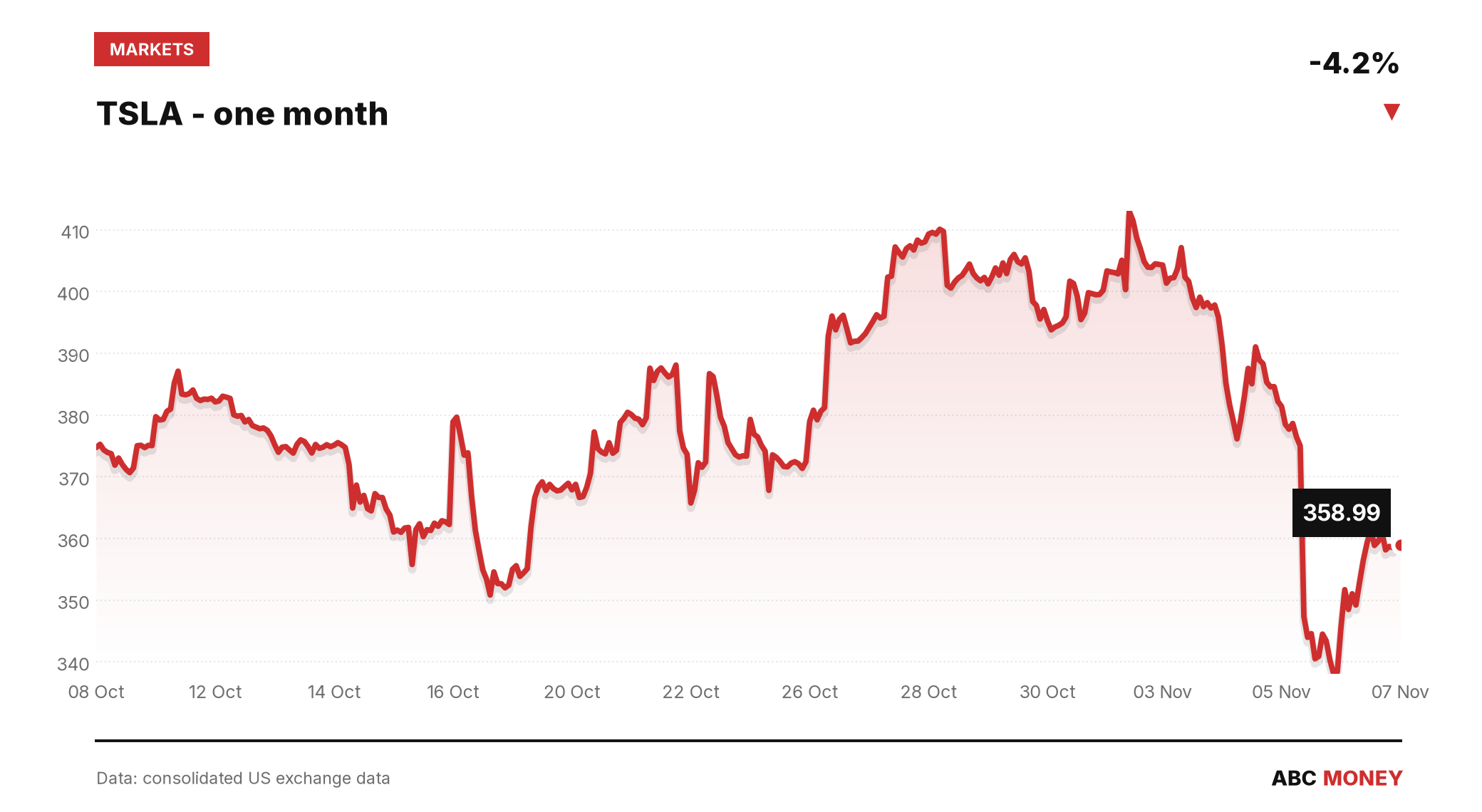
What is more striking than the Cybertruck’s demise is how little the market cared. Tesla shares closed at $359.10 the day after the announcement, up just 0.06% on the session – essentially flat for a decision that kills a flagship product line Musk once promised would move hundreds of thousands of units a year. The stock has traded in a $338.06-to-$413.04 range over the preceding twenty trading days, and the news barely registered a ripple within it.
Positioning data tell a similar story. The FINRA short-sale ratio for Tesla – the share of daily trading volume attributable to short sales, where traders borrow and sell stock betting the price falls – sat between 0.47 and 0.56 through the days surrounding the announcement, showing no spike that would suggest traders were piling in to bet against the stock on the news. In short, this looks less like a shock to the market’s view of Tesla and more like confirmation of a repricing that had already happened.
From pickup to robotaxi
That repricing centres on the Cybercab, the two-seat autonomous robotaxi that began pilot production in February 2026, moved to formal production in April, and started carrying paying passengers in Austin in September. The Cybertruck’s factory floor space is being handed over to scale that programme – a tangible sign of how far Tesla has shifted its own narrative, from volume EV manufacturer toward a company betting its valuation on self-driving software and robotics.
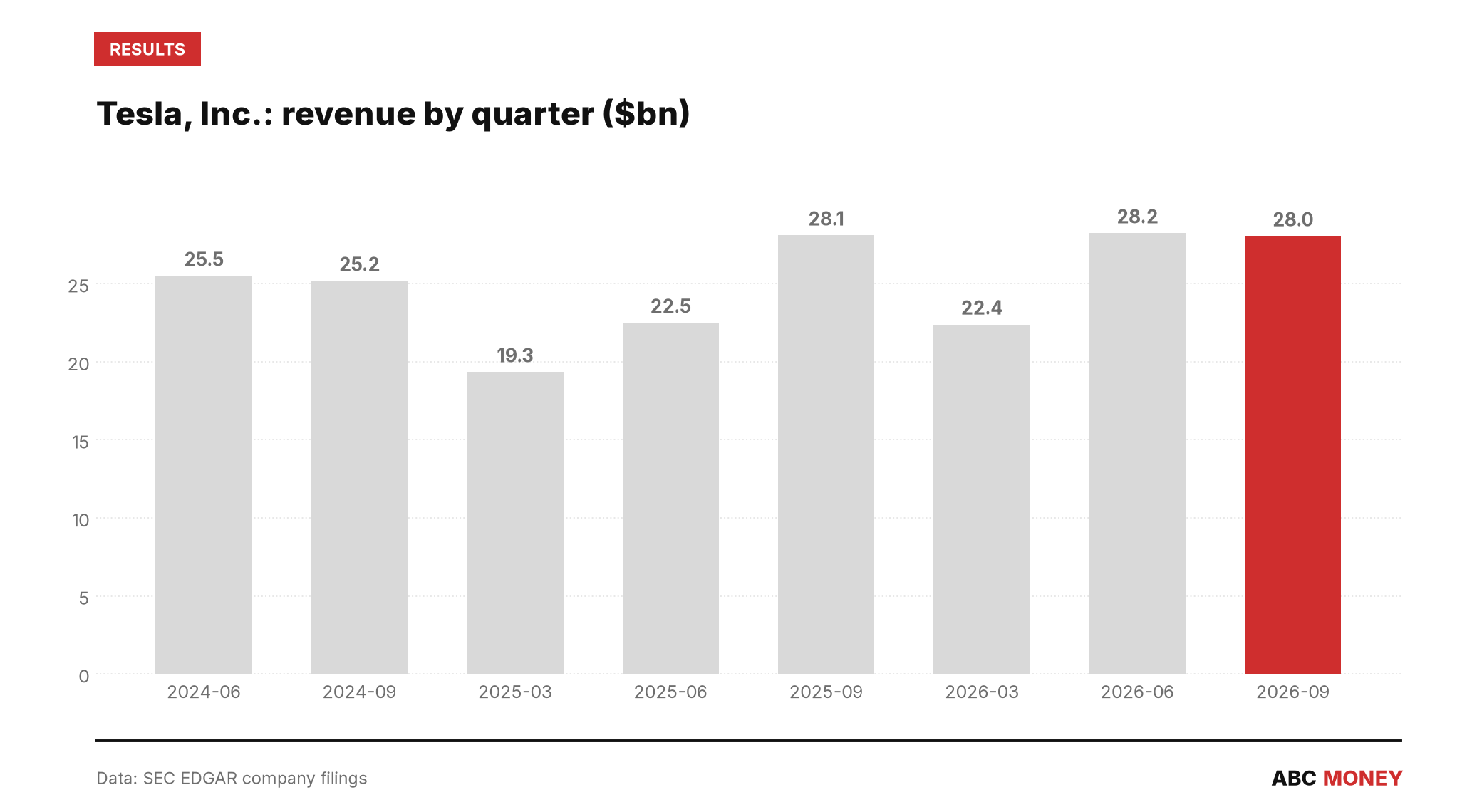
Tesla does not break out Cybertruck revenue or unit economics separately in its accounts, so the financial cost of the wind-down cannot be isolated from the group numbers. What is visible is the broader earnings backdrop against which this decision was made: Tesla reported revenue of $28.046bn and net income of $787m for the third quarter of 2026, continuing a pattern of profit that has bounced around without a clear upward trend over the past two years, even as quarterly revenue has held broadly steady in the $22bn-to-$28bn range.
The near-term test is whether the capacity freed up in Austin translates into a faster Cybercab ramp than the market has already priced in. Musk’s post set a loose timeframe of “around the middle of next year,” without a firm date, and investors watching the shift will be looking for whatever comes next – a formal filing, a production update, or Tesla’s next quarterly results in early 2027 – to see whether the robotaxi bet delivers on the scale the Cybertruck never did.
This article is for information only and is not investment advice or a recommendation to buy or sell any asset. Markets move quickly; figures are correct as sourced at the time of writing. Always do your own research before making financial decisions.