Devon Energy Q3 Earnings: Profit Climbs, Per-Share Gain Diluted
Devon Energy Q3 earnings show net income up sharply, but merger-related share issuance cut diluted EPS even as core profit beat forecasts.
In this article 3 sections
Devon Energy’s (DVN) Q3 earnings landed with net income up sharply to $1.008 billion, yet diluted earnings per share actually fell versus a year earlier – a reminder that growth in the headline profit line and growth in per-share value are not the same thing once a company has issued a lot of new stock.
The Oklahoma City shale producer reported GAAP diluted earnings of $0.88 a share for the quarter to 30 September, alongside core, or adjusted, earnings of $1.42 a share, according to its 8-K filing with the SEC. A year earlier, Devon earned $687 million, or $1.09 a diluted share. So while net income rose by roughly 47%, the per-share GAAP figure dropped by nearly a fifth – the arithmetic consequence of a much larger share count following Devon’s merger, which closed earlier in the year and made the September quarter its first full three months as a combined company.
Devon Energy Q3 earnings: a beat and a miss in the same print
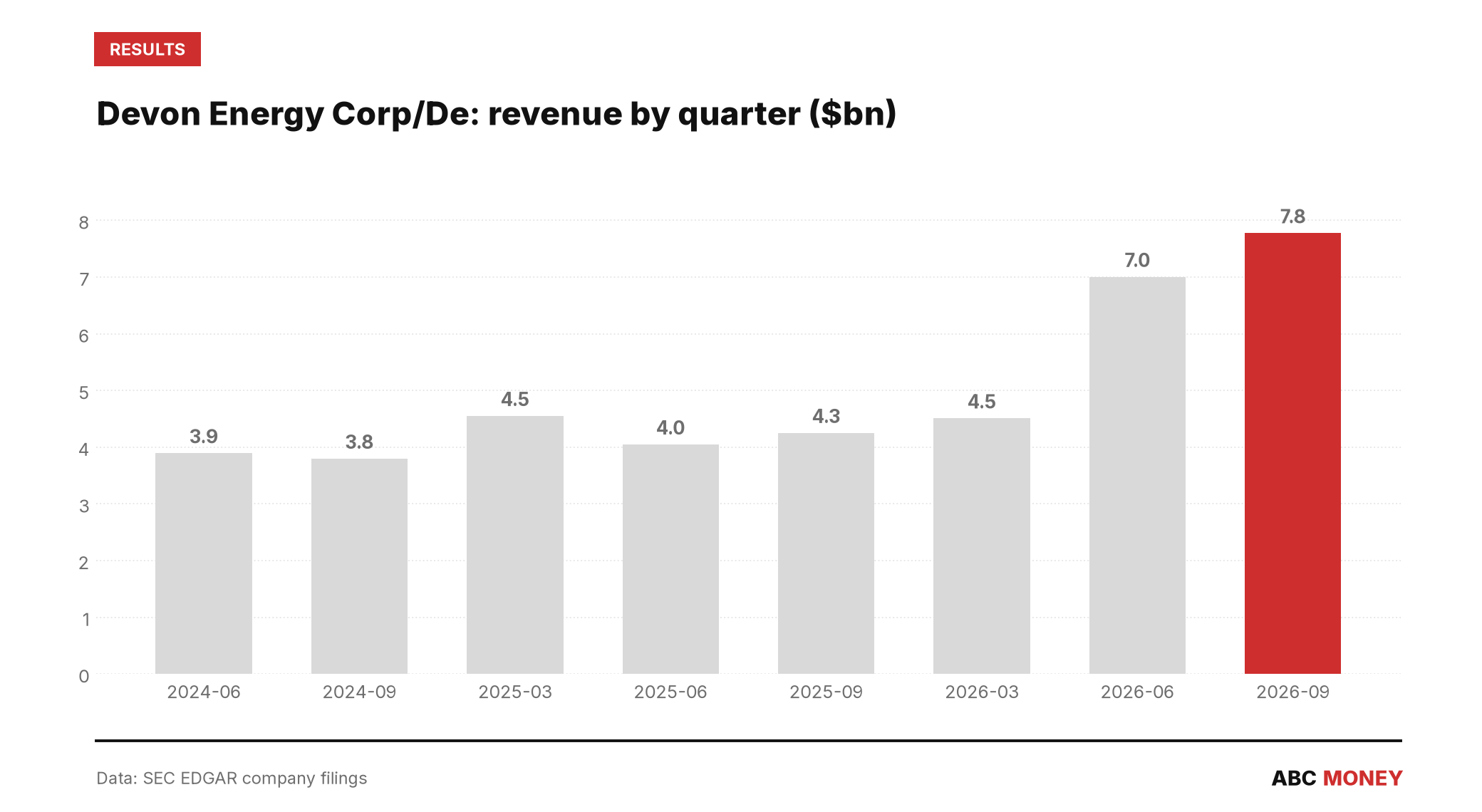
Analysts had pencilled in GAAP earnings of around $1.27 a share, so the $0.88 print was a clear miss on that measure even as the $1.42 core figure beat expectations – the kind of split result that rewards close reading of a release rather than the headline alone. Revenue told a similar story of scale without universal clarity: Devon’s top line rose roughly 58% year-on-year to $6.86 billion, a figure confirmed across independent earnings trackers, though the beat over consensus revenue estimates was a mere $6.65 million – essentially in line, once the merger-driven jump is accounted for.
The merger is the backdrop to nearly everything in this report. Devon filed a run of registration and proxy documents with the SEC during 2026 tied to the combination, and the enlarged share count is now showing up directly in the per-share numbers investors use to judge performance. It is a pattern management will need to keep explaining for several more quarters: absolute profit climbing while per-share metrics catch up only as cost synergies and buybacks work through.
Eagle Ford exit and buybacks do some of the heavy lifting
Devon has been actively reshaping its asset base and capital return programme alongside the integration. The company agreed to sell its Eagle Ford acreage to Crescent Energy for $4.2 billion, a disposal that trims a legacy position in favour of the combined company’s core growth areas, and management has also accelerated its share buyback programme – a direct lever against the dilution, or reduction in per-share value from more shares outstanding, created by the merger. Whether that pace of repurchases proves large enough to meaningfully offset the enlarged float is likely to be the key swing factor in how quickly per-share earnings catch up with the growth in total profit.
Shares still well off their highs
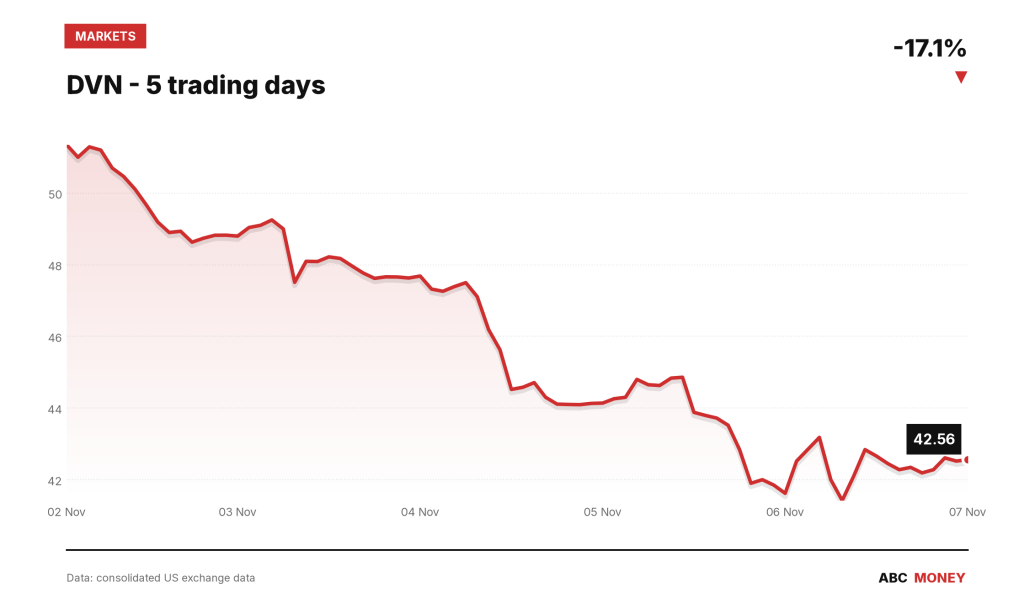
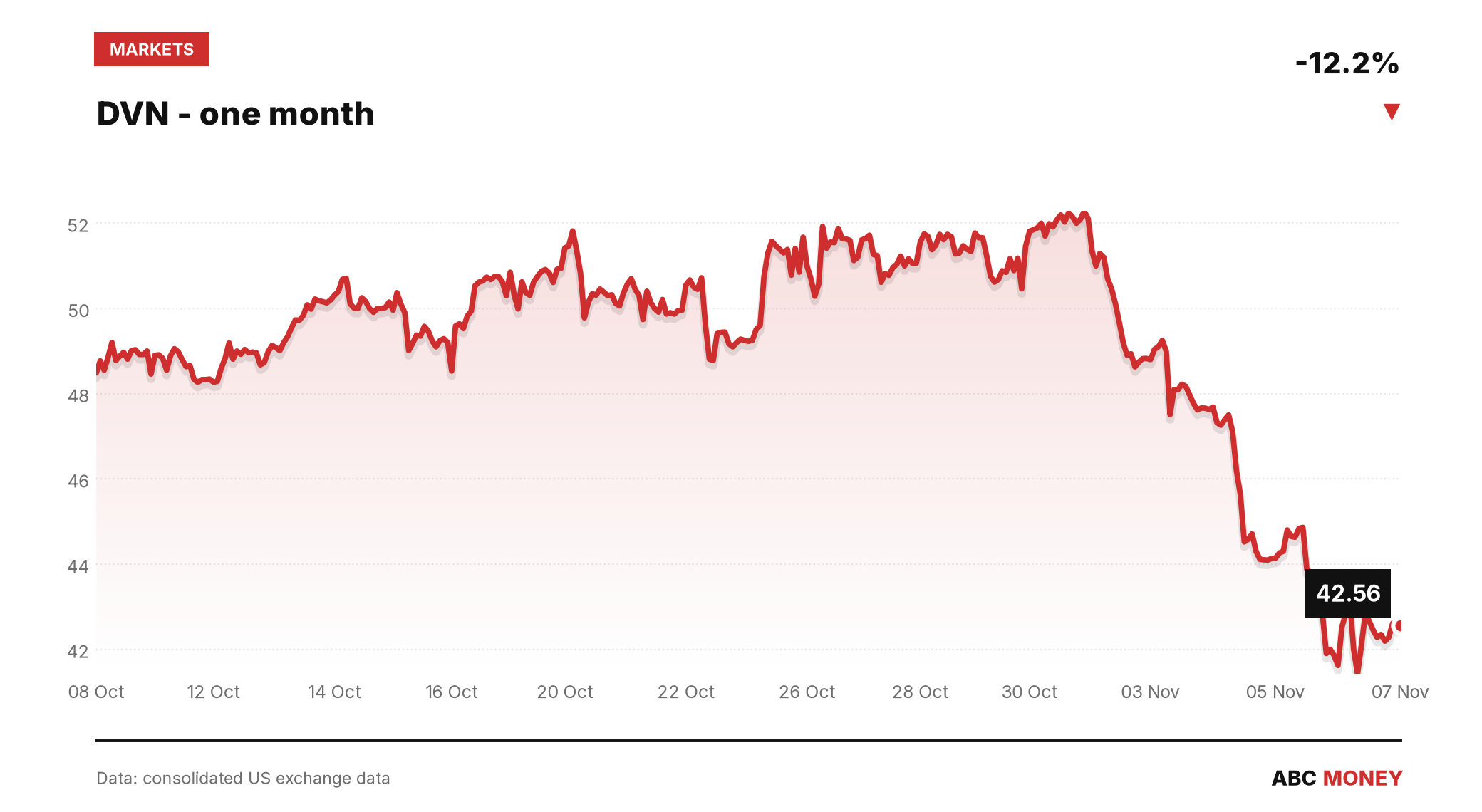
The market’s verdict on the quarter has been muted rather than violent. Devon shares closed at $42.56, essentially flat on the day, but they remain down more than 15% over the preceding 20 trading sessions and well below their 20-day high of $52.285, having traded as low as $41.42 in that window. That range sits inside a wider 52-week band of $32.49 to $52.71, underlining how much ground the stock has given up from its yearly peak even before this print. Trading volume around results ran at roughly double the 20-day average, a sign the market was paying attention even if the price reaction was restrained.
Notably, there was no spike in bearish positioning to accompany the mixed print. FINRA’s daily short-sale data shows Devon’s short-sale ratio – the share of daily trading volume attributable to short sales, where traders borrow and sell stock betting on a price fall – ranging between roughly 0.25 and 0.41 in the fortnight around the results, with no discernible jump tied to the earnings date itself. That suggests the stock’s recent weakness has been a gradual repricing tied to sentiment around the merger integration and commodity prices, rather than a sudden wave of fresh short bets triggered by this specific report.
For now, the company’s own framing – a first full quarter as a combined entity, a major portfolio sale in Eagle Ford, and buybacks running at a faster clip – gives investors a template for judging the next few quarters. The real test will be whether per-share profit growth starts to track total profit growth more closely as the enlarged share count is absorbed, a question Devon’s next quarterly filing should start to answer.
This article is for information only and is not investment advice or a recommendation to buy or sell any asset. Markets move quickly; figures are correct as sourced at the time of writing. Always do your own research before making financial decisions.