FTC Sues to Block Covetrus MWI Merger Worth $3.5bn
The Covetrus MWI merger, a $3.5bn veterinary supply tie-up, faces an FTC lawsuit and a dozen state co-plaintiffs, even as Cencora shares hold firm.
In this article 3 sections
The Covetrus MWI merger is now a court fight rather than a formality. The US Federal Trade Commission filed suit on 13 November to stop Covetrus buying MWI Animal Health, the veterinary distribution unit of Cencora, Inc. (COR), in a deal valued at $3.5bn.
The commission’s complaint, filed in federal court in New York, argues the combination would fuse the two largest suppliers of veterinary products and services, leaving clinics facing higher costs and fewer alternatives, according to Law360’s account of the filing. The FTC’s own commissioners voted 2-0 to authorise staff to pursue a permanent injunction, a procedural step that signals the agency sees the case as clear-cut enough not to need a dissent, per the FTC’s own release.
Twelve states, one merger
What distinguishes this case from a routine federal challenge is the company it kept. A dozen states joined the FTC as co-plaintiffs, a scale of state-federal coordination that is unusual even by the standards of the Biden- and Trump-era antitrust crackdowns of recent years, as first reported by Bloomberg Law. The formal case docket lists co-plaintiffs including Arizona, Arkansas, California, Colorado, Maine, Michigan, Nebraska, New York and North Carolina. California’s attorney-general, Rob Bonta, went further, framing the suit as part of a broader push to keep what his office called corporate consolidation “on a short leash,” according to a statement from his office.
That breadth matters for how the case plays out. A single-agency challenge can sometimes be settled with divestitures or behavioural remedies negotiated quietly between the company and FTC staff. A multi-state coalition raises the number of parties who would need to sign off on any settlement, and gives the litigation a political dimension that outlasts whichever administration happens to be running the FTC at the time.
Covetrus pushes back
Covetrus has signalled it intends to fight rather than fold. The company disputed the FTC’s definition of the relevant market as too narrow, arguing the rise of online price-comparison platforms for veterinary supplies undercuts the idea that the merger would hand the combined firm unchecked pricing power, according to dvm360. The company followed with a formal statement defending the deal’s logic, saying the tie-up would improve the economics of veterinary practices and sharpen distribution efficiency, per its own release carried on PR Newswire.
Whether that argument persuades a federal judge is now the entire question. The FTC’s theory rests on treating MWI as Covetrus’ closest rival in veterinary products distribution rather than one of several interchangeable suppliers; Covetrus’ defence rests on the opposite premise, that the market has widened enough that the two firms are no longer each other’s chief constraint on price.
A rounding error for the parent, not a non-event for the stock
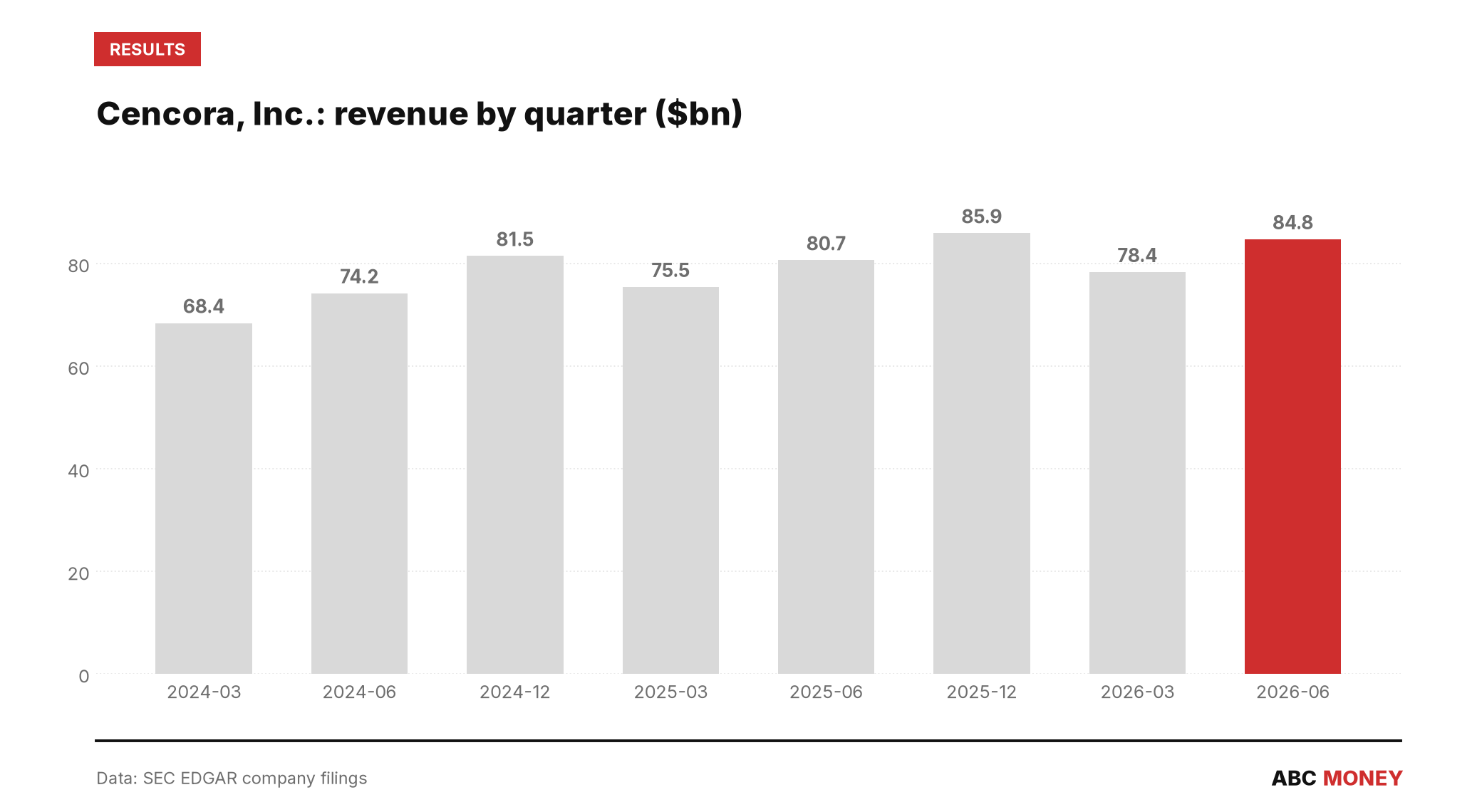
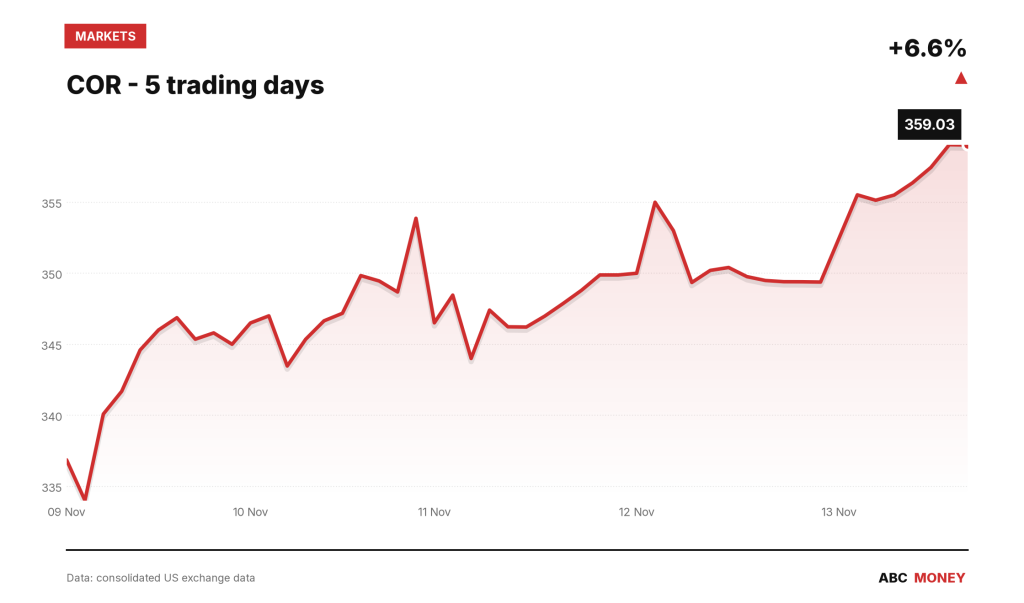
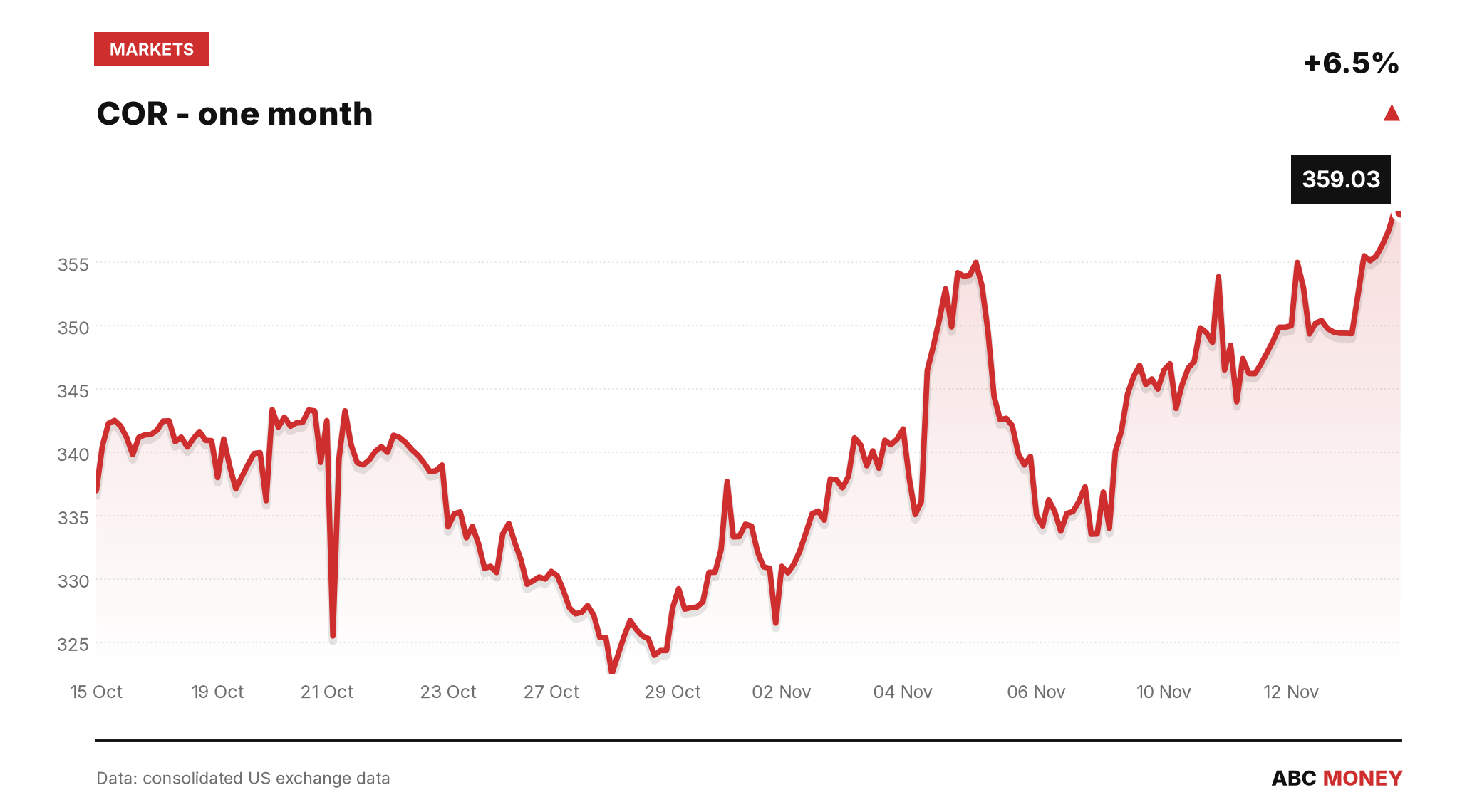
For Cencora, MWI is a small piece of a very large business. The group reported $84,754,837,000 in revenue for the quarter ended 30 June 2026, a reminder that the unit it is trying to sell represents a modest fraction of the parent’s overall scale, even at a $3.5bn price tag, according to the company’s quarterly filing. That scale helps explain why Cencora shares did not sell off on the news. The stock traded at $359.03 as of 13 November, up on the day and roughly 8.6% higher over the prior 20 trading sessions, according to consolidated US exchange data, suggesting the market had been pricing the stock up into the announcement rather than bracing for regulatory risk around it.
Positioning data backs that reading. The share of Cencora’s daily trading volume attributable to short sales — bets that the price will fall, which a trader covers by borrowing and later buying back the stock — fluctuated between roughly 0.30 and 0.59 over the fortnight before the suit, with no discernible spike around the filing date, per FINRA’s daily short-sale data. That pattern points to a market treating the MWI sale as a side issue for Cencora’s own valuation, whatever happens to Covetrus’ acquisition plans.
Several of Cencora’s most senior executives filed routine disclosures of their own stock transactions in the days around the suit, a normal feature of corporate life that happens on a running basis rather than a signal tied to the litigation itself.
The case now moves to the New York federal court where the FTC filed its complaint, with Covetrus having already told regulators and the public it intends to contest the challenge rather than negotiate a quick settlement. Until a judge rules on the injunction request, the $3.5bn transaction sits in limbo — a live deal on paper, but one that neither side appears ready to walk away from without a fight.
This article is for information only and is not investment advice or a recommendation to buy or sell any asset. Markets move quickly; figures are correct as sourced at the time of writing. Always do your own research before making financial decisions.