SpaceX confirms $74bn data centre investment in Texas, Arizona
SpaceX's $74bn data centre investment spans Texas and Arizona AI campuses, even as shares slipped and short interest climbed into the announcement.
In this article 3 sections
SpaceX (SPCX) has put a number on its ambitions in artificial intelligence infrastructure: more than $74bn (£58bn) of committed spending across two new supercomputing campuses, one in Texas and one in Arizona. The SpaceX data centre investment, first reported by Reuters on 12 November 2026 and confirmed in detail by the Wall Street Journal, marks one of the largest single capital commitments any company has made to AI compute this year.
The split is roughly $24bn for a facility in the Rio Grande Valley, close to the company’s Starbase site, and about $50bn for a campus in Cochise County, Arizona. The Texas site is designed to generate its own electricity and train what SpaceX calls frontier AI models – the current generation of the largest, most capable systems. The Arizona project is still working through approval with local electric cooperatives, and the company says it could create roughly 5,500 construction jobs and 1,000 permanent positions, while potentially cutting electricity costs for cooperative members by up to 20%, according to Reuters’ reporting via Investing.com.
Two sites, two very different bets
The Texas and Arizona projects are not identical propositions. Texas is the more advanced of the two, with construction already under way and separate reporting indicating the site has generated more than 3,000 construction jobs and is expected to support over 500 permanent roles once operational – figures that sit alongside, rather than inside, the Arizona jobs estimate. Arizona is earlier stage and contingent on cooperative and local sign-off, with a power draw for the planned campus described as close to ten times the capacity of the nearby Apache Generating Station, a scale that explains why grid negotiations are central to the timeline.
That scale is also why the regulatory backdrop matters. In Texas, data-centre developers are bracing for a less permissive environment once Governor-elect Gina Hinojosa takes office, having campaigned on pausing new data-centre approvals until tighter rules on electricity costs, water use and community consultation are in place, per The Epoch Times. Arizona residents have separately raised concerns at community meetings over water use, electricity bills and the impact on local wildlife. Neither objection derails the project today, but both are the kind of friction that can stretch an 18-month build into three years.
Why SpaceX can write a $74bn cheque
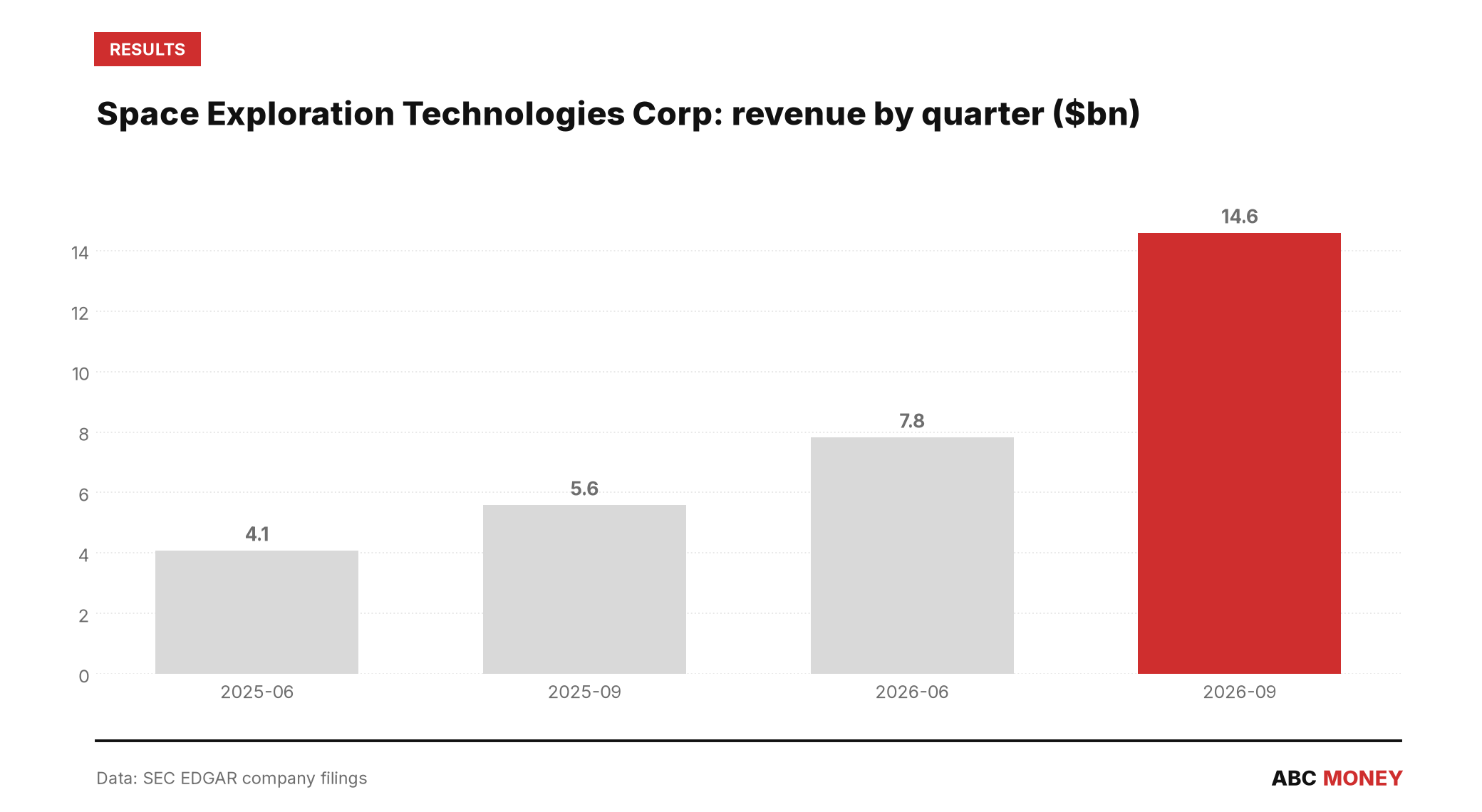
The spending plan follows a sharp swing in SpaceX’s own numbers. Quarterly revenue, which includes its AI computing segment alongside rockets and Starlink, nearly doubled from $7.814bn in the three months to 30 June 2026 to $14.575bn in the quarter ended 30 September, according to filings with the SEC. Net income flipped from a $541m loss in the June quarter to a $4.404bn profit in the September quarter. Reuters reporting cited in the Investing.com writeup put the AI computing segment at more than half of that third-quarter revenue – a notable reweighting for a company whose public identity still centres on launch vehicles.
Capital spending has moved in step. SpaceX is reported to have put roughly $48bn into capital expenditure in the first nine months of 2026, of which close to $40bn went into AI infrastructure, according to Benzinga. Set against that run rate, a further $74bn commitment is less a one-off splash than the next instalment of a build-out that was already under way.
The market’s muted response
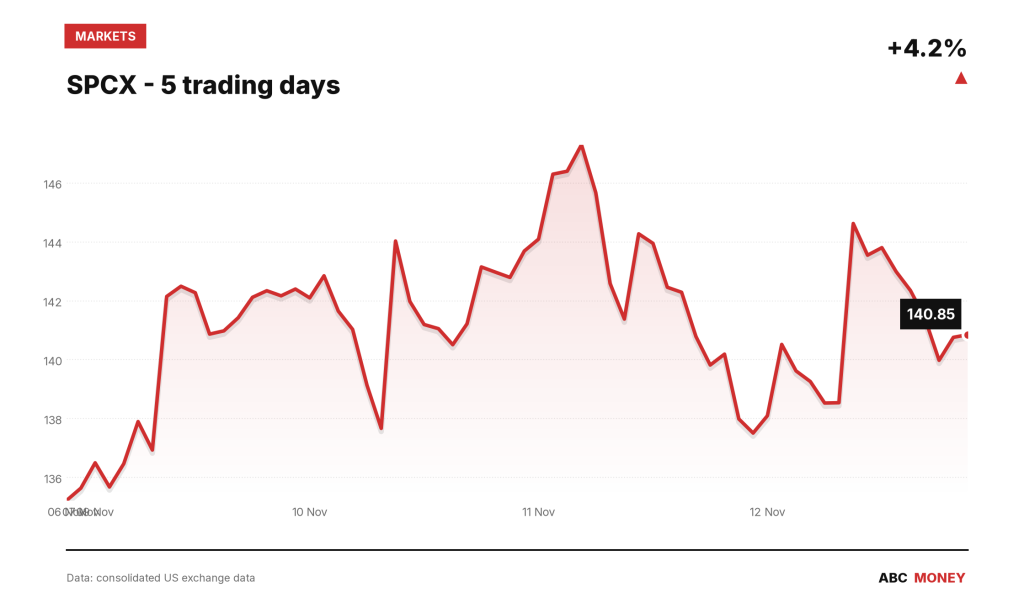
What is harder to square is how the shares traded on the day. SPCX closed 1.94% lower over the 24 hours around the announcement and was down 3.88% against its 20-day average, on volume 1.21 times the recent norm, per consolidated US exchange data as of 10pm UK time on 12 November – even as some coverage elsewhere described the stock as higher on the news. The short volume ratio tracked by FINRA, a rough gauge of how much daily trading is short-selling rather than ordinary buying and selling, had already climbed from 0.377 on 2 November to 0.579 by 11 November, suggesting some positioning against the stock built in the days before the announcement landed.
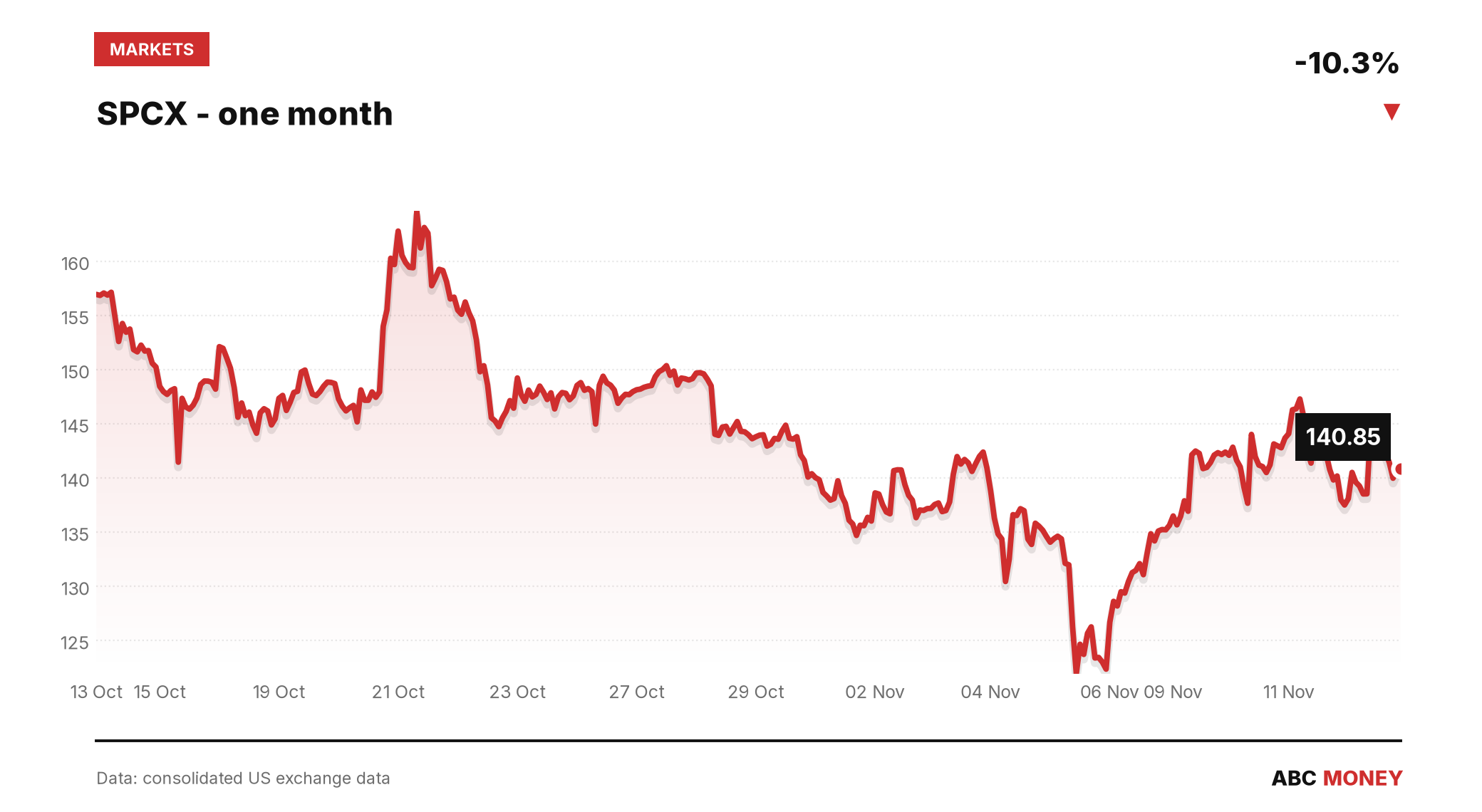
None of that undermines the substance of the investment plan – the dollar figures and job estimates are corroborated across multiple outlets and line up with SpaceX’s own recent capital spending trajectory. But it is a reminder that a headline-grabbing capex number does not automatically translate into a share-price pop, particularly for a stock that had already drifted lower over the preceding month, from a 20-day high of $150.38 to a low of $121.92 before settling at $140.77. Investors weighing the Arizona and Texas projects now have two separate clocks to watch: the pace of cooperative and state approvals, and how SpaceX’s AI revenue holds up once this latest wave of spending starts showing up on the balance sheet.
This article is for information only and is not investment advice or a recommendation to buy or sell any asset. Markets move quickly; figures are correct as sourced at the time of writing. Always do your own research before making financial decisions.