Supreme Court to Hear Robinhood IPO Disclosure Lawsuit
The Supreme Court will hear the Robinhood IPO disclosure lawsuit over 2021 meme-stock risk claims, as HOOD shares slide amid rising yields.
In this article 4 sections
The US Supreme Court has agreed to hear the Robinhood IPO disclosure lawsuit, taking up an appeal from Robinhood Markets (HOOD) over claims it failed to warn investors ahead of its July 2021 flotation that meme-stock and cryptocurrency trading volumes were already cooling. The justices granted certiorari in the case, docketed No. 25-944, on 13 November 2026, as first reported by Reuters and confirmed separately by CNBC.
The underlying claim is narrow but consequential: plaintiffs argue Robinhood’s IPO registration documents should have disclosed that the retail-trading frenzy of early 2021 – the GameStop-and-dogecoin period that made the company a household name – was already fading by the time it went public, and that the drop-off in trading activity materially dented the revenue base investors were buying into. Robinhood counters that its filings carried extensive, forward-looking risk warnings about exactly this kind of downturn. A federal district court initially sided with Robinhood and threw the case out, only for the 9th US Circuit Court of Appeals to revive it in 2025, setting up the appeal the Supreme Court will now consider.
What the justices will actually decide
The case turns on how specific an IPO prospectus needs to be about risks that are already materialising, rather than merely hypothetical, at the time of listing – a recurring fault line in securities law since the 2021 boom in direct listings and blank-cheque vehicles. A ruling against Robinhood would not by itself resolve the underlying factual dispute; it would send the case back for further proceedings on the disclosure question. Oral arguments and a decision are expected within the Supreme Court’s normal term schedule, which would put a ruling by the end of June 2027.
A business that has moved on from the 2021 slump
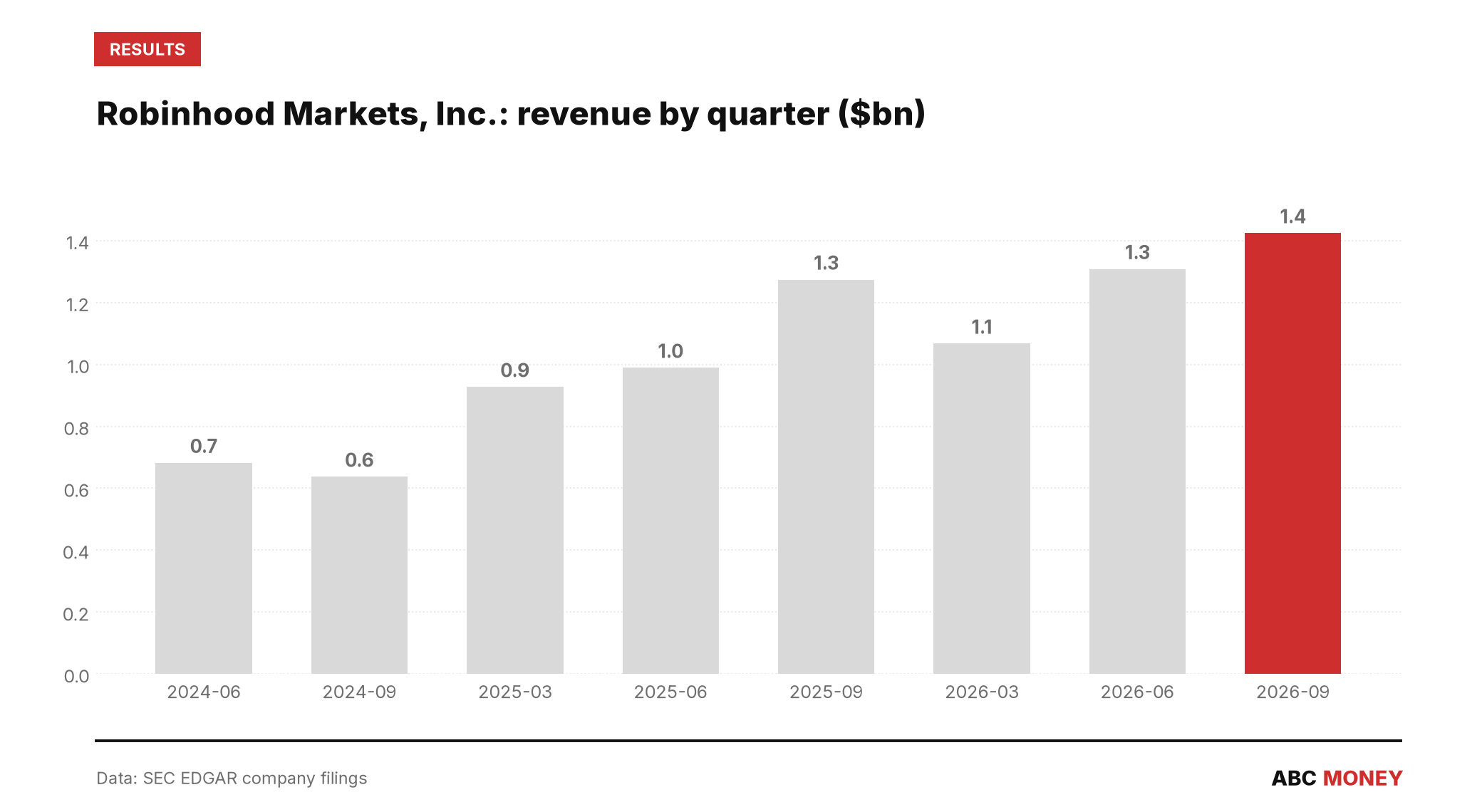
What makes the timing notable is how far Robinhood’s numbers have travelled since the trading lull the lawsuit describes. Quarterly net income has risen from $188m in the second quarter of 2024 to $561m in the second quarter of 2026, according to the company’s 10-Q filings with the SEC. The most recent quarter on record, the three months to 30 September 2026, produced net income of $468m on revenue of $1.424bn – a trajectory that bears little resemblance to the volume collapse plaintiffs say was looming at IPO. None of that history settles whether the original prospectus should have flagged the risk more explicitly; the two questions – was the disclosure adequate in July 2021, and how has the business performed since – are legally separate, even if they sit awkwardly side by side in the same case file.
The shares, meanwhile, have had a rough month
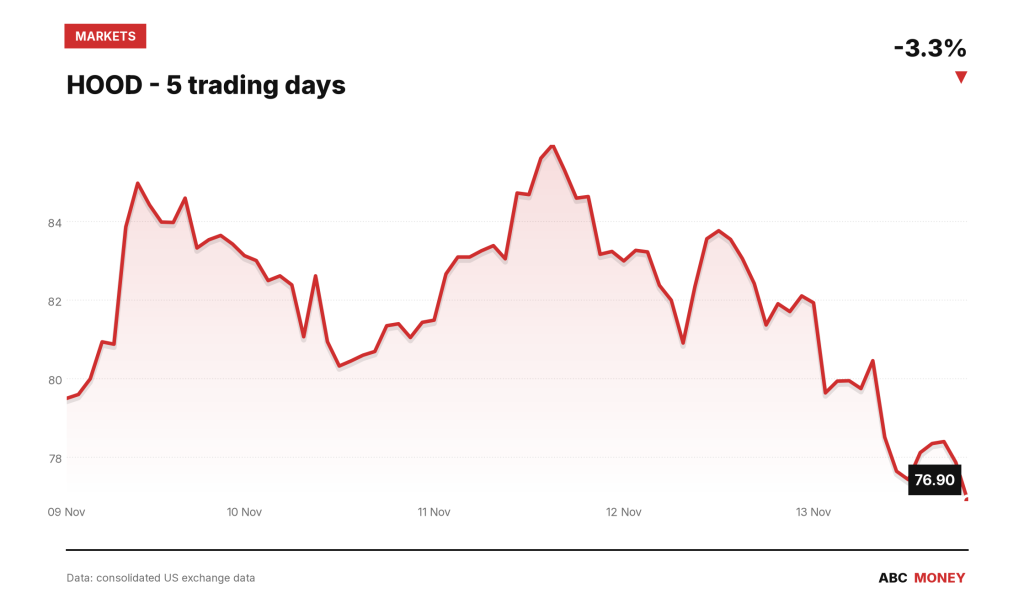
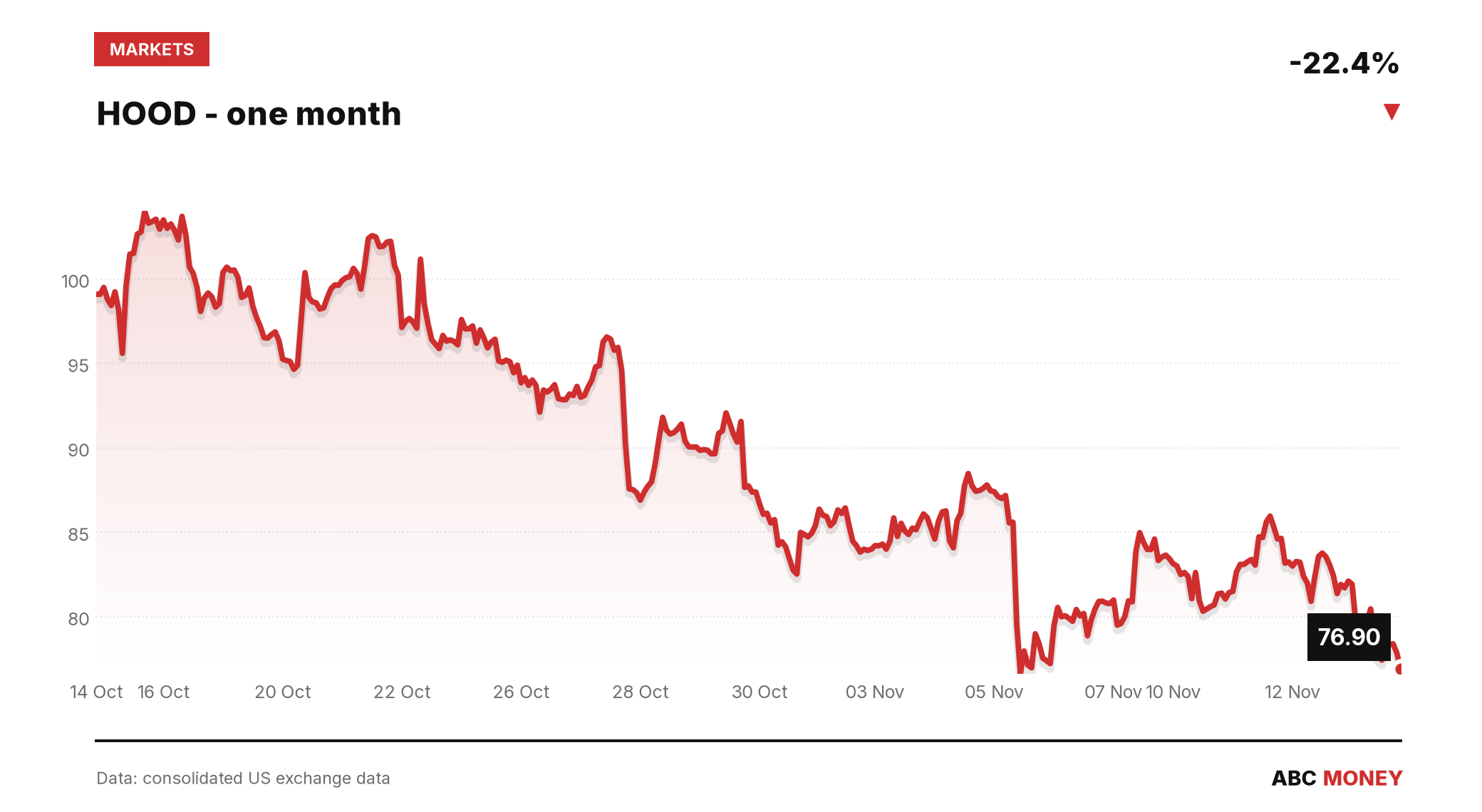
Robinhood stock closed at $77.05 on 13 November 2026, down 1.87% on the day and 18.42% over the preceding 20 trading sessions, having traded as high as $96.57 in that window. Trading volume has run 75% above its 20-day average, consistent with a stock working through a sharp repricing rather than drifting lower on thin activity. Litigation risk is one plausible contributor, but it is not the only one: the 10-year US Treasury yield climbed to 4.98% from 4.88% over the same stretch, part of a broader rise in borrowing costs that has weighed on richly valued trading and fintech names generally, Robinhood among them.
Separate from the Supreme Court matter, a plaintiffs’ law firm continues to maintain an active case page describing a related Robinhood Markets securities fraud claim, and a securities-litigation advisory has flagged a connected intra-quarter disclosure dispute – a reminder that the IPO-era allegations sit within a wider cluster of litigation the company has faced since 2021 rather than standing entirely alone.
What happens next
Robinhood will file its merits brief in the coming months, with plaintiffs’ response and oral argument to follow under the Supreme Court’s standard calendar; a decision is expected by the end of the court’s term in June 2027. Until then, the case adds a multi-year overhang to a stock already navigating a higher-rate environment, even as the underlying business – on the SEC filings – looks nothing like the one the lawsuit describes at the moment it went public.
This article is for information only and is not investment advice or a recommendation to buy or sell any asset. Markets move quickly; figures are correct as sourced at the time of writing. Always do your own research before making financial decisions.