Keurig Dr Pepper prices $2bn share offering at $34.50
Keurig Dr Pepper share offering raised $2bn at $34.50 a share, a discount priced to clear debt ahead of its planned corporate split.
In this article 3 sections
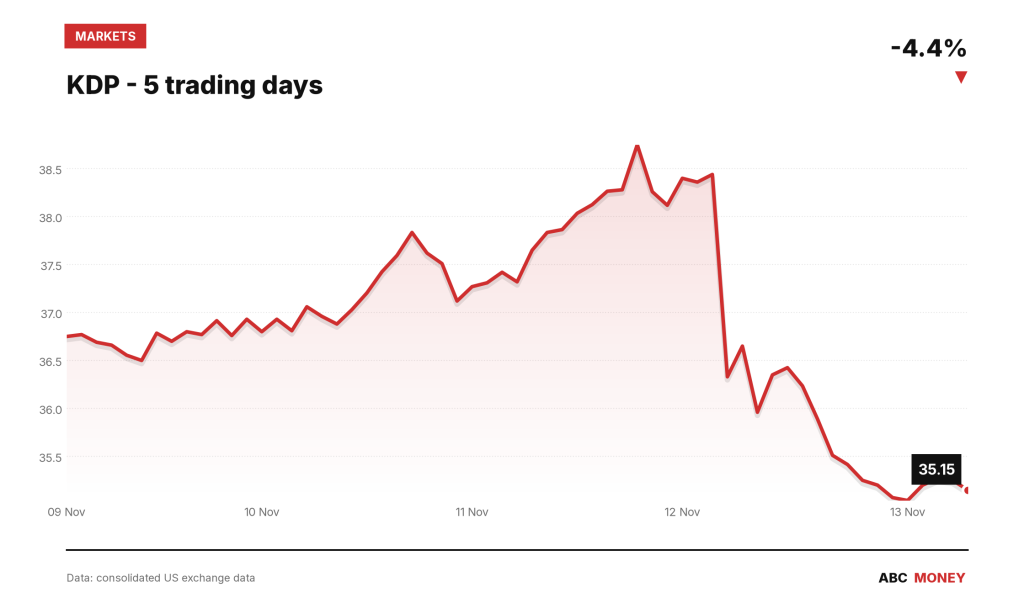
Keurig Dr Pepper’s share offering landed exactly where the market had feared it might: at a discount steep enough to sting. The drinks group, listed as Keurig Dr Pepper (NASDAQ: KDP), priced its previously announced underwritten offering at $34.50 a share late on 12 November 2026, selling 57.97 million new shares to raise roughly $2bn, according to the company’s own pricing statement.
That price sat well below where the stock had been trading. KDP’s last reported Nasdaq sale the day before the offering launched was $38.25, meaning the deal was priced at close to a 10% discount to that level – a standard feature of large, fast-moving equity raises, but a costly one for existing holders, who absorb both the dilution (the reduction in their proportional ownership and earnings-per-share as new shares are issued) and the signal that management needed cash quickly enough to accept a lower price.
A discounted sale to clear debt before a split
The purpose is not disguised. KDP intends to use the proceeds to repay or repurchase around $2bn of outstanding obligations – a delayed-draw term loan, commercial paper and senior unsecured notes – according to reporting that accompanied the launch. That deleveraging is being done ahead of KDP’s previously flagged plan to separate into two independently listed companies, a restructuring that follows its acquisition of JDE Peet’s, which closed on 1 April 2026 after KDP took 96.22% of the coffee group’s shares, rising to 97.75% once a post-closing acceptance window ended, for tendered consideration of roughly €15.11bn, as detailed in its quarterly filing. Outside legal commentary at the time of that deal described it as an $18bn acquisition once debt and other obligations were included.
Underwriters were also given a standard 30-day option to buy up to a further 8,695,652 shares at the same $34.50 price, which would lift the total raise if exercised in full. The offering is expected to close on 16 November 2026.
Where the consolidation shows up in the numbers
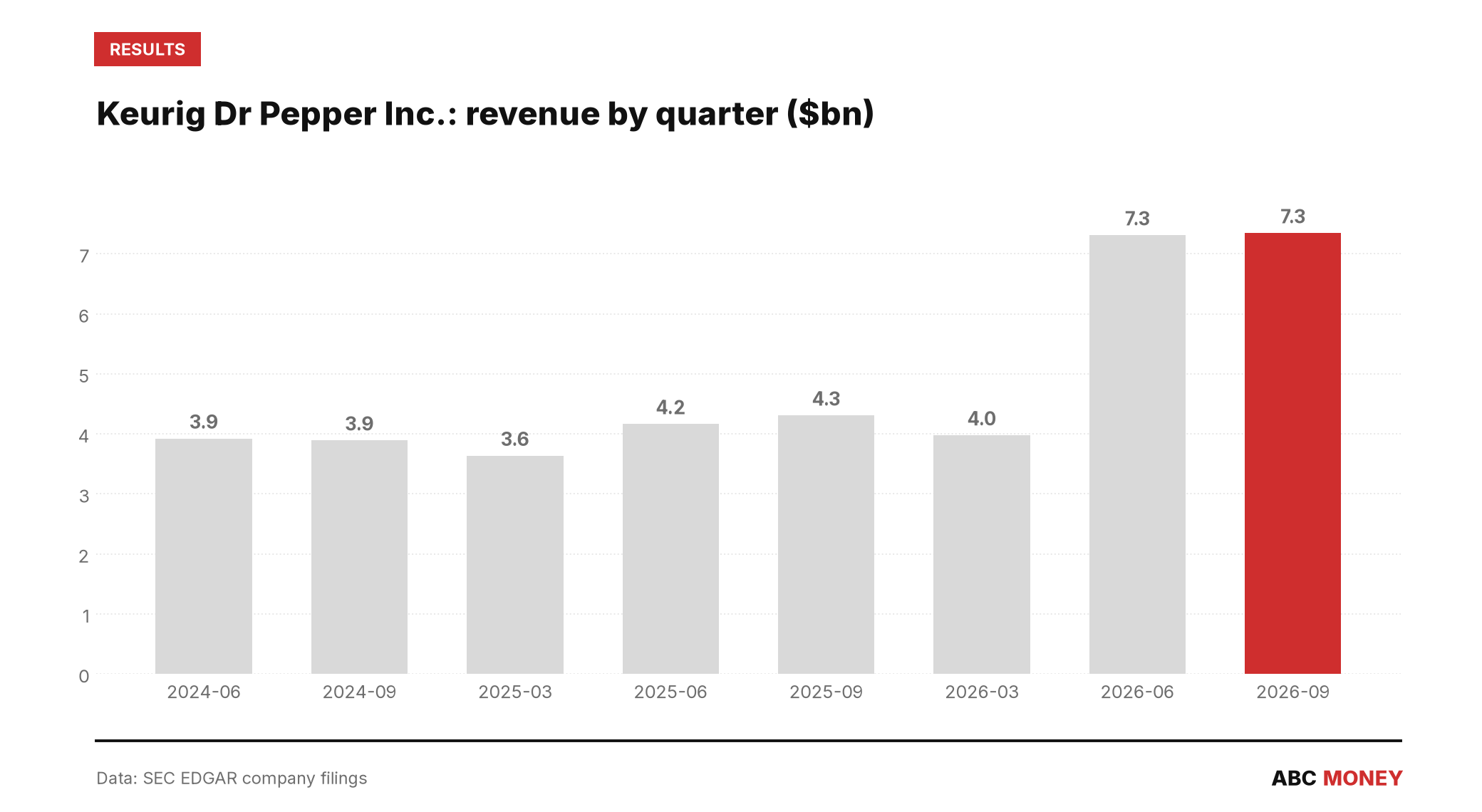
The JDE Peet’s deal has already reshaped KDP’s reported scale. Quarterly revenue jumped from $3.976bn in the first quarter of 2026 to $7.309bn in the second, once the coffee business was folded into the accounts, and held at $7.344bn in the third quarter, filings show. Diluted earnings per share told a bumpier story: they fell to just $0.04 in the acquisition-closing quarter, weighed down by one-off integration costs and the larger share base, before recovering to $0.59 in the third quarter as net income rose to $882m. That recovery matters for context – it suggests the underlying business is digesting the deal reasonably well, even as the balance sheet still carries the debt taken on to fund it.
Why equity, and why now
The timing also reflects the cost of debt itself. The 10-year US Treasury yield, a benchmark for long-term borrowing costs, rose to 4.98% on 10 November from 4.88% previously, according to Federal Reserve data, part of a broader climb in yields across the curve. In that environment, selling equity to retire floating-rate and short-term debt becomes relatively more attractive than refinancing it at higher rates, even accounting for the dilution cost – a trade-off management evidently judged worth making.
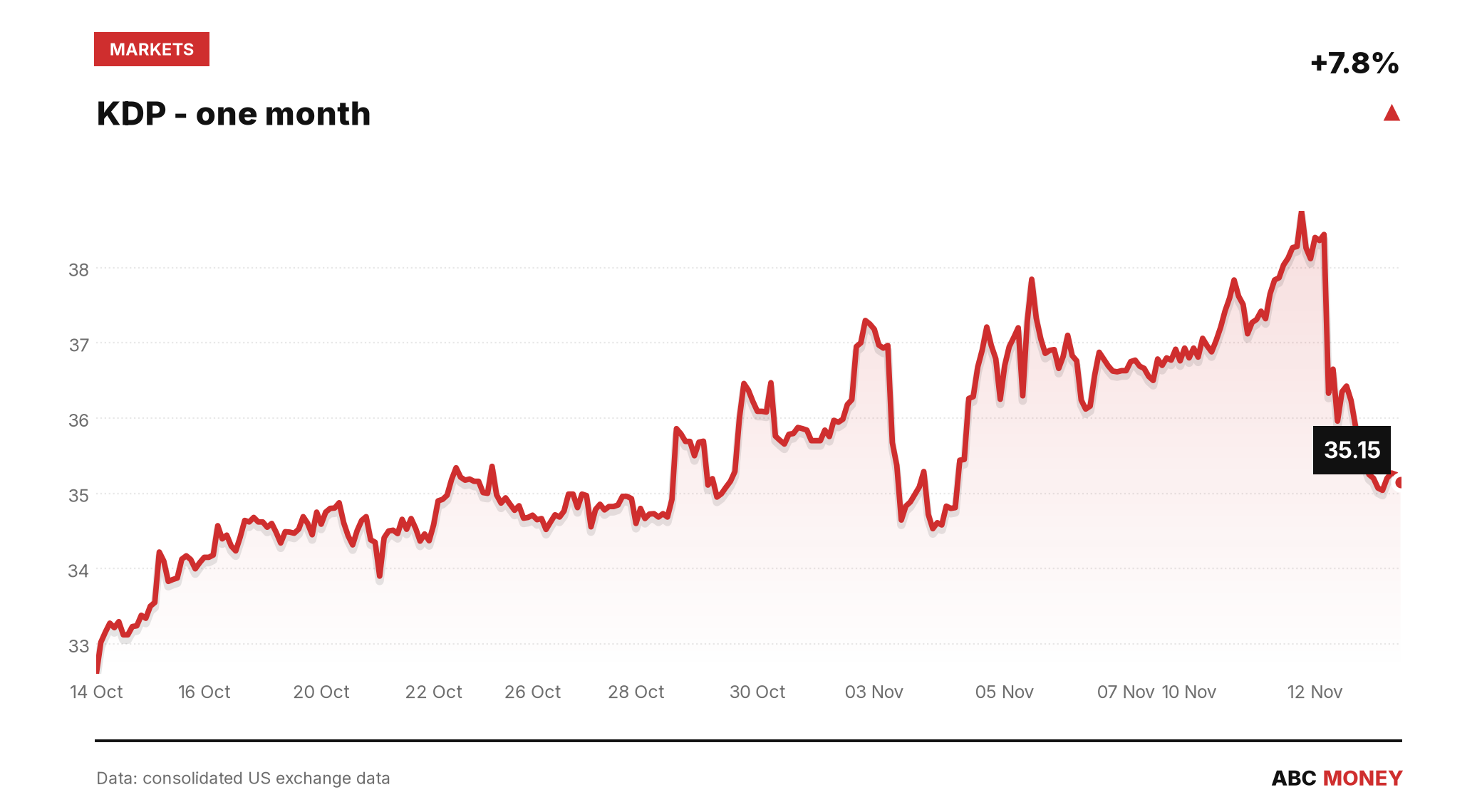
The stock absorbed the news hard on the day it was announced, falling about 7.4% on 12 November as the market priced in both the discount and the dilution. By the following session the shares had largely found a floor, last changing hands at $35.10, down a modest 0.43% over 24 hours and still comfortably above the $34.50 offer price. Trading volume that day ran at only 37% of its 20-day average, suggesting the initial shock had largely worked through the market rather than triggering sustained selling.
There is little sign the drop was driven by aggressive short-selling rather than ordinary repricing. The share of KDP’s trading volume tied to short sales – a FINRA measure of bearish positioning – actually eased to 0.454 on the announcement day from 0.76 the session before, which points to investors adjusting existing positions rather than piling into fresh bets against the stock.
For shareholders, the more useful marker now is the calendar rather than the chart: the offering’s close on 16 November, the exercise window on the underwriters’ additional-share option, and – further out – the terms KDP eventually sets for splitting its coffee and broader beverage businesses into two separately traded companies.
This article is for information only and is not investment advice or a recommendation to buy or sell any asset. Markets move quickly; figures are correct as sourced at the time of writing. Always do your own research before making financial decisions.