Microsoft global outage hits 74 countries, stock barely blinks
A Microsoft global outage knocked out Outlook, Teams and Copilot for hours across 74 countries - yet MSFT shares closed almost unchanged.
In this article 3 sections
A Microsoft global outage tore through Outlook, Teams, Microsoft 365 and Copilot on 12 November 2026, leaving users across North America, Europe and Asia-Pacific locked out of their inboxes and meeting rooms for hours. The disruption began shortly before 1pm UK time and, more than twelve hours later, services in 74 countries were still only seeing “marginal success” in restoration, according to Al Jazeera.
The scale was unusual even by the standards of a company whose products sit on hundreds of millions of desktops. Downdetector, the outage-tracking site, logged a peak of roughly 130,000 reports of Outlook problems in the US alone, with more than 45,000 separate reports flagging Microsoft 365 issues, per TIME. Separate tracking cited by NBC News showed complaints spiking to 19,650 per minute across five services – Outlook, Microsoft 365, OneDrive, Copilot and Teams – against a baseline of fewer than 15 reports a day in normal conditions.
What actually broke
Microsoft’s explanation, echoed across coverage, was an infrastructure problem rather than an attack: a number of servers became unexpectedly unavailable, piling additional load onto the remainder of the network until it buckled. TIME reported the trigger traced back to an issue surfacing from a recent network capacity upgrade. The company said it had found no evidence of malicious activity, and its engineers worked through restarting servers, rerouting traffic and pushing configuration changes before reporting incremental stabilisation.
The blast radius went well beyond email. TechCrunch reported that Copilot’s AI tools, the Defender security-screening layer and the Intune device-management dashboards that IT administrators rely on were all knocked out at various points – turning what looked initially like an Outlook glitch into what the outlet called a full-blown cloud crisis.
The market’s shrug
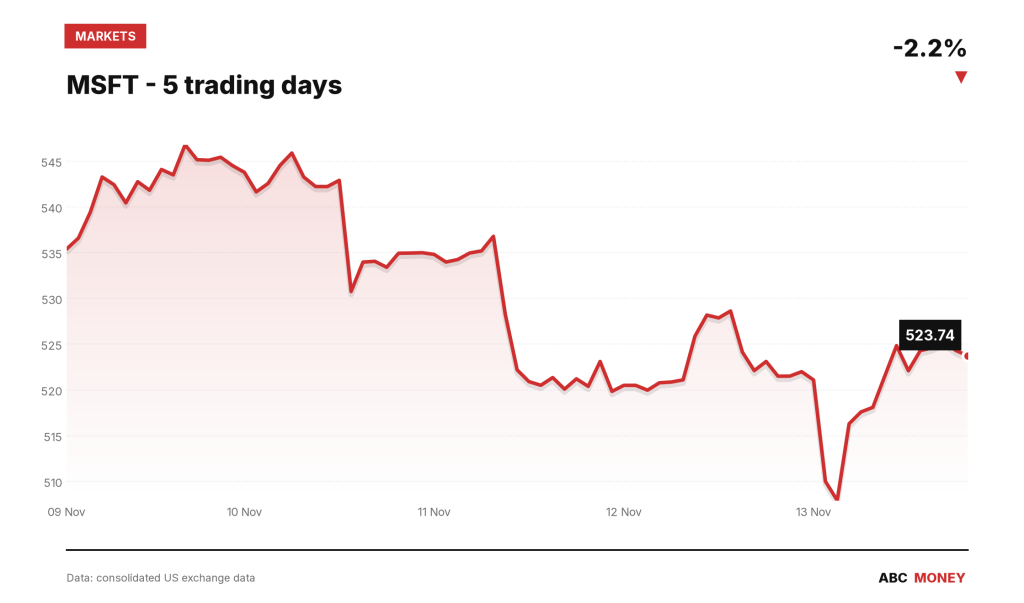
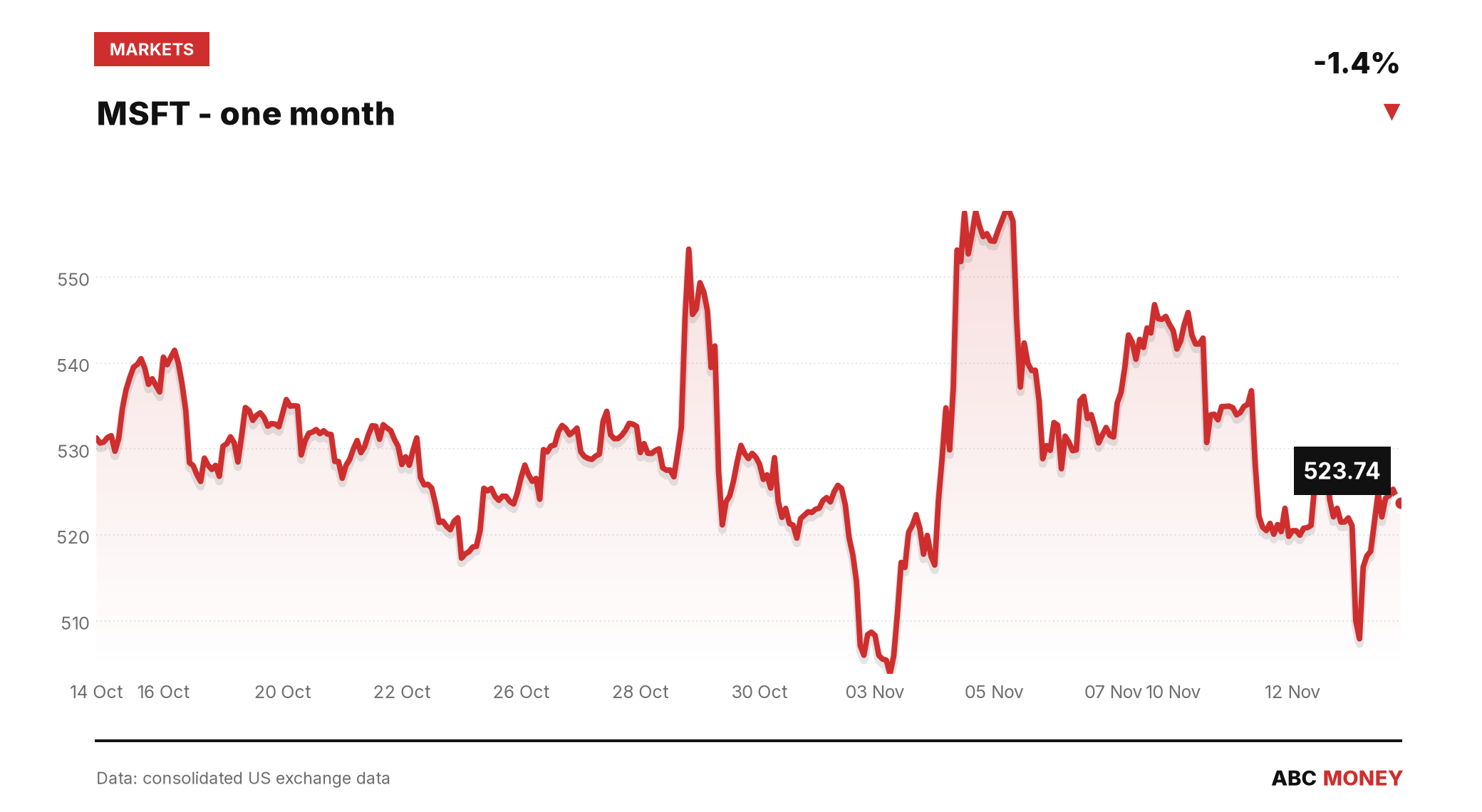
Here is the part that should surprise readers more than the outage itself: Microsoft (NASDAQ: MSFT) shares barely moved. Schaeffer’s Investment Research had the stock down just 0.2% intraday at $521.89 on 13 November, and by the market close MSFT was effectively flat, last changing hands at $522.40, up 0.17% on the day. That sits comfortably inside the stock’s 20-day trading range of $503.82 to $557.70.
Context matters here. The shares had already pulled back more than 5% from a record closing high of $559.15 set on 4 November, a retreat that coverage attributes largely to intensifying competition in artificial intelligence rather than any reliability concerns. Invezz described the stock as “steadying” once the immediate outage headlines faded, framing the episode as secondary to the bigger story of where Microsoft sits in the AI race.
No unusual positioning around the event
Three Microsoft executives – chief executive Satya Nadella, finance chief Amy Hood and an executive named Takeshi Numoto – filed routine Form 4 disclosures with the SEC on 9, 10 and 12 November respectively, bracketing the outage window. Nothing in the filings suggests anything beyond standard periodic reporting, and short-selling activity tells the same story of indifference: FINRA’s daily short-sale ratio for MSFT ran between 0.346 and 0.373 in the days immediately around the outage, squarely within the 0.204-to-0.403 band seen over the prior fortnight – no sign traders were rushing to bet against the stock.
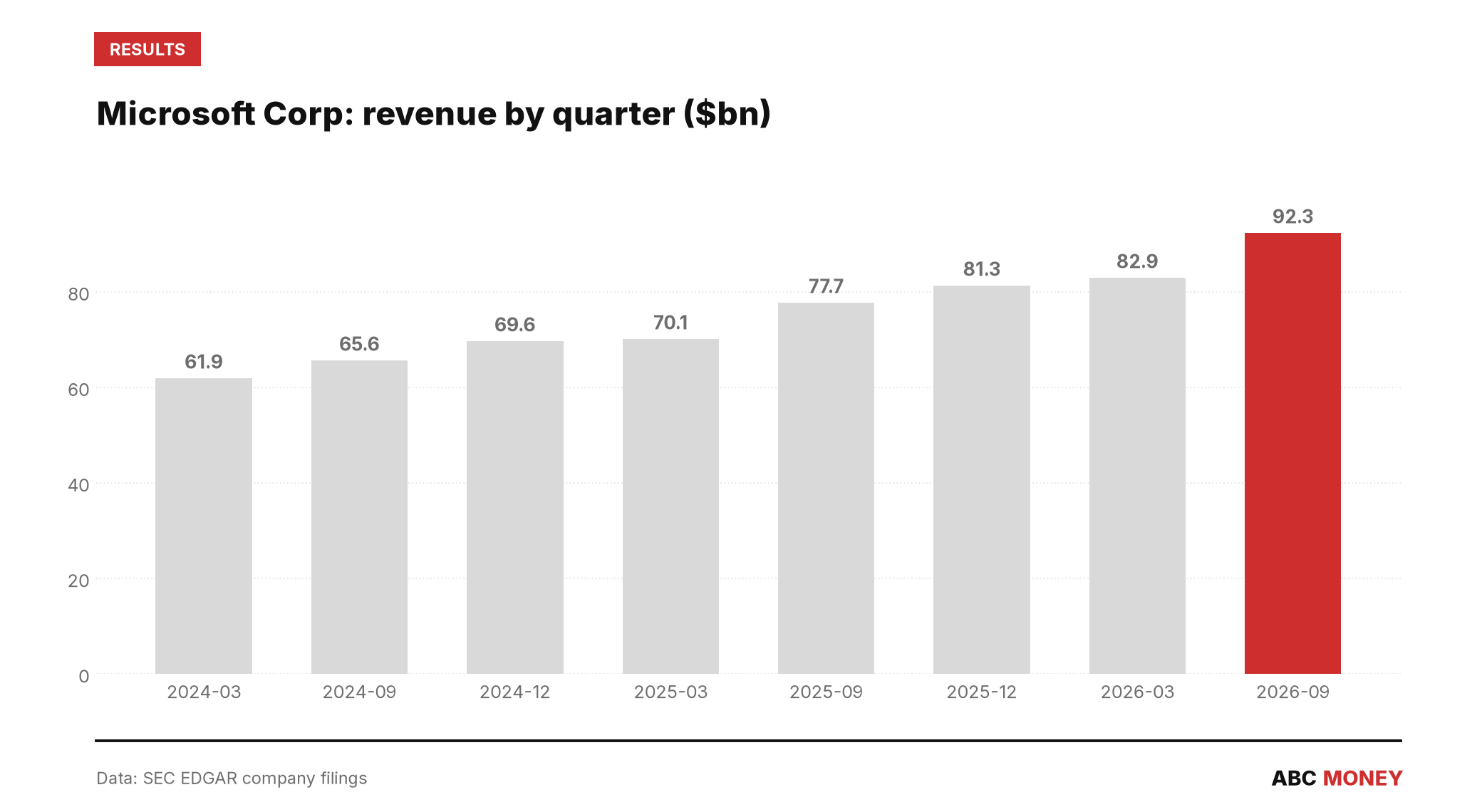
The fundamentals underpinning that calm are substantial. Microsoft’s most recent quarter, covering the three months to 30 September 2026, showed net income of $36.629bn on revenue of $92.279bn, continuing a run of steady growth through fiscal 2026 and into fiscal 2027, according to the company’s latest 10-Q filing. Against that backdrop, a multi-hour service failure – however disruptive for the IT administrators and office workers living through it – barely registers as a balance-sheet event.
Treasury markets, for what it is worth, were moving on their own logic that week: the 10-year yield stood at 4.98% on 10 November, up from 4.88% previously, with the 2-year at 4.73% versus 4.56%, according to Federal Reserve data – a rates backdrop entirely unconnected to events in Redmond.
The more durable question raised by the outage may not be financial at all. Al Jazeera noted commentary suggesting Microsoft’s intense capital focus on AI infrastructure may be leaving legacy productivity plumbing – the email and meeting software that hundreds of millions of workers touch every day – comparatively under-resourced. Investors, for now, do not appear to be pricing that risk in. Whether 74 countries losing their inboxes for half a day changes that calculation is a question for the next earnings call, not this week’s share price.
This article is for information only and is not investment advice or a recommendation to buy or sell any asset. Markets move quickly; figures are correct as sourced at the time of writing. Always do your own research before making financial decisions.