Google Backs Quaise’s Superhot Geothermal Power Deal in Oregon
Google's geothermal power purchase agreement with Quaise Energy is tiny for Alphabet but marks the first commercial superhot-rock power deal.
In this article 3 sections
Google has signed a geothermal power purchase agreement with Quaise Energy for 50 megawatts of so-called “superhot rock” power from Project Obsidian, the Boston-based developer’s flagship site on the southern flank of Oregon’s Newberry Volcano, according to Quaise’s own announcement. The electricity is earmarked for Google’s existing data centres in The Dalles, Oregon, with deliveries expected as early as 2030.
It is a small number dressed up in a large claim. Fifty megawatts is roughly enough to run a modest industrial site, not a hyperscale server farm. But Quaise and independent reporting both frame this as something rarer than another clean-power contract: the first commercial-scale agreement built on technology that drills into rock hot enough to flash water straight into supercritical steam, rather than the more familiar hydrothermal wells that have powered geothermal plants for decades.
What the geothermal power purchase agreement actually covers
Quaise’s release did not put a number on the contract, a point confirmed independently by MarketScreener’s coverage of the same announcement. The Wall Street Journal has since reported the agreement is worth more than $500m over its life, with the underlying project carrying a build cost of roughly $350m, though those figures sit outside Quaise’s formal disclosure and should be read as journalistic estimates rather than contract terms.
Oregon Public Broadcasting’s reporting adds texture Quaise’s statement does not: the power is destined for three separate Google data centres in The Dalles, and the station describes the arrangement as the first commercial-scale superhot rock geothermal deal anywhere in the world. Quaise’s chief executive, quoted in that coverage, frames Newberry’s geology as tapping “some of the hottest accessible rock on Earth” – the kind of heat that has historically been too deep, too hot, or too hard to drill economically.
The drilling is already real, not theoretical
The clearest evidence this is more than a term sheet comes from an unlikely corner: Nabors Industries, the drilling contractor, which disclosed in an 8-K filing with the SEC that Project Obsidian’s first phase targets exactly 50 megawatts out of a planned three-phase build-out. A separate Nabors filing confirms the company has made a $35m strategic investment in Quaise and has a PACE-B rig actively turning at the Central Oregon site – hardware on the ground, not a slide deck. Quaise says the full project could ultimately support 200 to 400 construction jobs and more than 50 permanent engineering and operations roles, alongside grid upgrades and royalty payments for the surrounding region, according to Quartz’s reporting.
There is also a paper trail suggesting this deal predates its public unveiling. Canary Media reported months earlier that Quaise had already signed a 50 MW power purchase agreement with an undisclosed customer – almost certainly the same contract only now attached to Google’s name. That sequencing is typical of how hyperscalers handle early-stage energy bets: lock in capacity quietly, confirm it publicly once construction milestones de-risk the story.
Why Alphabet’s share price shrugged
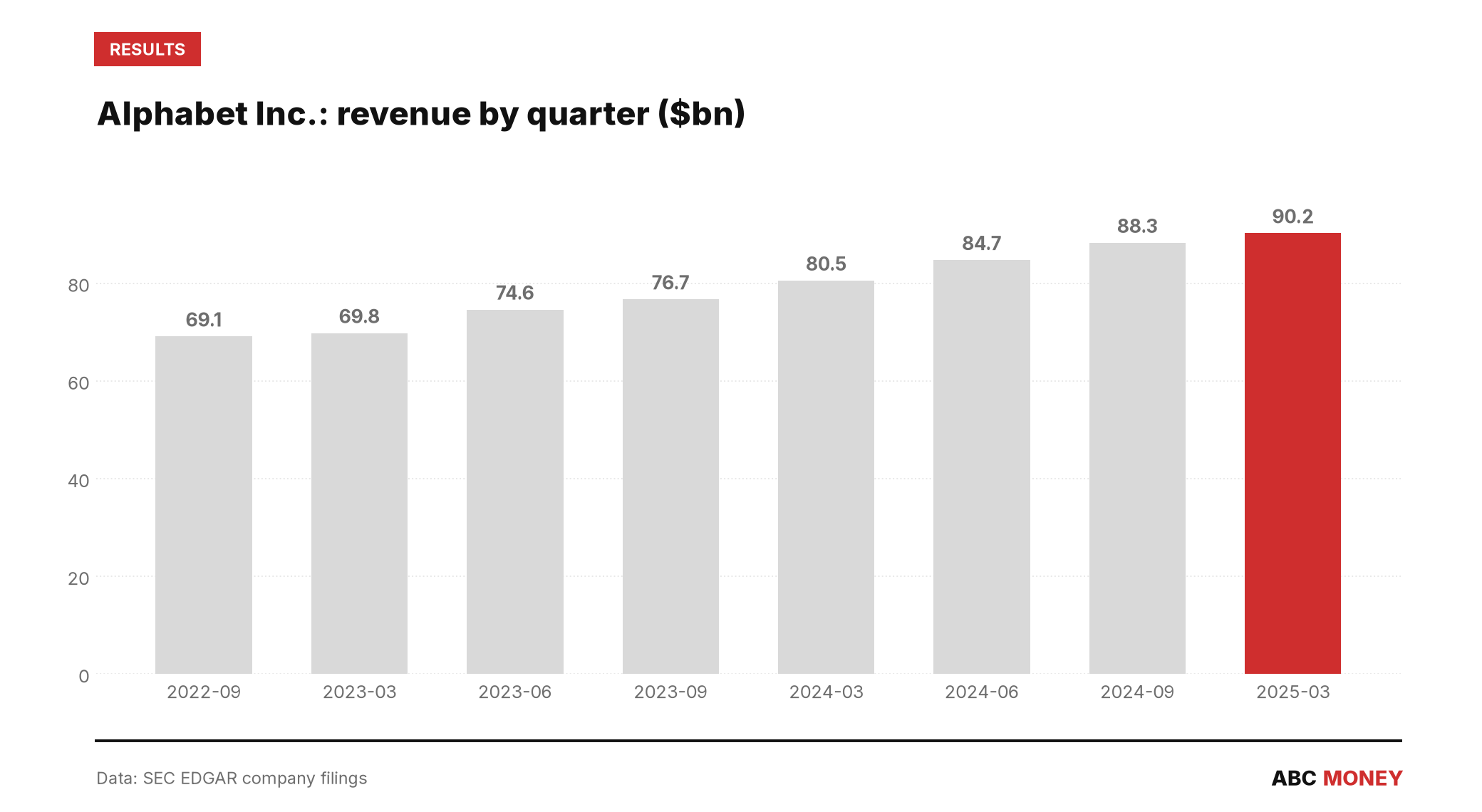
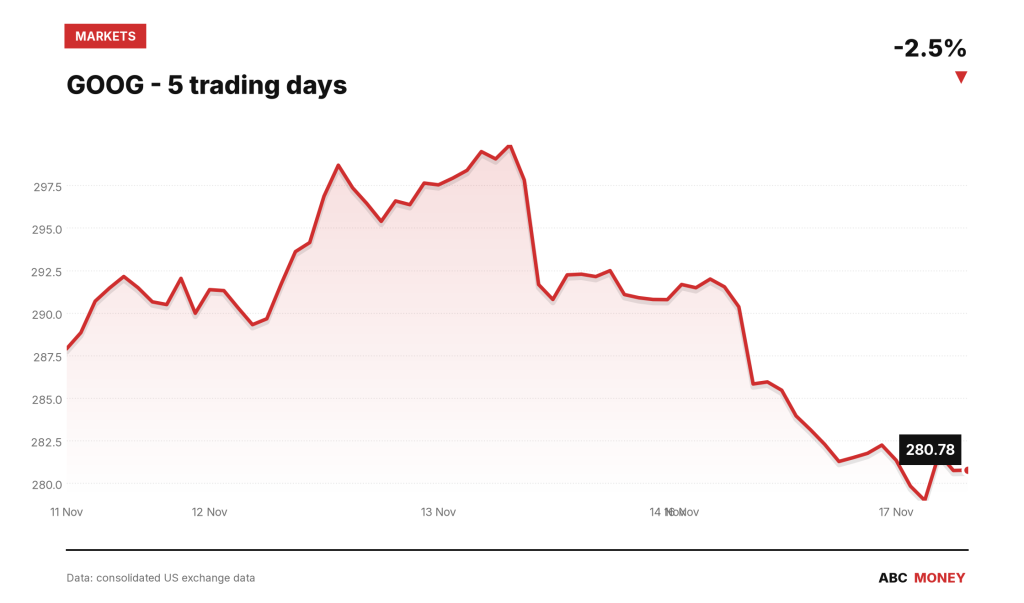
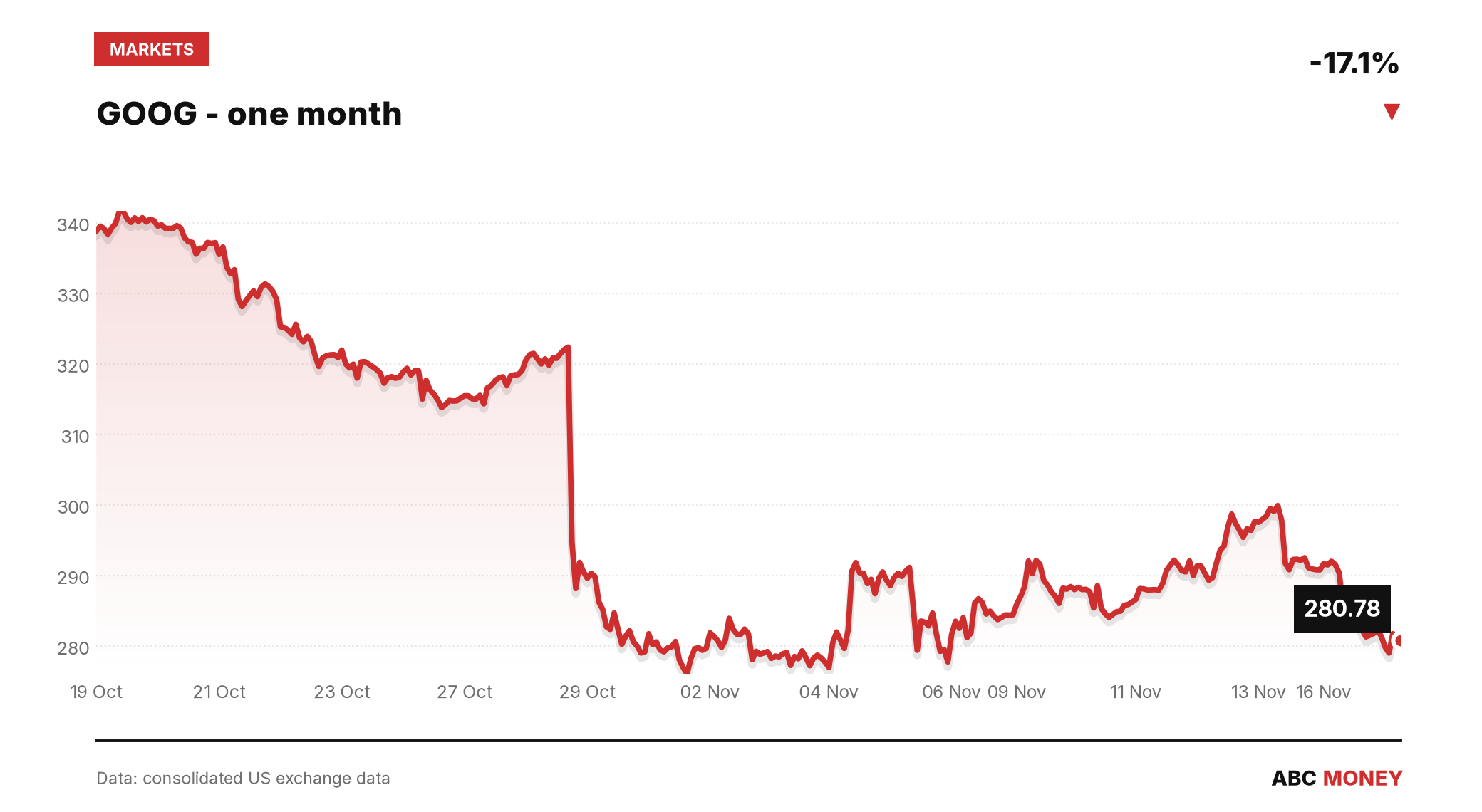
Set against Alphabet’s own numbers, a 50 megawatt contract barely registers. The company’s most recent 10-Q filing shows net income of $26.468bn for the third quarter of 2026 alone. Shares of Alphabet (NASDAQ: GOOG) closed at $280.78 on 17 November, down 0.35% on the day and 11.32% over the preceding twenty trading days – a slide that has far more to do with broader market positioning than with a geothermal power purchase agreement signed in Central Oregon. FINRA’s daily short-sale data for the stock shows no unusual build-up around the announcement, consistent with the deal’s immateriality at Alphabet’s scale.
Context matters here too: this is a small entry in a much larger clean-power shopping list. Google’s other recent agreements include a 396 megawatt geothermal deal with Fervo Energy and roughly 890 megawatts of nuclear uprates secured through Constellation, according to analysis from FourWeekMBA – both of which dwarf Project Obsidian’s first phase on raw capacity.
What makes this one worth tracking isn’t the megawattage but the geology. If Quaise can prove superhot rock drilling works commercially at Newberry, Nabors’ own filings point to a three-phase plan that could eventually scale well beyond 50 megawatts, and the backdrop of persistently elevated US borrowing costs – the 10-year Treasury yield sat at 5.15% as of FRED’s most recent reading – makes any technology promising always-on, weather-independent power unusually attractive to capital-hungry data-centre operators. Phase II is the number to watch next.
This article is for information only and is not investment advice or a recommendation to buy or sell any asset. Markets move quickly; figures are correct as sourced at the time of writing. Always do your own research before making financial decisions.