Former Robinhood Engineer Pleads Guilty to Wire Fraud
A former Robinhood engineer pleads guilty to wire fraud over crypto futures trades made ahead of Robinhood Crypto listing announcements.
In this article 3 sections
A former Robinhood engineer pleads guilty to wire fraud, admitting he used confidential knowledge of upcoming crypto listings at Robinhood Markets (NASDAQ: HOOD) to trade ahead of the market. Huaisong Xiang, who worked as a software engineer at the brokerage, entered the plea before a federal judge in Manhattan, agreeing to forfeit $125,523 in proceeds from the scheme, according to the US Attorney’s Office for the Southern District of New York.
Xiang entered his plea to a single count of wire fraud before US District Judge Colleen McMahon. He faces a maximum sentence of 20 years in prison, with sentencing scheduled for 25 February 2027, Bloomberg reported. Federal sentencing guidelines typically produce terms well below statutory maximums, but the admission itself settles the core question prosecutors raised when they first brought charges in September.
How the trading worked
Prosecutors said that between 2025 and 2026, Xiang repeatedly bought perpetual futures – derivatives that let traders bet on an asset’s price without owning it outright – tied to specific tokens on the decentralised exchange Hyperliquid, timing the trades to land just before Robinhood publicly announced those tokens would be added to Robinhood Crypto, its in-app trading venue, per the Justice Department’s account.
The access came with a title: Xiang and a second engineer, Hefu Chai, were designated “Coin Aware Individuals” with entry to a private Slack channel listing planned token additions and removals before they went public, according to Cointelegraph. Robinhood’s own insider-trading policy, filed as an exhibit to its annual report with the Securities and Exchange Commission, bars insiders from trading a crypto-asset on any platform in the 24 hours before and after a listing or delisting announcement – the exact window prosecutors say Xiang exploited.
Chai, charged alongside Xiang in September on commodities fraud and wire fraud counts tied to trading ahead of more than ten listing announcements, has not pleaded guilty and the case against him remains pending and unproven. A Robinhood spokesperson said at the time the original charges were announced that the company had investigated the trading activity itself and reported its findings to law enforcement and regulators, pointing to a zero-tolerance insider-trading policy, per Cointelegraph.
Why wire fraud, not securities fraud
The charging choice is itself notable. Rather than reaching for securities fraud, which would require settling the unresolved question of whether a given token counts as a security, prosecutors built the case on plain wire fraud: the theft and misuse of confidential company information transmitted electronically. It is a template that sidesteps years of regulatory argument over how to classify digital assets, and one that could prove durable if prosecutors bring similar cases against insiders at other crypto-adjacent firms.
A stock already under pressure
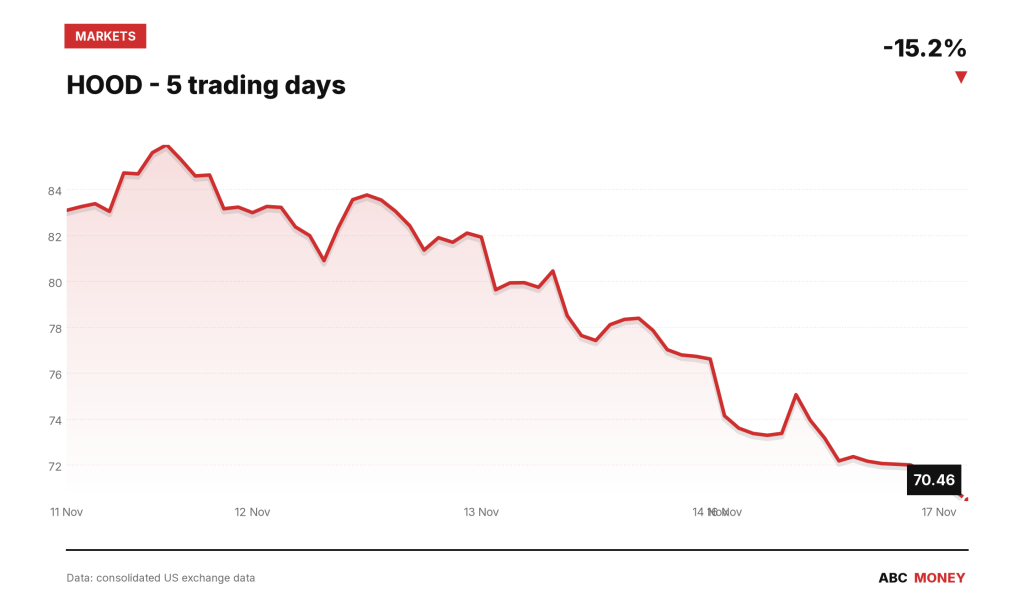
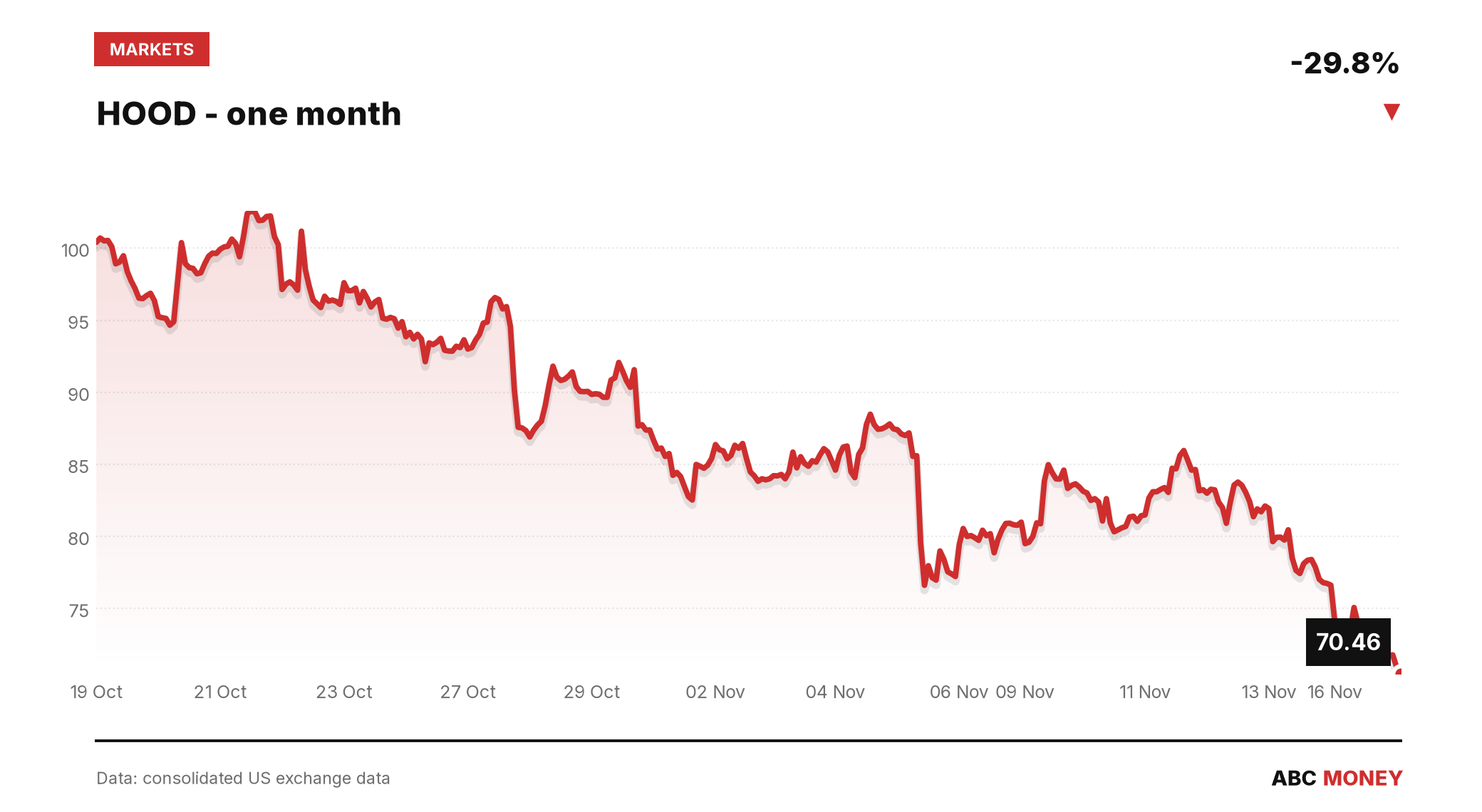
The plea lands while Robinhood shares are already soft. The stock last traded at $70.46, down 2.37% on the day and off 25.05% over the prior 20 trading sessions, sitting at its 20-day low, according to The Block. Daily short-sale volume tracked by FINRA – the share of trading volume from bets that a stock will fall – had ranged roughly between 0.46 and 0.61 in the weeks before the plea, with no dramatic spike that would point to traders specifically positioning around the case.
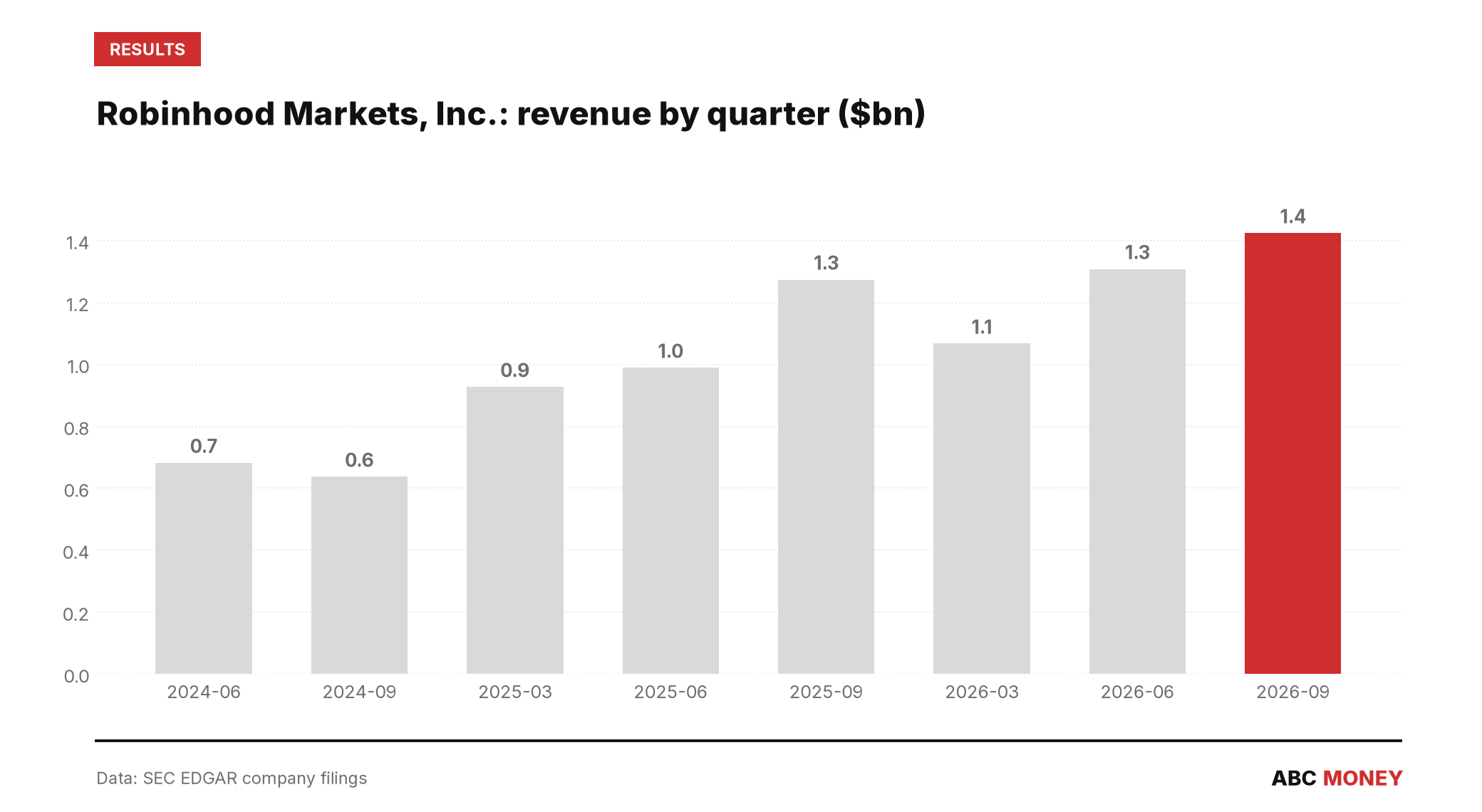
The scale of what was allegedly at stake reflects how central crypto trading has become to Robinhood’s business. Quarterly net income has climbed from $188 million in the second quarter of 2024 to $468 million in the third quarter of 2026, with revenue over the same stretch rising from $682 million to $1.42 billion, according to the company’s quarterly filings with the SEC. A listing announcement that moves a token’s price even modestly is now a commercially sensitive event worth trading around – which is precisely what prosecutors say Xiang understood.
Sentencing is set for 25 February 2027, a date that will also sharpen scrutiny of the still-pending case against Chai and of whether Robinhood’s internal controls – and the 24-hour blackout window at their centre – get any tightening as a result.
This article is for information only and is not investment advice or a recommendation to buy or sell any asset. Markets move quickly; figures are correct as sourced at the time of writing. Always do your own research before making financial decisions.