Instagram rolls out Amazon affiliate links for Reels, posts
Instagram now lets creators embed Amazon affiliate links in Reels and feed posts, tagging up to 30 products - timed for the Black Friday rush.
In this article 4 sections
Instagram has switched on a feature that lets creators tag Amazon products directly inside Reels and feed posts, turning ordinary scrolling into a shoppable experience without the viewer ever leaving the app. The update, confirmed by TechCrunch on 16 November 2026, extends Amazon’s affiliate programme well beyond its previous footprint in bios, Stories and direct messages.
Creators can now tag up to 30 products in a single Reel, or 20 in a feed post, with affiliate attribution applied automatically once their accounts are connected – a detail corroborated independently by Engadget. That’s a meaningful jump from the handful of links creators could previously squeeze into a bio or a swipe-up.
How the Amazon affiliate links actually work
The mechanics run through Instagram’s Professional Dashboard. Eligible creators link their Instagram account to an Amazon Influencer account via the dashboard’s Monetization section, after which product tags become available when composing a Reel or feed post. Before publishing, creators can see an estimated commission rate for each item – useful given that payouts still flow through Amazon’s own system rather than Meta’s, a mechanism confirmed by MediaPost.
Notably, Meta is understood to take no cut of the resulting Amazon sales, according to mlq.ai – meaning the economics for creators look identical whether a sale originates from a bio link or a tagged product inside a Reel. For Meta, the incentive is less about commission and more about making Instagram stickier for the creators who drive engagement; for Amazon, it’s another distribution channel for its affiliate inventory at essentially no cost.
Timed for Black Friday, not for the stock
The rollout lands a little over a week before the US holiday shopping season kicks into gear, a timing point flagged explicitly by The Next Web. That’s unlikely to be coincidental: affiliate marketing volumes typically spike around Black Friday and Cyber Monday, and giving creators a bigger canvas to tag products just before that window is a straightforward way to capture more of that seasonal spend inside the feed itself, rather than losing shoppers to an external link.
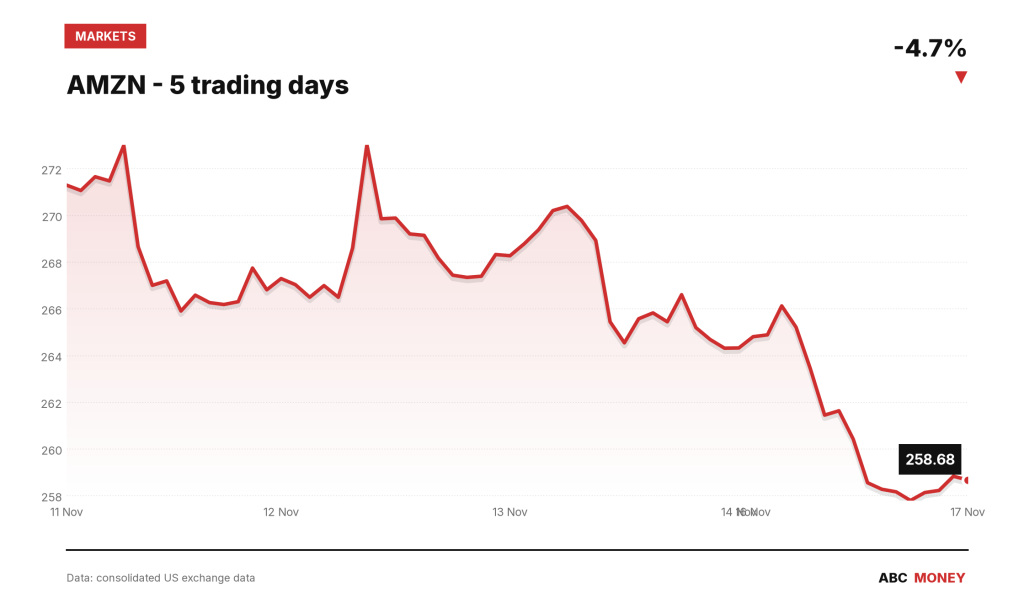
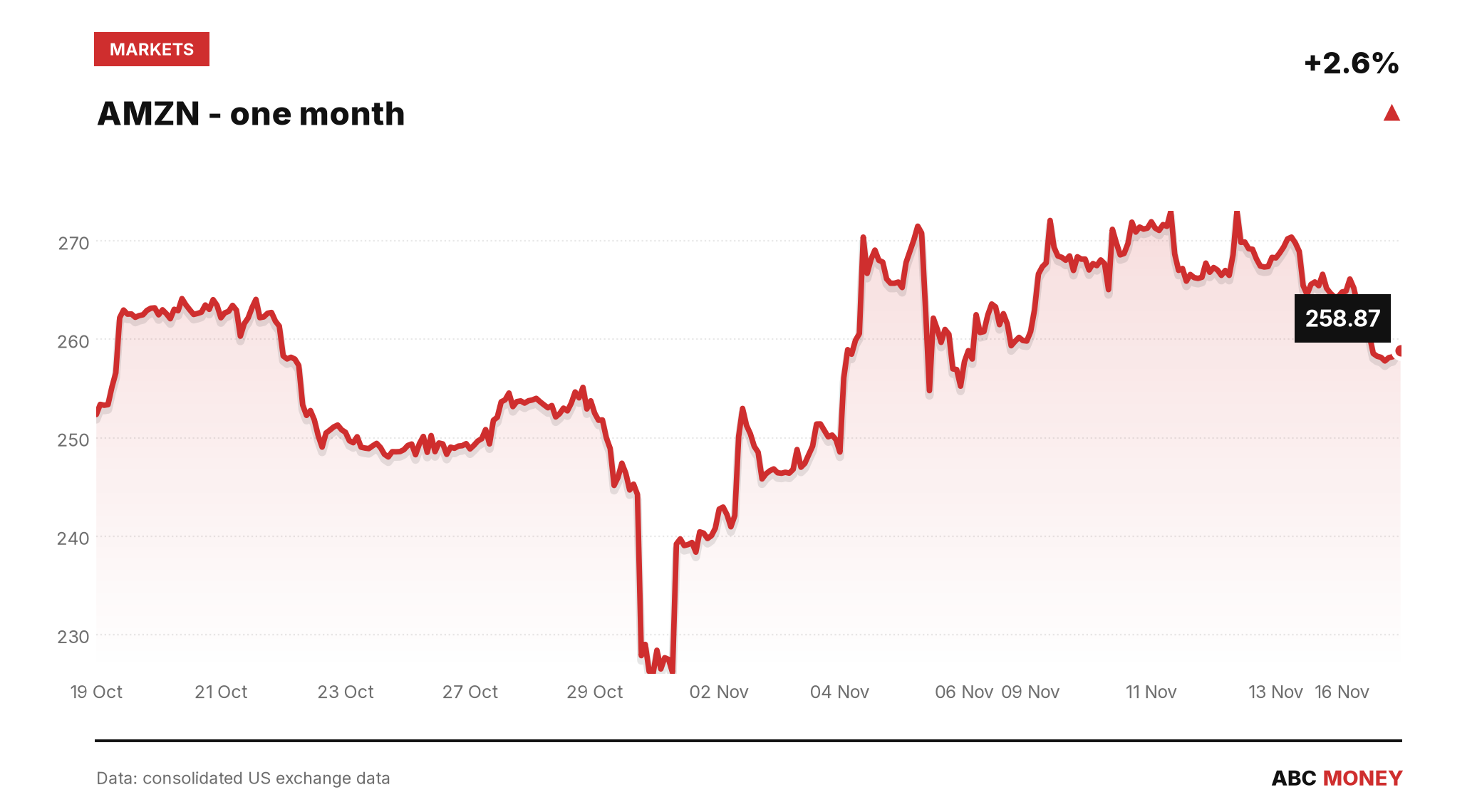
What the update is not, on the evidence so far, is a market-moving event for Amazon.com (NASDAQ: AMZN). The stock traded essentially flat the day the news broke, closing up 0.13% at $258.90, well within its range of the prior twenty sessions, which spanned $225.99 to $273.03. No unusual volume accompanied the move – trading ran only modestly above its 20-day average. That flatness fits the scale of the announcement: a creator-tools feature with no disclosed revenue target, no fee structure disclosed by either company, and no guidance attached.
The numbers this doesn’t move
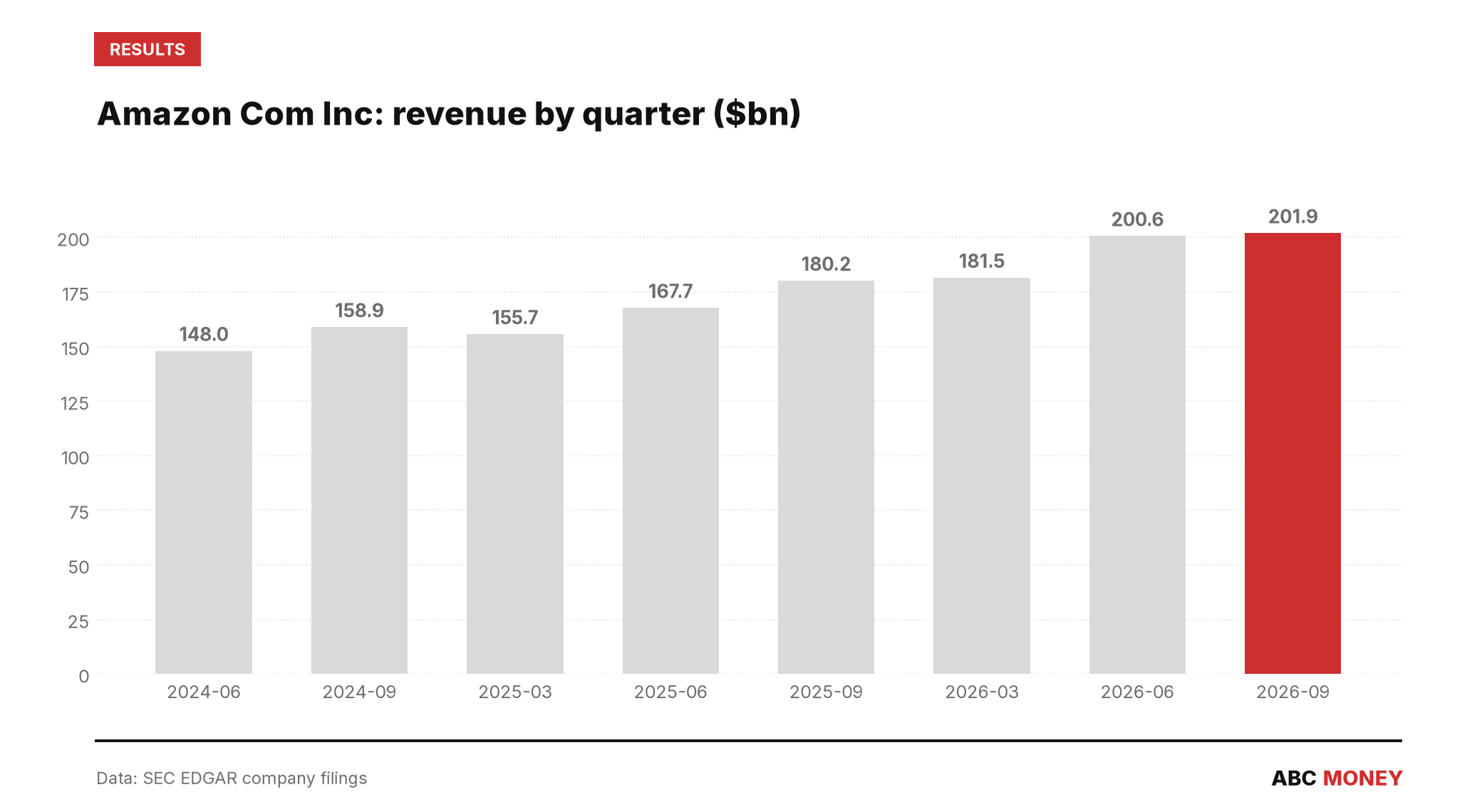
It’s worth keeping the scale in view. Amazon reported revenue of $201.9bn for the third quarter of 2026, up from $200.6bn the quarter before, according to its quarterly filing with the SEC. Net income for the same quarter came in at $20.7bn. Against a business of that size, an affiliate-tagging feature inside someone else’s app – however useful for creators chasing commission income – sits a long way from anything that shows up in a results call. Amazon’s affiliate programme generates commission income for participating creators rather than a disclosed line item for Amazon itself, and neither company has put a figure on what the expanded placement might be worth.
That’s also consistent with how the story was covered elsewhere: independent write-ups from TokenPost and others repeated the same mechanical details – the 30-product and 20-product caps, the Professional Dashboard linking step, the commission preview – without attaching any financial projection to the launch. This reads as infrastructure, not catalyst.
Where the real contest lies
The more interesting fight is the one playing out among the platforms chasing affiliate commerce more broadly. TikTok Shop, LTK and ShopMy have all been building out creator-commerce tools with varying fee structures, and Instagram’s zero-commission approach to Amazon sales is a deliberate point of contrast rather than an accident of design. For creators, the calculus is simple: more surfaces to tag products, no extra cut taken by the platform hosting the post, and a direct line to Amazon’s existing commission schedule. For Amazon, it’s one more place shoppers can be converted without building new storefront technology itself.
Whether that translates into a meaningfully larger slice of Amazon’s affiliate revenue, or simply redistributes existing affiliate traffic from bios and Stories into Reels and feed posts, is the question that neither company has yet answered publicly. For now, the feature is live for eligible creators, the limits are set at 30 and 20 products, and the only chart worth watching this week is the one tracking Black Friday sales volumes, not Amazon’s share price.
This article is for information only and is not investment advice or a recommendation to buy or sell any asset. Markets move quickly; figures are correct as sourced at the time of writing. Always do your own research before making financial decisions.