Tesla’s €3bn Gigafactory Expansion Lands as Profits Slide
Tesla's €3bn Gigafactory expansion targets a million Cybercabs a year, announced just as quarterly profit has nearly halved.
In this article 3 sections
Tesla (NASDAQ: TSLA) has confirmed a €3 billion Gigafactory expansion in Grünheide, Germany, committing to a new production building designed, eventually, to build up to one million Cybercabs a year. The plan, reported by Reuters on 16 November 2026, puts a concrete figure and a timeline on Tesla’s European robotaxi ambitions at a moment when the carmaker’s own profits are running at roughly a third of where they stood two years ago.
Tesla says it will submit a building permit application for the new facility before the end of 2026, with construction pencilled in to start in the first half of 2027 and production beginning in 2029, according to reporting from Drive Tesla Canada. Grünheide remains Tesla’s only production site in Europe, a point electrive.com flags as central to why the company is leaning on it rather than spreading the Cybercab build-out across a new location.
A big bet against a shrinking profit base
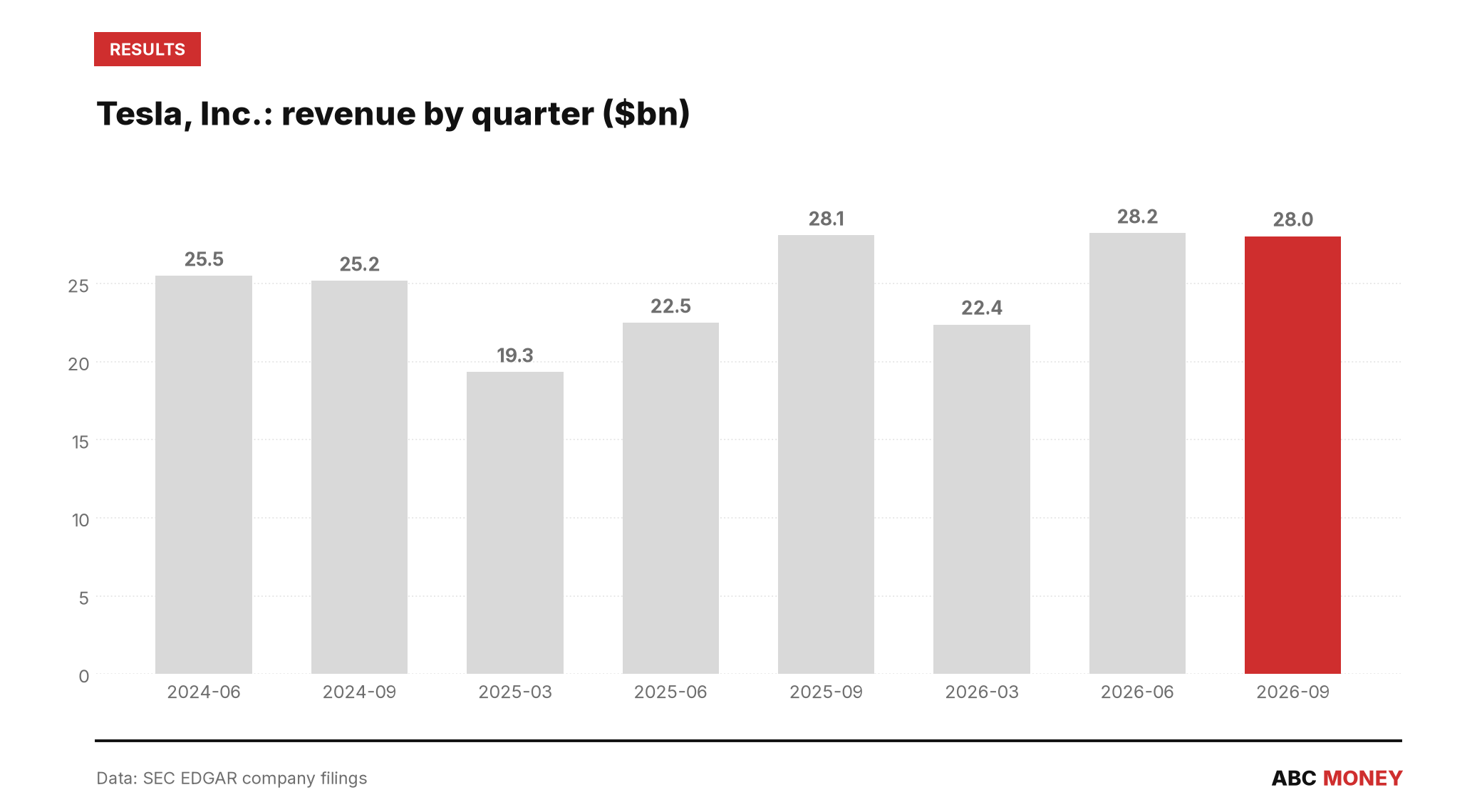
The timing is the part worth sitting with. Tesla’s net income has fallen sharply from the levels it posted through 2024: $787m in the third quarter of 2026, against $1.373bn a year earlier and $2.167bn two years before that, according to the company’s 10-Q filed with the SEC. Diluted earnings per share over the same stretch slid from 62 cents to 22 cents. Quarterly revenue, by contrast, has held up reasonably well – $28.0bn in the third quarter of 2026 versus $25.2bn two years prior – which points to margin compression rather than a collapse in sales.
Tesla has also been trimming its own capital-spending plans this year. Its third-quarter filing lowered 2026 group-wide capex guidance to “in excess of $20 billion,” down from the “more than $25 billion” it had guided since April, as reported by Electrek. Announcing a fresh €3 billion commitment to a single site, then, isn’t quite the full-throttle spending it might look like in isolation – it’s a reallocation inside a budget that has itself just been cut by roughly $5bn, with the company evidently deciding that the Cybercab line in Germany is worth protecting even as other capex gets squeezed.
Swimming against Germany’s downsizing tide
The contrast with the rest of the German car industry is stark enough that Tesla’s own statement leaned on it. Volkswagen, the country’s largest carmaker, has been locked in talks over a restructuring plan that could mean closing four plants – Hanover, Emden, Zwickau and Audi’s Neckarsulm site – and cutting up to 100,000 jobs in total, as Euronews reported in July. Against that backdrop, Tesla is adding capacity rather than removing it. The company’s own framing, as conveyed in the licensed lead reporting, is that the expansion would “establish the site as its most technologically advanced factory” – a line clearly aimed at distinguishing Grünheide from the retrenchment under way elsewhere in German manufacturing.
Tesla’s plant manager in Grünheide, André Thierig, confirmed the additional €3 billion investment directly, according to Tagesspiegel‘s reporting from the site. That local confirmation matters: this isn’t a case of a headline figure floating free of the people who have to deliver it on the ground.
The market shrugged, for now
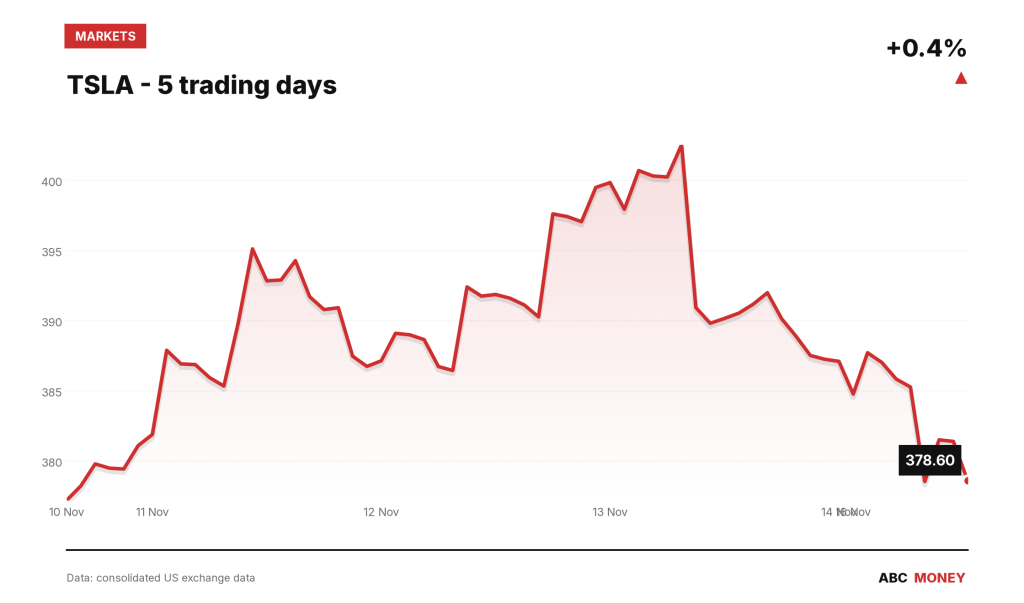
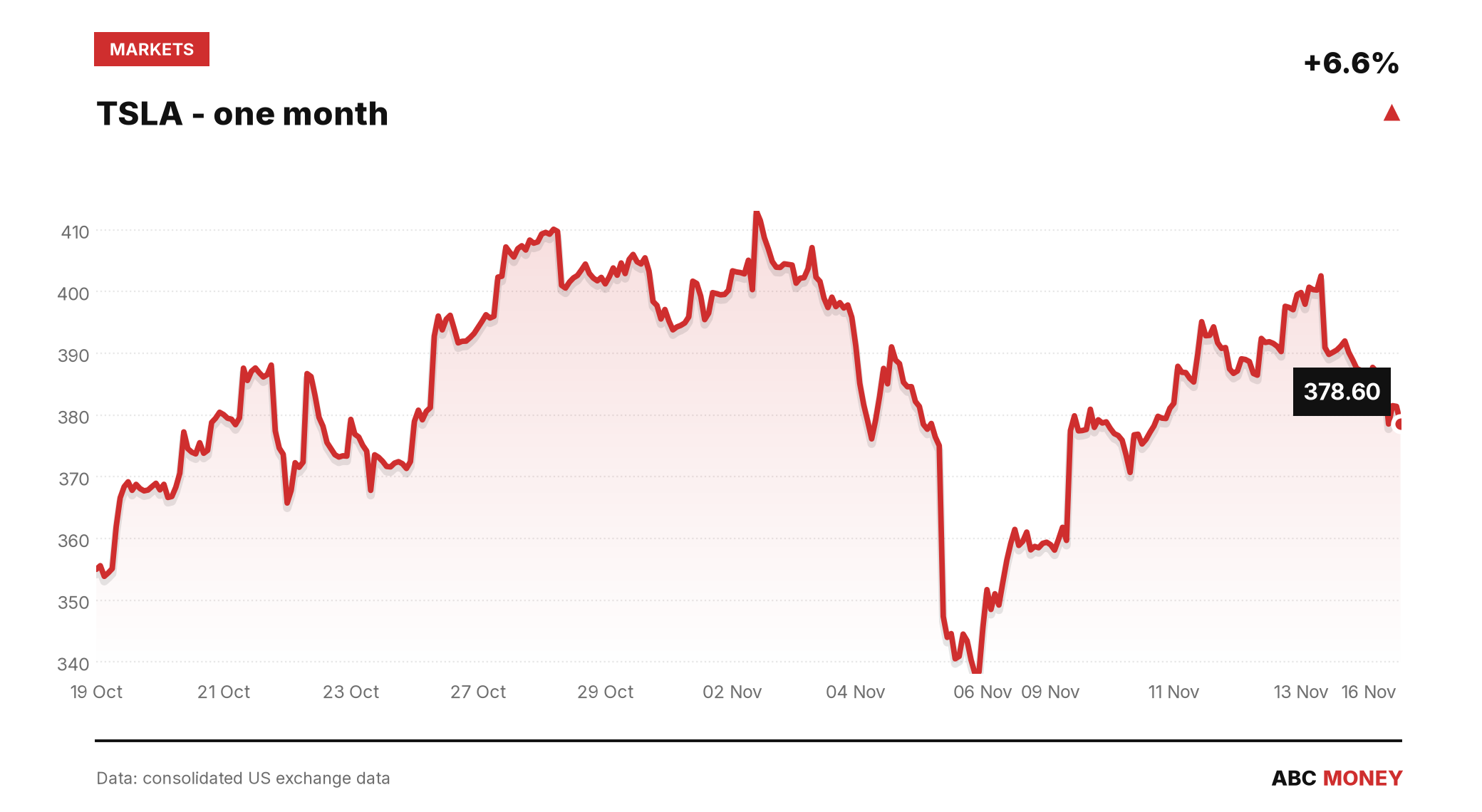
Investors didn’t greet the news with enthusiasm. Tesla shares were sliding around 3.4% in morning trading on 16 November, touching a session low of $376.33, as a broader technology-sector retreat overshadowed the corporate announcement, per Investing.com. By the time markets closed, the stock sat at $378.67, down 2.34% on the day and 3.88% over the prior 20 trading sessions, with trading volume running at about three-quarters of its 20-day average – not the kind of volume spike that usually accompanies a market genuinely re-rating a stock on fresh news.
Some of that reflects a macro backdrop that has been getting tougher for long-duration growth bets generally. The gap between 10-year and 2-year US Treasury yields – a gauge of how much extra return investors demand for lending long versus short – widened to 0.27 percentage points from 0.24, according to Federal Reserve data, with the 10-year yield itself at 5.1%. A steepening curve of that kind tends to make multi-year capital commitments, like a factory that won’t produce a car until 2029, a harder sell to markets already nervous about valuation.
None of that changes the substance of what Tesla has committed to. The permit application is due before year-end, construction is slated for the first half of 2027, and the first Cybacab off the Grünheide line, on the company’s own timetable, is still three years away.
This article is for information only and is not investment advice or a recommendation to buy or sell any asset. Markets move quickly; figures are correct as sourced at the time of writing. Always do your own research before making financial decisions.