Booking Holdings Launches Booking Partner Division for B2B Push
Booking Partner Division formalises a B2B unit Skift scooped months ago. The real question: can Booking match Expedia's B2B margins?
In this article 3 sections
Booking Holdings (NASDAQ: BKNG) confirmed on 18 November 2026 what travel-trade outlet Skift had already told its readers twice over the preceding four months: the company is folding its partner-facing businesses into a single new unit called Booking Partner Division, a global B2B organisation built around Booking.com Strategic Partnerships and Rocket Travel by Agoda.
The press release ticks every box Skift had already called. Booking Partner Division will serve banks, airlines, online travel agencies, travel-technology platforms, affiliates, advertisers and publishers, the company said, framing the consolidation as a response to artificial intelligence reshaping how people plan and book trips. CNBC’s same-day report corroborates the structure and the AI framing independently.
A scoop that outran the press release
What makes this launch unusual is how little of it was actually news by the time it landed. Skift reported in July 2026 that Booking was forming a new B2B unit under Agoda chief executive Omri Morgenshtern, and followed up in August with detail on the leadership appointments and a target date of January 2027 for the unit to become a formal legal entity. Tuesday’s announcement is, in effect, the company catching up to its own leak.
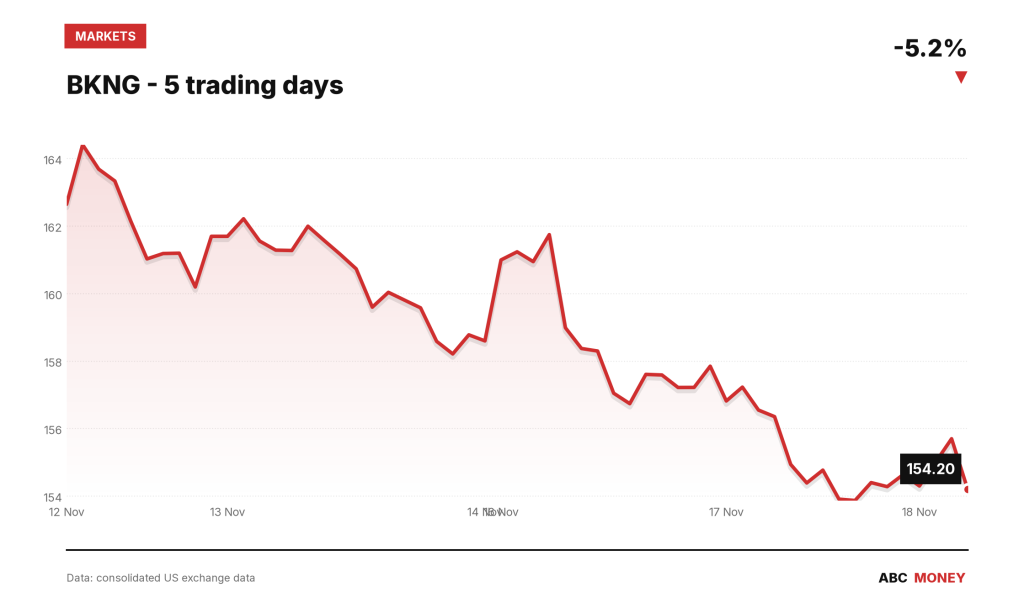
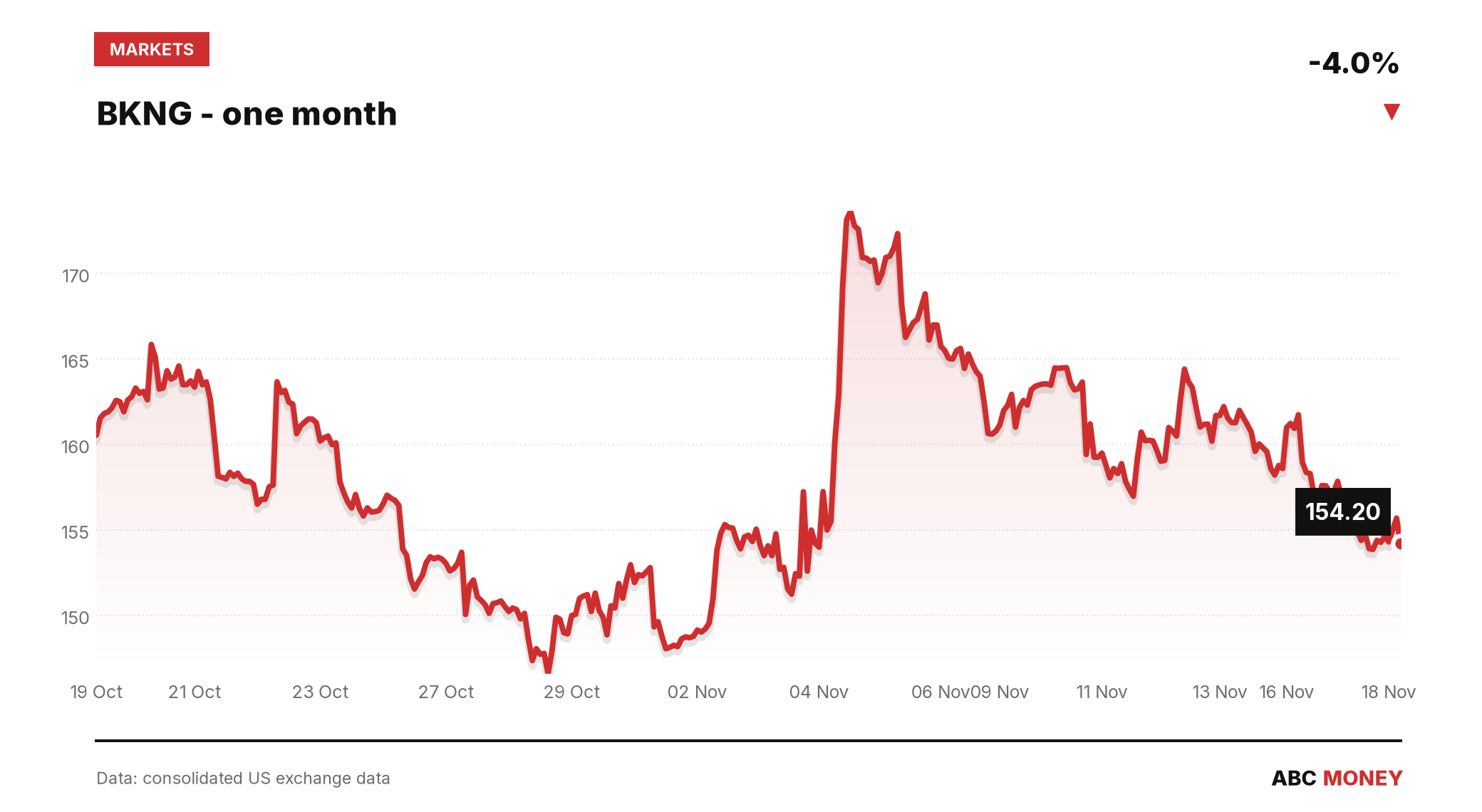
That sequencing shows up in the share price. BKNG closed at $154.20 on the day of the announcement, up a mere 0.21% on the session, even as the stock has climbed 4.64% over the preceding 20 trading days and traded in a range between $146.58 and $173.66 over that span. Volume on the day ran at roughly three-quarters of its 20-day average — hardly the footprint of a market digesting a surprise. Skift’s scoops did the price discovery months in advance; the formal unveiling mostly tidied up the paperwork.
Chasing Expedia’s margins
The more interesting question than whether the division exists is whether it can earn its keep. CNBC’s reporting leans on rival Expedia Group as the implicit benchmark: Expedia’s B2B segment grew revenue at a 16% compound annual rate and adjusted EBITDA — earnings before interest, tax, depreciation and amortisation, a common profitability yardstick — at 28% between 2018 and 2023, before posting 2025 B2B revenue of $4.8 billion, up 18%, and adjusted EBITDA of $1.26 billion, up 22%. In Expedia’s first quarter of 2026, B2B gross bookings reached $10.7 billion, up 22% year on year, against consumer-facing growth of just 10%, according to the company’s earnings call transcript. That gap between wholesale and retail growth is precisely the trade Booking is now trying to replicate at scale.
Booking already has the raw material. Partners powered by its existing B2B infrastructure reportedly include Citi Travel, Apple, Microsoft, American Airlines, Southwest and Emirates, according to Skift’s social reporting — a client list that suggests the new division is less a start-up than a rebadging exercise for a business that was already sizeable. Skift has also drawn a parallel with Booking’s recent unification of its advertising operations under a single “BKNG Ads” brand, arguing the partner-division consolidation marks a real departure from the company’s historically independent-brand playbook, where Booking.com, Agoda, Priceline and Kayak have long run as separate fiefdoms.
Filings in the margins
Two Booking executives filed Form 4 disclosures with the SEC on 17 November, the day before the announcement: general counsel Peter Millones and chief human resources officer Paulo Pisano. Form 4s report changes in executives’ own shareholdings and are routine filings rather than announcements in themselves; the underlying share or value figures were not detailed in the versions available, so it would be a stretch to read strategic intent into the timing. They are worth noting only because they sit either side of a restructuring that touches senior leadership assignments across two major brands.
The macro backdrop, for what it is worth, was unusually quiet around launch day. The 10-year Treasury yield sat at 5.12% on 16 November, down marginally from 5.15% the prior reading, while the 2-year stood at 4.83%, according to Federal Reserve data. US unemployment held at 4.1% in October. None of that points to a macro story competing for the stock’s attention — the muted reaction to Tuesday’s news looks like old information being formally filed, not fresh information being priced.
The real test arrives in January 2027, when Booking Partner Division is due to become a standalone legal entity under Morgenshtern. Investors watching the travel sector’s B2B pivot will want to see whether Booking’s version of the Expedia playbook can post growth rates that justify the reorganisation, rather than simply formalising a structure the market had already worked out for itself.
This article is for information only and is not investment advice or a recommendation to buy or sell any asset. Markets move quickly; figures are correct as sourced at the time of writing. Always do your own research before making financial decisions.