Textron Sells Industrial Segment to Kingswood for $1.2bn
The Textron Industrial segment sale to Kingswood Capital nets $1.1bn and funds a 35m-share buyback as the group turns pure-play defence.
In this article 3 sections
Textron (NYSE: TXT) has agreed to sell its Industrial segment to an affiliate of Kingswood Capital Management for $1.2bn (£950m), completing a strategic retreat the company first signalled seven months ago and leaving it as a pure-play aerospace and defence business. The Textron Industrial segment sale, covering the Kautex fuel-systems unit and Textron Specialized Vehicles (think golf carts and turf-care machinery under the E-Z-GO and Cushman names), is expected to hand Textron roughly $1.1bn in net cash once tax and transaction costs are stripped out, according to the company’s announcement.
The deal closes a chapter Textron opened in April, when it told investors it was evaluating options, including a spin-off or sale, for the division. This week’s agreement confirms the company chose a clean exit rather than spinning the unit off to shareholders – a sale that Goldman Sachs advised on, with Latham & Watkins handling the legal work, according to Textron’s own filing with the Securities and Exchange Commission.
The numbers behind the Textron Industrial segment sale
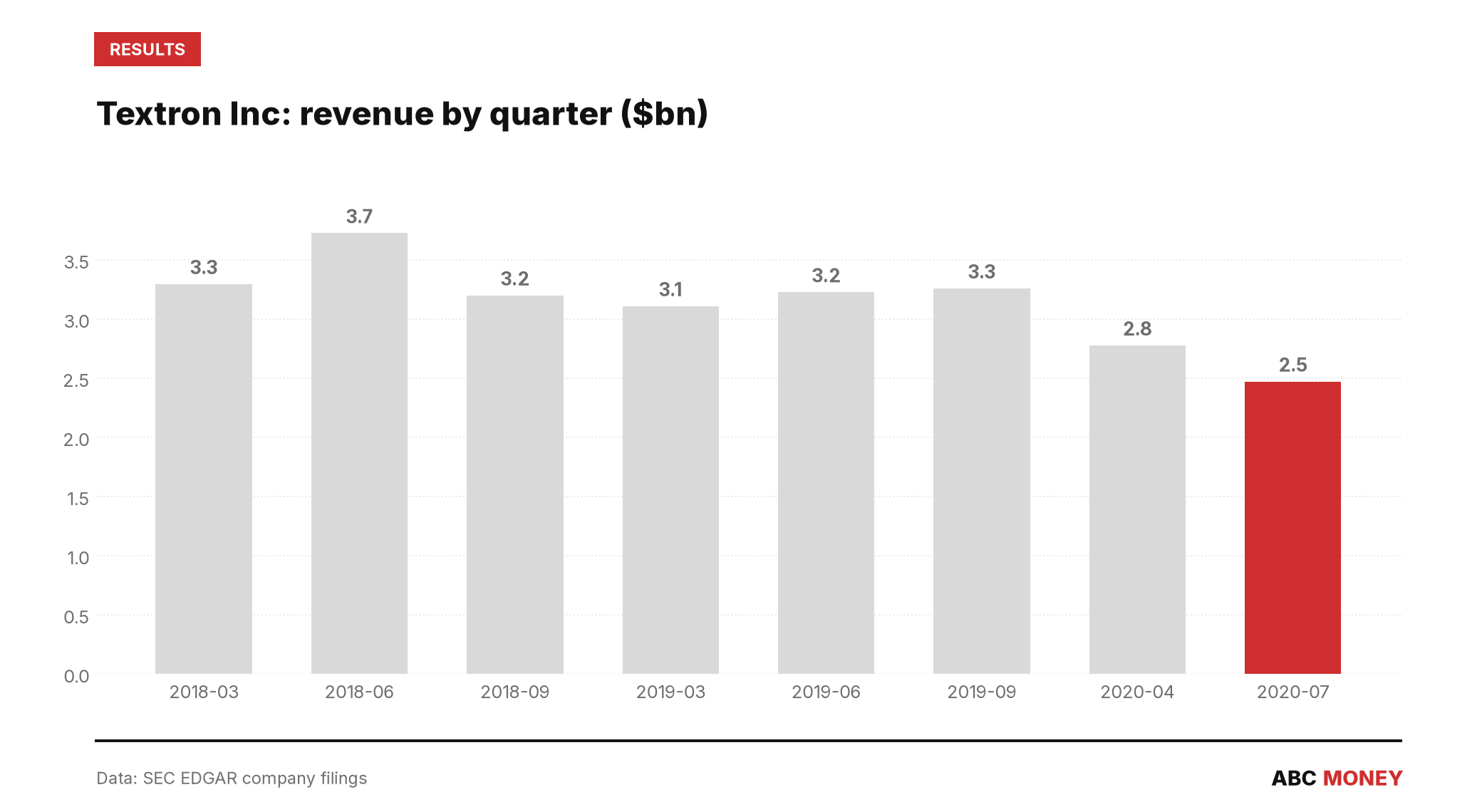
Context matters here. The Industrial unit generated around $3.2bn in revenue in 2025, down from $3.5bn in 2024, according to reporting by Manufacturing Dive – a business growing slower than the parts of Textron it is leaving behind. What remains – Textron Aviation, Bell and Textron Systems – is estimated to produce something closer to $12bn a year in revenue, the same reporting suggests, meaning the divested arm represented roughly a fifth of group sales. Textron’s own quarterly filings show net income running between $207m and $270m a quarter through 2024 and 2026, including $220m in the first quarter of 2026, $248m in the second and $270m in the third, filed with the SEC – useful scale for judging a one-off $1.1bn cash injection against several years of ordinary earnings power.
The agreement carries an outside date of 18 November 2027, the point by which the deal must close or either side can walk away, per the filing, with completion more broadly expected in the first half of 2027 according to Seeking Alpha. That is a long runway, typical for carve-outs of this size that require regulatory clearances across multiple jurisdictions given Kautex’s European manufacturing footprint.
A buyback dressed as a pivot
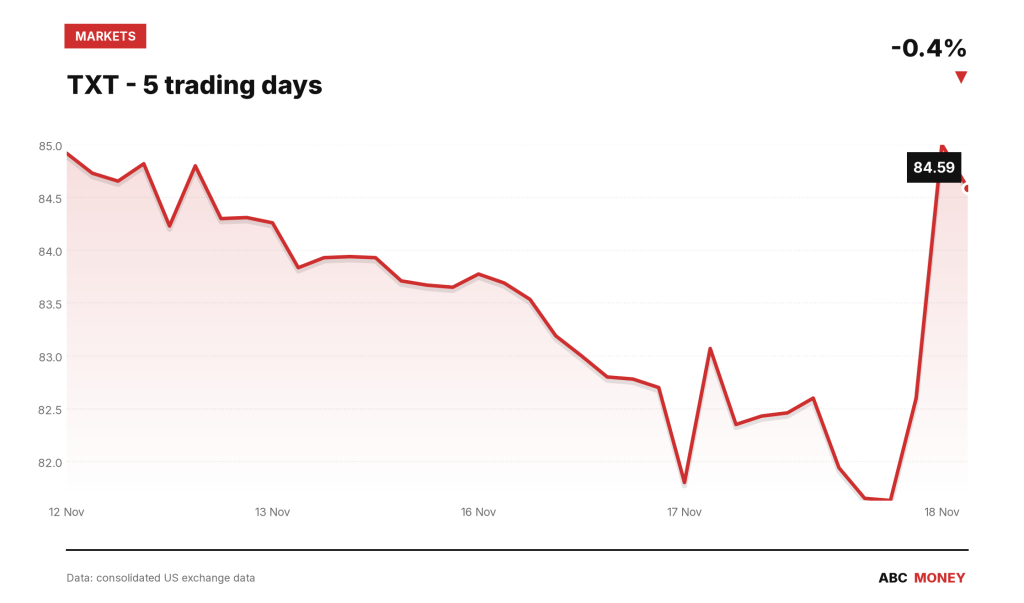
The part of the announcement doing the real work for shareholders sits a few paragraphs below the headline sale price: Textron’s board simultaneously authorised the repurchase of up to 35 million shares, funded directly by the proceeds. At Tuesday’s price of $84.59, that authorisation would be worth close to $3bn if fully executed – roughly three times the cash the sale itself generates, which tells you the company intends to layer in existing buyback capacity and balance-sheet cash alongside the fresh proceeds rather than treat this purely as a one-for-one capital return. Either way, the mechanics matter more than the strategic language. Calling the result a “pure-play aerospace and defense company” is accurate, but the buyback authorisation is what converts a portfolio reshuffle into a direct signal about how management plans to support the stock once the Industrial business is off the books.
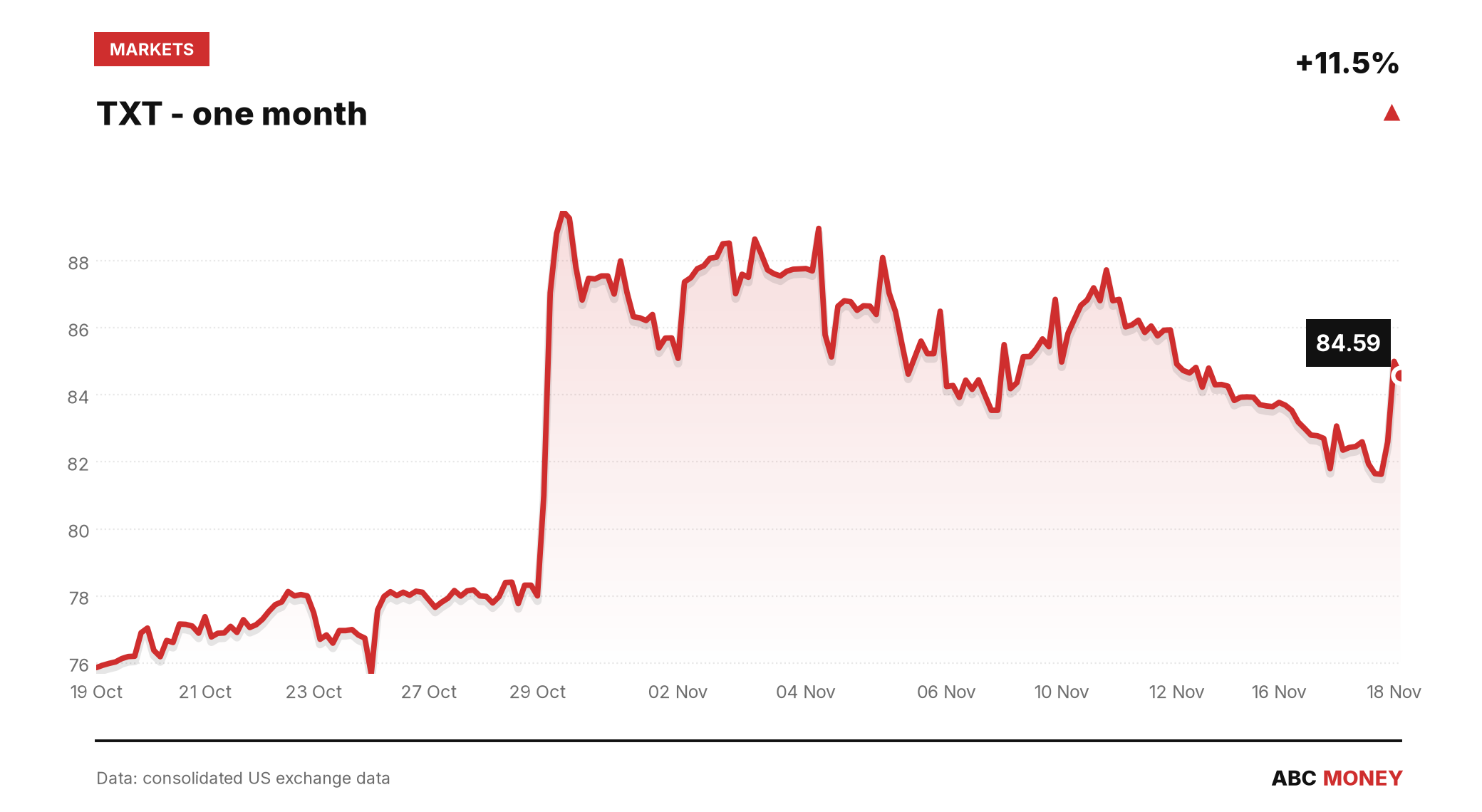
The market had already worked some of this out. The Wall Street Journal and other outlets confirmed the terms within hours of the filing, and Textron shares were changing hands at $84.59 as of Wednesday morning, up 2.58% on the day and 8.74% over the preceding 20 trading sessions – a run that had already pushed the stock toward the top of its recent range of $77.77 to $89.49.
Positioning tells its own story
Short-sale activity in Textron stock had been building in the fortnight before the announcement became public. FINRA’s daily short-sale data show the share of trading volume attributed to short sales climbing from 0.692 on 5 November to a peak of 0.85 on 11 November – the same day Textron’s board is understood to have approved the buyback authorisation – before easing to 0.747 by 17 November, the day before the deal was confirmed, according to FINRA’s short-sale volume data. None of that proves anything untoward; short-sale ratios move for all sorts of reasons, including hedging ahead of an expected announcement rather than any leak of its contents. But the pattern is a reminder that Textron’s strategic review had been closely watched by traders long before Tuesday’s filing made it official.
For investors, the practical markers now are the regulatory approvals Kingswood will need to close the transaction, the pace at which Textron deploys its new buyback authorisation, and whether the slimmed-down aerospace and defence business can hold the growth rate that justified separating it from a slower-moving industrial arm in the first place. Textron’s next quarterly filing should offer the first real test of that question.
This article is for information only and is not investment advice or a recommendation to buy or sell any asset. Markets move quickly; figures are correct as sourced at the time of writing. Always do your own research before making financial decisions.