HPE Board Appointment: Nason Joins as Elliott Pact Tightens
HPE's board appointment of Jennifer Nason came the same day it capped board size under its Elliott cooperation deal - the third activist-linked seat since 2025.
In this article 3 sections
Hewlett Packard Enterprise (NYSE: HPE) confirmed on 18 November 2026 that Jennifer Nason, the former Global Chair of Investment Banking at JPMorgan Chase Bank, has joined its board of directors, effective immediately. The company’s filing frames it as a straightforward governance upgrade – decades of advising technology, media and telecoms clients, brought to bear on a board steering HPE through what its own press release calls the reshaping of networking, cloud and AI.
That framing is accurate. It is also not the whole story. The same regulatory filing that announces Nason’s arrival discloses a second amendment to HPE’s cooperation agreement with activist investor Elliott Investment Management – a deal that now caps the board at 15 directors through the 2027 annual meeting, falling to 13 thereafter if the arrangement is still running. An activist investor, for readers who haven’t followed the saga, is a shareholder that buys a stake specifically to push for changes in strategy, management or board composition rather than simply sit and collect dividends. HPE and Elliott have been doing exactly that dance for sixteen months.
A board seat that arrived with conditions attached
Nason is the third director HPE has added under its engagement with Elliott since the original cooperation agreement was signed on 16 July 2025, a deal that also installed a new Strategy Committee chaired by fellow new director Bob Calderoni. Elliott partner Chris Hsu followed him onto the board on 1 June 2026 under a first amendment to the same agreement. Nason’s appointment, under the second amendment, continues the pattern rather than closing it out – though the newly agreed board-size cap suggests HPE and Elliott have at least settled on an endpoint for how far the reshuffle goes.
None of this makes Nason’s résumé less relevant. Her decades inside JPMorgan’s investment bank, advising large-cap technology and telecoms clients on deals and capital strategy, is precisely the skill set a board wrestling with network infrastructure, cloud economics and AI capital spending would want in the room. But the timing – filed alongside, not separately from, the Elliott amendment – tells shareholders this is as much a negotiated outcome as a merit hire. Independent reporting from TipRanks and a republication by Stockhouse both corroborate the substance and the date.
The business Nason is inheriting
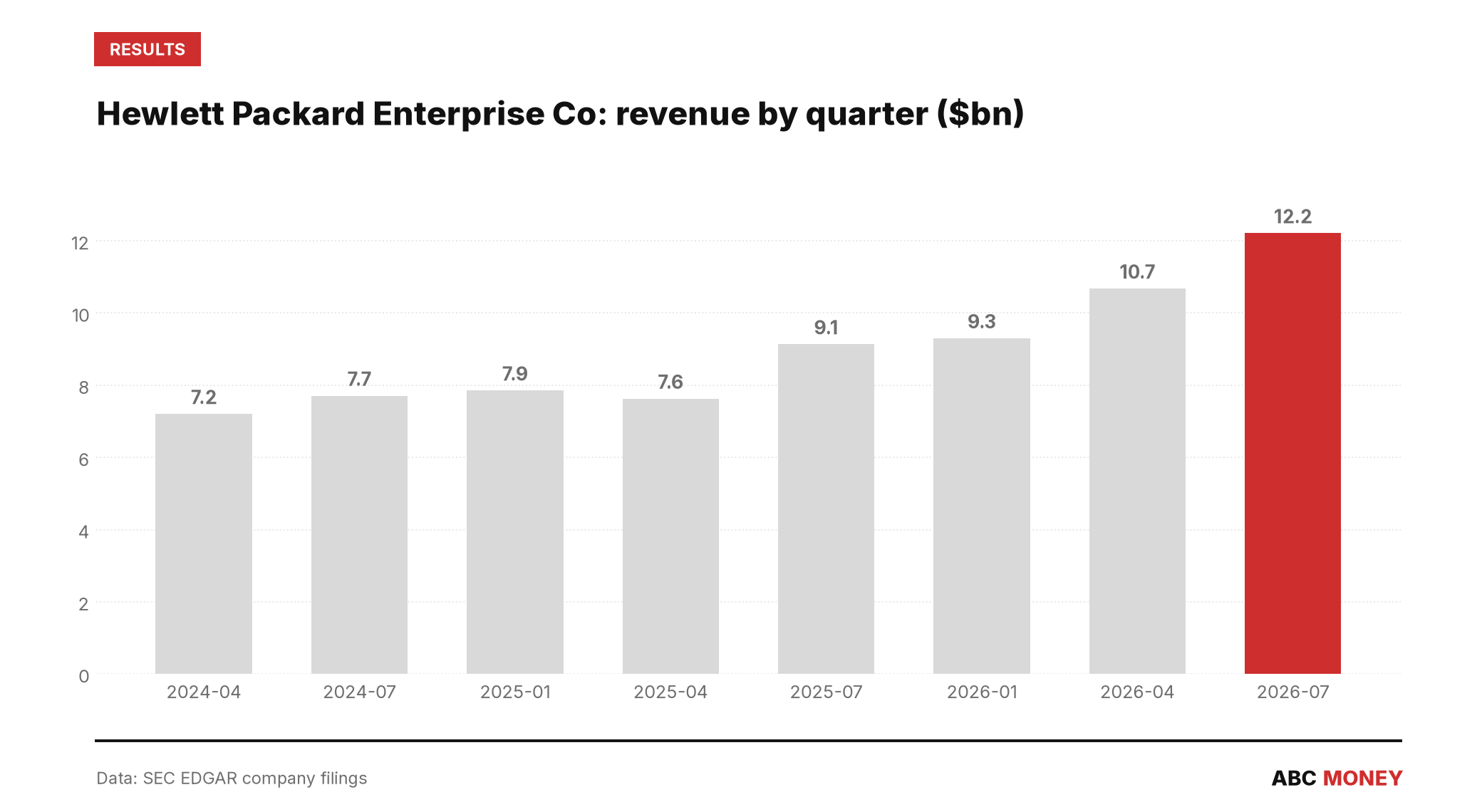
Whatever the governance politics, the company itself has been through a visible transformation since Elliott first turned up. Quarterly revenue has roughly doubled across the period the cooperation agreement has been in force, from $7.2bn in the quarter ended April 2024 to $12.2bn in the quarter ended July 2026, according to HPE’s own quarterly filings – a jump that reflects the scale change from folding Juniper Networks into the group rather than organic growth alone. Profitability has been lumpier: HPE swung to a $1.05bn net loss in the quarter ended April 2025 before rebuilding to net income of $1.54bn by the quarter ended July 2026, a trajectory that explains some of the appetite, on both sides, for outside financial expertise at board level.
Markets took notice before the ink dried
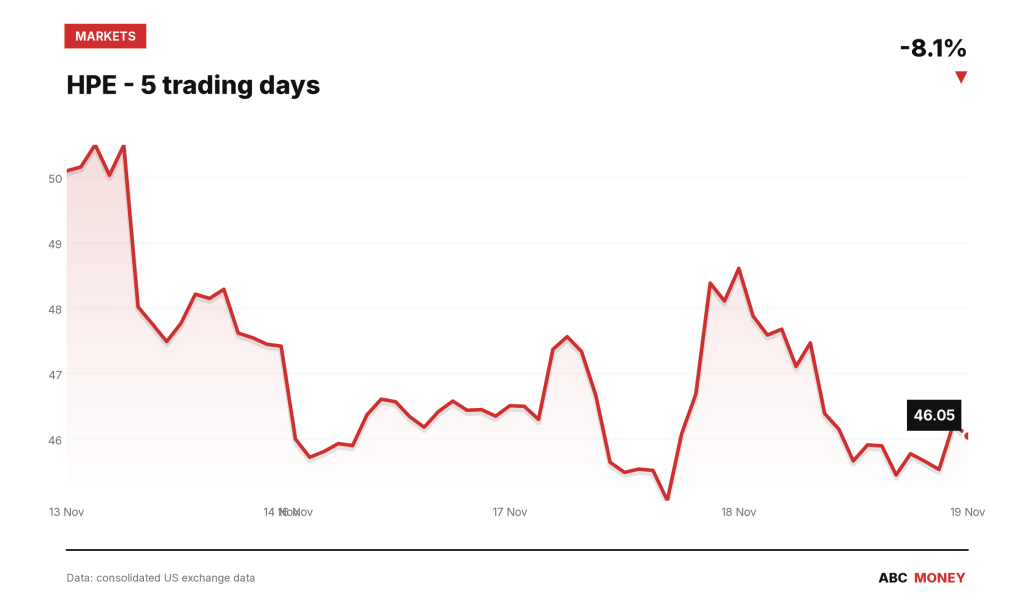
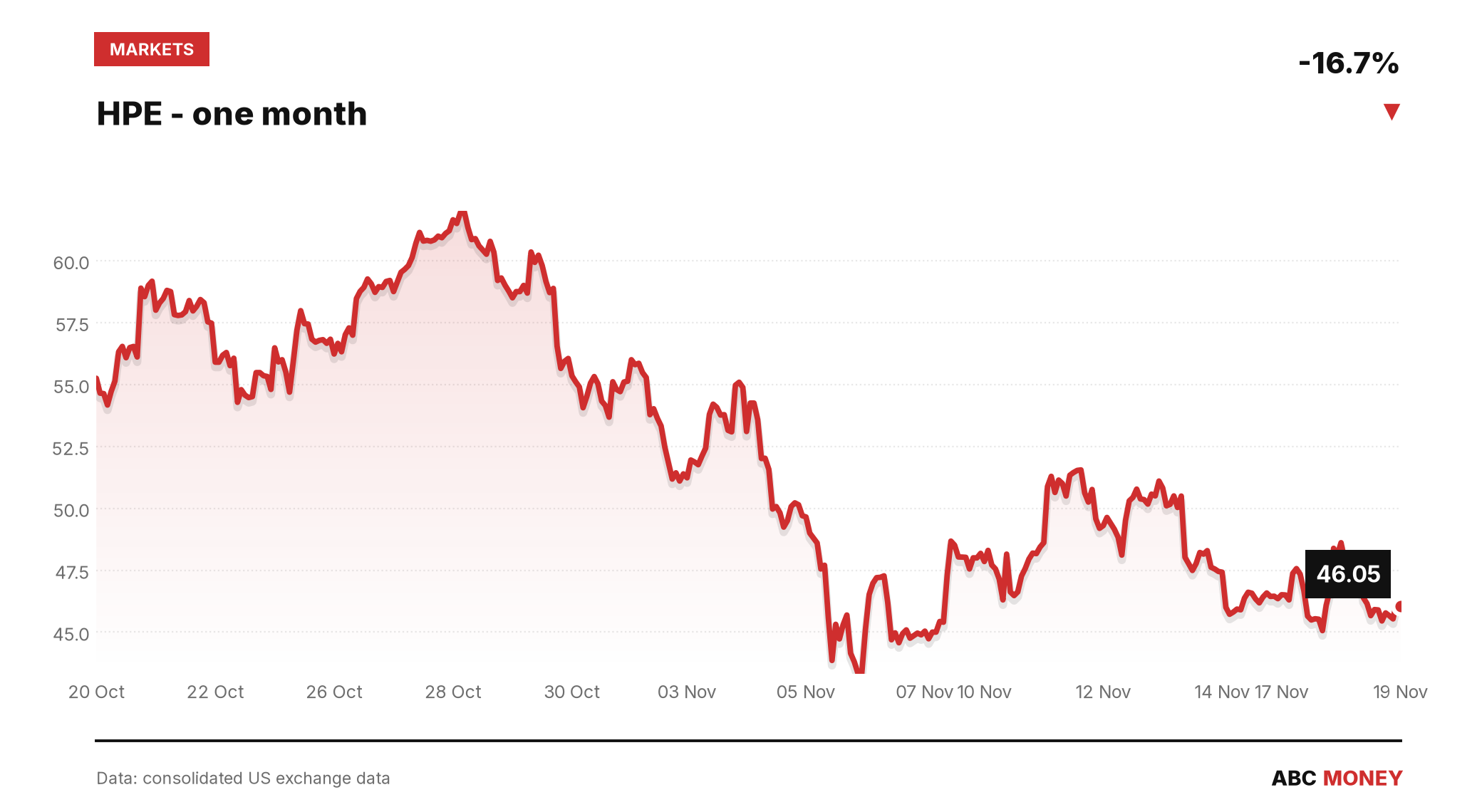
Trading data around the announcement hints that some investors had an inkling something was coming. The daily short-sale volume ratio on HPE stock – roughly the share of a day’s trading that involved short sales, tracked by FINRA – nearly doubled from 0.211 on 12 November to 0.418 on 18 November, the day of the Nason filing. That is a shift worth flagging rather than over-reading: short-sale ratios move on plenty of noise unrelated to corporate news, and a single-day jump of this size is not unusual around any scheduled filing. HPE shares themselves have had a rough run regardless, down 20.87% over the preceding twenty trading sessions and closing at $46.29 as of 19 November 2026, within a twenty-day range that stretched from $43.31 to $60.35.
For shareholders, the practical question now is less about Nason’s credentials, which are not in dispute, and more about what the newly capped board composition signals for the remainder of the Elliott engagement. With the ceiling set at 15 seats through next year’s annual meeting and a step down to 13 after that if the cooperation agreement is still active, HPE has effectively put a shelf life on how much further this activist-driven reshuffle can run – a detail investors tracking the stock into the 2027 meeting will want on their calendars.
This article is for information only and is not investment advice or a recommendation to buy or sell any asset. Markets move quickly; figures are correct as sourced at the time of writing. Always do your own research before making financial decisions.