Ford starts shipping CATL battery cells from Michigan plant
Ford has shipped its first CATL battery cells from Michigan, a milestone dogged by political scrutiny of the Chinese tie-up and shaky quarterly profits.
In this article 3 sections
Ford Motor Co (NYSE: F) has shipped its first CATL battery cells from a Michigan factory, a concrete step in a strategy the carmaker has pursued since 2023 but one that remains politically fraught in Washington. The cells, manufactured using technology licensed from China’s CATL, left the BlueOval Battery Park in Marshall, Michigan, on Wednesday 18 November 2026, bound for the Louisville Assembly Plant in Kentucky, where they will power pre-production units of Ford’s new Fathom electric pickup, as UPI reported.
The cells are lithium iron phosphate, or LFP – a battery chemistry that trades some energy density for lower cost and longer cycle life, and one that Chinese manufacturers have dominated for years. Ford’s VP of advanced development, Alan Clarke, said CATL’s scale made it “the best supplier” to help the company learn the chemistry quickly, framing the licensing arrangement as a fast-track rather than a dependency, according to UPI.
A licence, not a joint venture – Ford insists
The structural distinction matters because it has become the crux of a running argument in Washington. Ford has been explicit that the Marshall plant is wholly owned and operated by the carmaker, which employs the workforce and runs the supply chain, with CATL providing technology and services under contract rather than equity, according to reporting from CarPro. That framing has not satisfied every critic in the current administration. US Transportation Secretary Sean Duffy said the department “remains deeply alarmed by Ford’s continued reliance on licensed technology from Chinese battery manufacturer CATL” at the Marshall facility, according to InsideEVs. Ford’s response, as relayed by the same outlet, was that the arrangement is “a limited technology-licensing and services agreement, not a joint venture or foreign-owned manufacturing operation” – a rebuttal that effectively concedes the political sensitivity even as it rejects the characterisation.
CATL’s presence on a Pentagon list of companies alleged to have military ties has kept that scrutiny alive since the deal was first struck, per CarPro. For Ford, Marshall is as much a test of whether a US-owned plant running licensed Chinese chemistry can pass political muster as it is a manufacturing milestone.
The scale Ford is chasing
Ford says the Michigan lines can run at 40 cells a minute, which the company describes as among the fastest LFP prismatic production rates outside China, according to Yahoo Finance. The Detroit News reported the plant is designed to eventually run two such lines at full ramp-up. The facility itself represents a $3 billion investment, according to the International Business Times, with production having quietly begun in October before Wednesday’s shipment made the milestone public.
Ford’s own target is to begin assembling cells into finished battery packs at a neighbouring facility in 2027, with the first production Fathom pickups reaching buyers by the end of that year, according to Fox17/WOOD-TV, which also reported that Michigan governor Gretchen Whitmer attended the launch and credited state support for landing the project. Ford’s long-term goal for the site is roughly 1,700 jobs, more than 70% of them drawn from the Marshall, Albion and Battle Creek area, the same report said.
A milestone against an uneven balance sheet
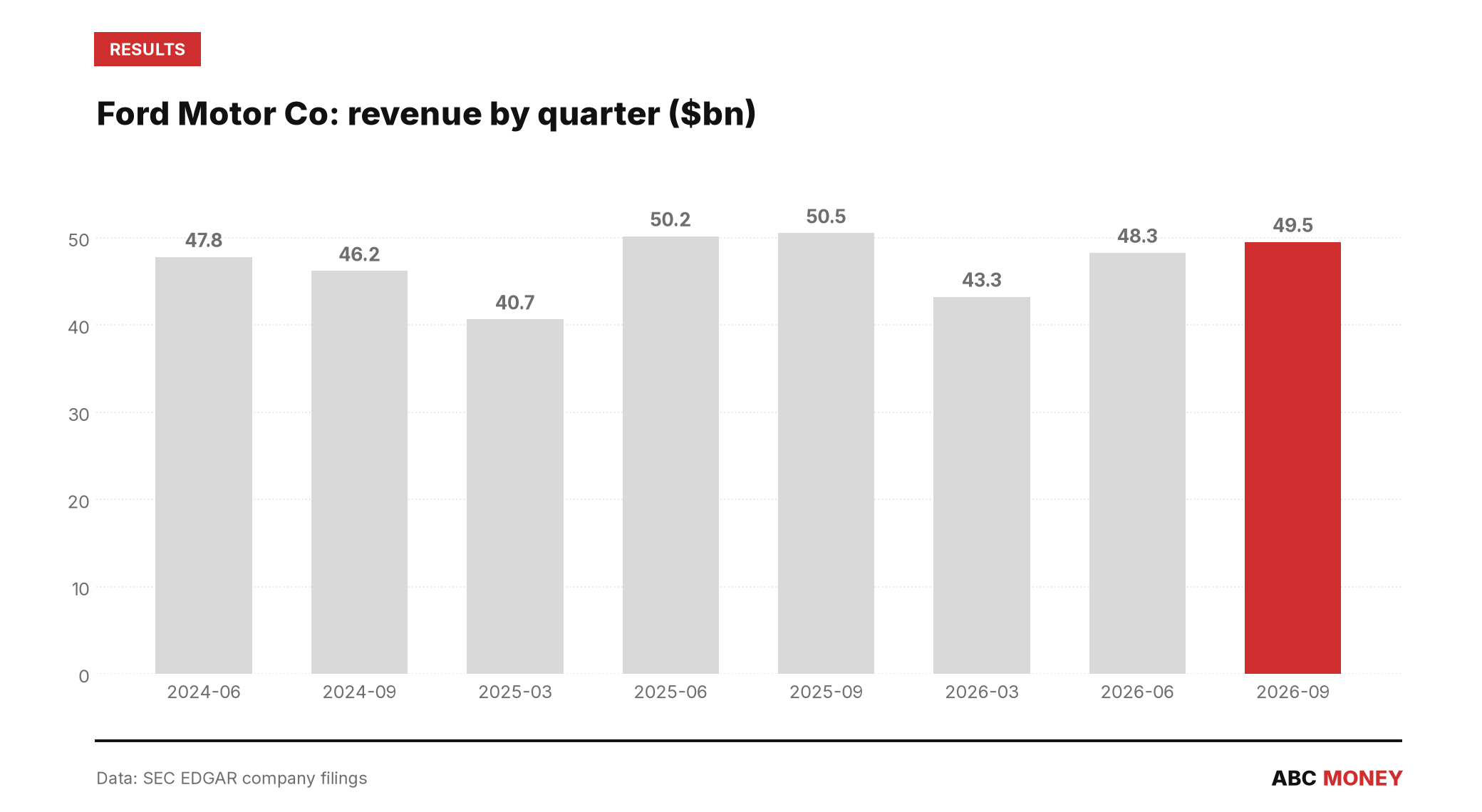
The announcement lands at an awkward moment for Ford’s core profitability. The carmaker’s quarterly net income has swung sharply over the past two years – from a $1.92 billion profit in the second quarter of 2023 to a $36 million net loss in the second quarter of 2025, before returning to diluted earnings per share of $0.50 in the third quarter of 2026, according to Ford’s own filings with the SEC. Quarterly revenue has moved in a similarly uneven band, from $40.7 billion in the first quarter of 2025 to $50.5 billion a couple of quarters later, per the same disclosures. Battery self-sufficiency is, in that context, as much a cost-control bet as a technology one: LFP chemistry is cheaper than the nickel-based cells Ford has relied on, and bringing production onshore is meant to insulate the company from both tariff exposure and supply shocks further down the line.
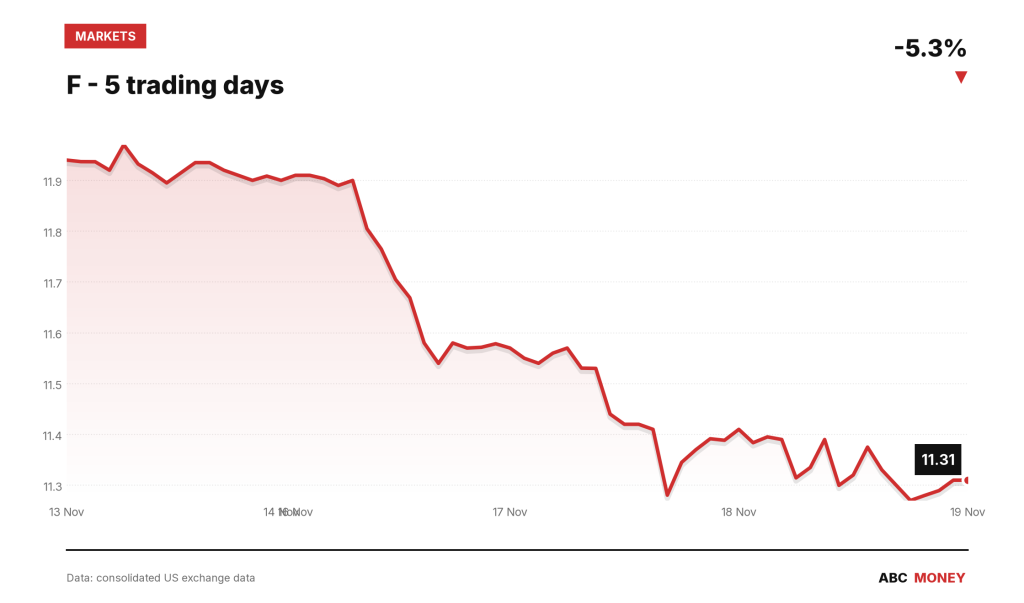
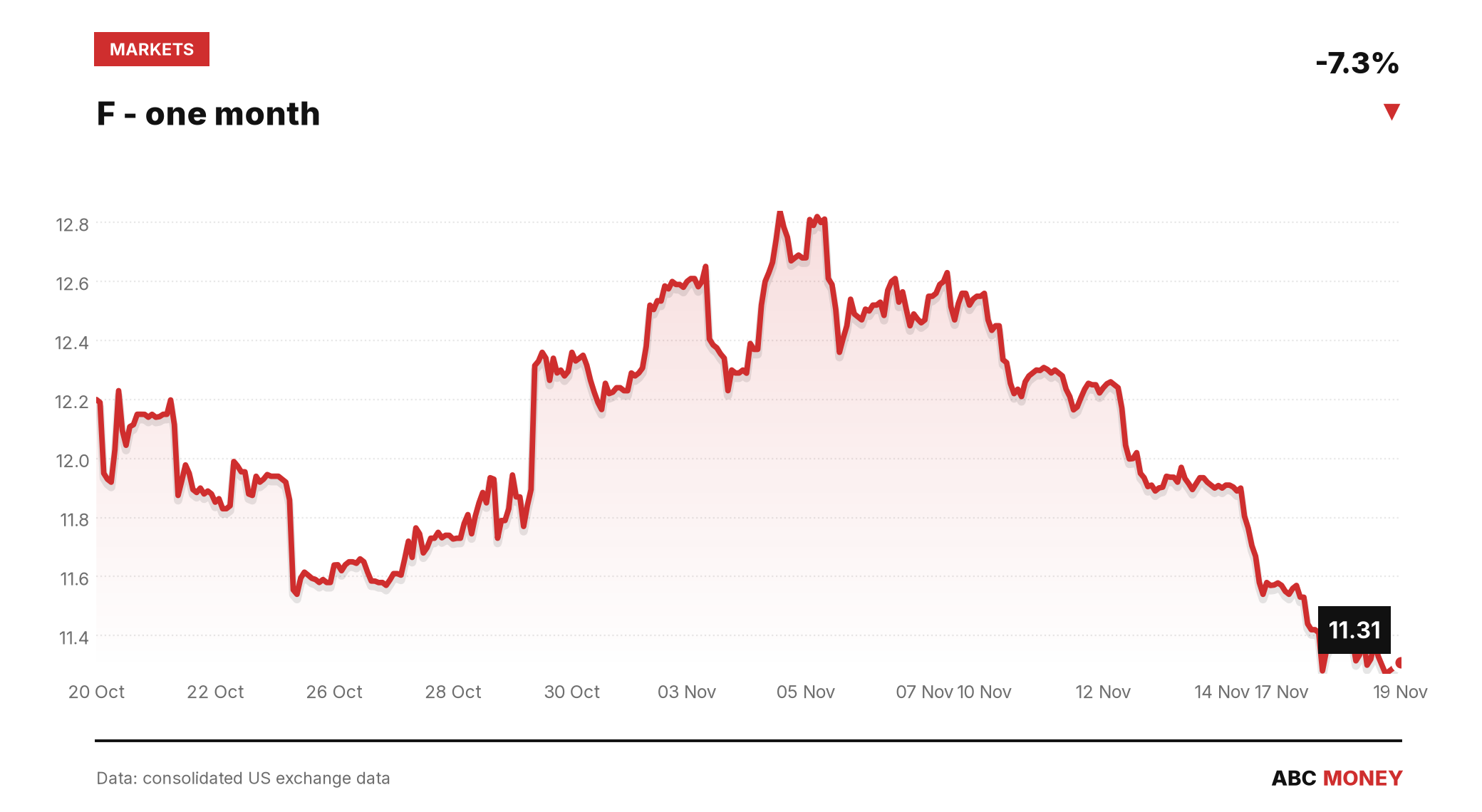
Markets, for their part, treated the news as background noise rather than a catalyst. Ford shares closed at $11.31, down 0.57% on the day and down 5.31% over the preceding 20 trading sessions, with volume running at 1.12 times the 20-day average – a pattern consistent with the stock’s existing short-term drift rather than a reaction unique to the battery news.
What happens next is less about the shipment itself than about what comes after it. Ford has pointed to 2027 as the year it expects to move from shipping test cells to assembling full packs at Marshall, and ultimately to putting Fathom pickups built on this chemistry into customers’ hands. Whether the licensing structure it has built around CATL can survive sustained political pressure in Washington may end up mattering as much to that timeline as the engineering does.
This article is for information only and is not investment advice or a recommendation to buy or sell any asset. Markets move quickly; figures are correct as sourced at the time of writing. Always do your own research before making financial decisions.