
Most investors chase the next trade. The smarter ones chase understanding.
That gap — between reacting to markets and actually grasping how they work — is exactly why DeFi education has become the obsession of a growing number of serious crypto investors. And it’s why platforms built around long-term learning are pulling ahead of those selling signals and shortcuts.
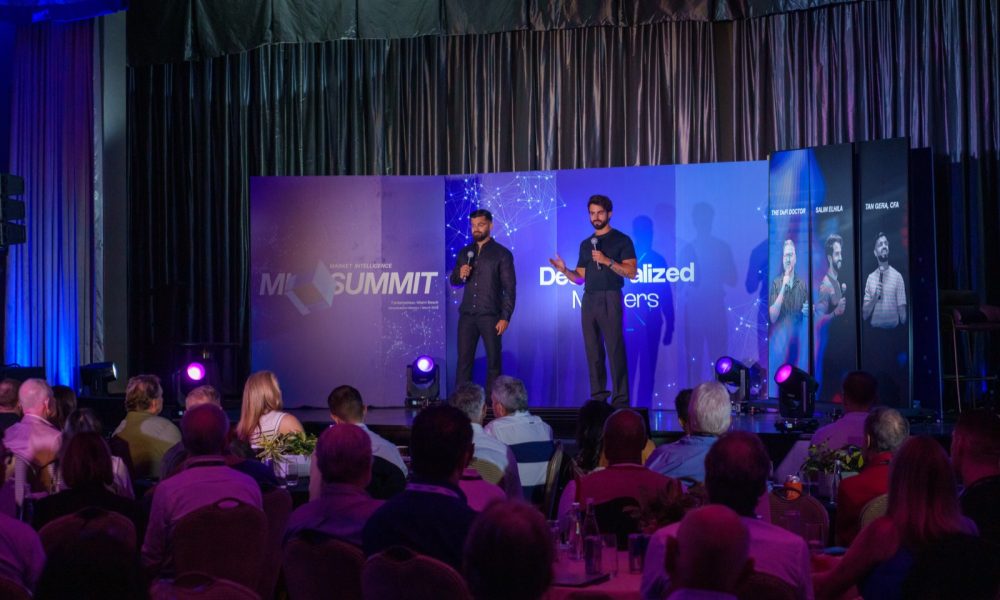
Decentralized Masters, a global investor development platform, has staked its reputation on one premise: education should outlast any market cycle.
Co-founder Tan Gera puts it plainly. "The investors who tend to survive multiple cycles are usually the ones who focus on education before speculation," he says.
Worth asking: when did that idea become controversial?
The field isn’t short on options. Binance Academy covers blockchain fundamentals at scale. Bankless Academy leans into on-chain participation and DeFi. Coin Bureau serves self-directed learners who want research-driven content. Investopedia remains a go-to for investors stepping into digital assets from traditional finance.
Each has its audience. Each fills a different gap.
Decentralized Masters does something else — it wraps education around mentorship, portfolio construction frameworks, ongoing research access, and community. The company serves more than 4,500 members worldwide and has cleared 1,000 Trustpilot reviews, making it one of the more scrutinized platforms in the space (including Reddit threads debating whether it’s actually worth joining).
That scrutiny, Tan says, doesn’t bother him. "The goal isn’t to make members dependent on an educator, but to develop independent decision-makers."
Here’s the thing: ten years ago, crypto education was simple. Bitcoin basics. How wallets work. What a blockchain actually does.
That era’s gone.
Today’s investor needs to get their head around DeFi protocols, tokenized real-world assets, yield strategies, self-custody, on-chain risk management, AI integrations, and portfolio construction — all while markets are moving. The DeFi education required to operate competently in 2025 looks nothing like what was needed in 2015.
So what should investors actually look for in a learning platform?
Tan breaks it into five areas. First: educational depth — not "what is happening" but why markets function the way they do. Second: risk management — most people learn entries; almost nobody learns how to manage the downside. Third: portfolio construction, because how assets interact within a portfolio often matters more than picking winners. Fourth: self-custody and financial sovereignty. Fifth: community, because learning accelerates when you’re surrounded by people wrestling with the same questions.
That last point cuts to something bigger.
Financial sovereignty — the ability to control your own assets without handing that job to a bank, broker, or intermediary — used to be theoretical. DeFi made it practical. And that shift has real consequences for how investors need to think.
"We emphasize financial sovereignty by teaching members to eliminate intermediaries entirely rather than simply switching from one platform to another," Tan says. "That shift requires education. Not because the technology is inaccessible, but because the responsibilities are different."
He’s right. Self-custody isn’t complicated in principle. But the responsibility is real — and most people have no framework for it.
Decentralized Masters is betting that’s the gap worth closing. Beyond static course delivery, it runs workshops, live mentorship, research initiatives, and international events. The pitch is context, not just content.
"People are no longer looking only for content, but for context," Tan claims. Sounds like a marketing line. But given how fragmented crypto information has become — contradictory, tribal, constantly shifting — it’s hard to argue the point.
The industry will never fully shake its obsession with predictions. That’s fine. But experienced investors learn something eventually: predictions expire. Frameworks don’t.
A market call might last a week. A clear mental model for how decentralized systems work can stay useful for decades.
That’s the real argument for taking DeFi education seriously — not as a shortcut to profits, but as the foundation serious investors keep coming back to. Tan Gera and Decentralized Masters are positioning themselves as that foundation.
Whether any platform can fully deliver on that promise is a question investors should ask carefully. But the underlying idea? Solid. The investors who’ll be standing after the next cycle are probably already studying.



 Bitcoin
  Ethereum
  Tether
  BNB
BNB  USDC
USDC  XRP
XRP  Solana
  TRON
TRON  Lido Staked Ether
  Cardano
  Gram (prev. Toncoin)
  Avalanche