Oracle says OpenAI deal is fully funded after final capital raise
Oracle says its OpenAI deal is fully funded after a $20bn capital raise, but ORCL shares still trade below the price investors paid.
In this article 3 sections
Oracle (NYSE: ORCL) said on Friday that its infrastructure contract with OpenAI is fully funded, closing out a capital raise the company says finally covers everything it has promised to build. “Oracle has secured all the funding we need to fulfil our contract with OpenAI,” the company told Reuters, adding that it had become “the first hyperscaler fully funded for this investment cycle.”
It’s a pointed line, aimed squarely at a market question that has dogged every cloud provider building out AI data centres this year: whether multi-year contracts to supply computing capacity are backed by cash in hand, or by promises that still need financing. Oracle’s answer, in its own words posted to its official account, is that the gap has now been closed.
How Oracle says the OpenAI deal fully funded itself
The mechanics go back to Oracle’s Investor Day, where the company capped additional capital-markets fundraising for its fiscal 2027–2030 build-out at $20bn, split evenly between new equity and debt. That followed an earlier $20bn at-the-market equity raise completed in the first quarter of fiscal 2027, according to Yahoo Finance. The final instalment landed this month: $10bn of new shares priced at $116.00, plus $10bn of notes, as reported by FourWeekMBA. Put together, that’s the funding stack Oracle now says covers its end of the OpenAI contract in full.
The company also used the update to point to physical progress rather than just balance-sheet arithmetic. Its Abilene, Texas campus – where OpenAI’s GPT-6 Astra model was trained – is nearly complete, and the larger, gigawatt-scale Shackelford campus is now fully permitted, Oracle said. Looking further out, the company is targeting more than $30bn of free cash flow in fiscal 2029, the point at which it expects to start self-funding future growth rather than returning to capital markets.
Oracle went further still, saying that any additional private financing talks with vendors are now optional rather than necessary to deliver on the OpenAI contract, and pushed back on media reports suggesting otherwise, calling them incorrect.
The awkward gap between $116 and where the stock trades
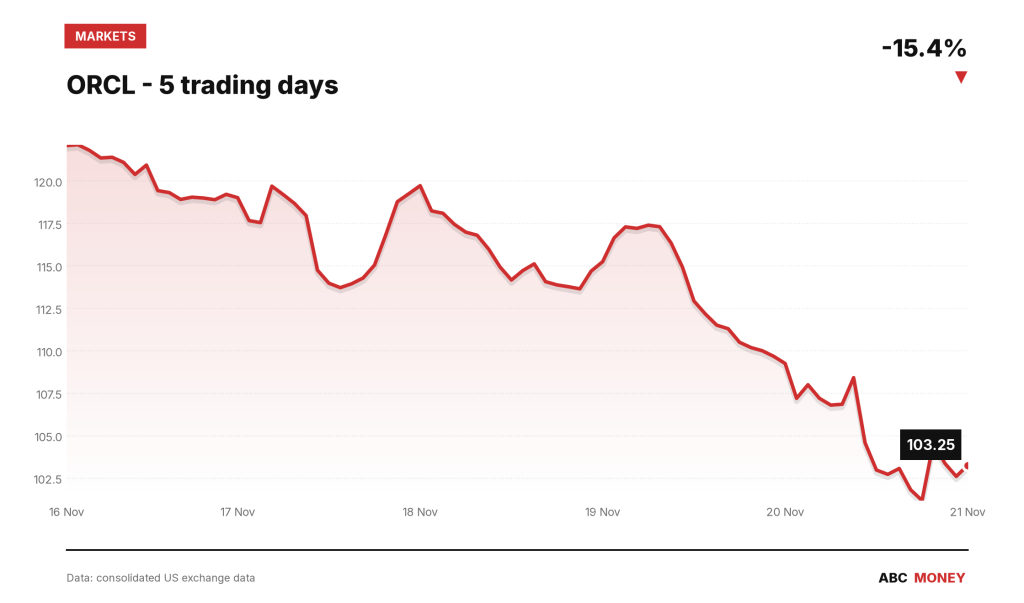
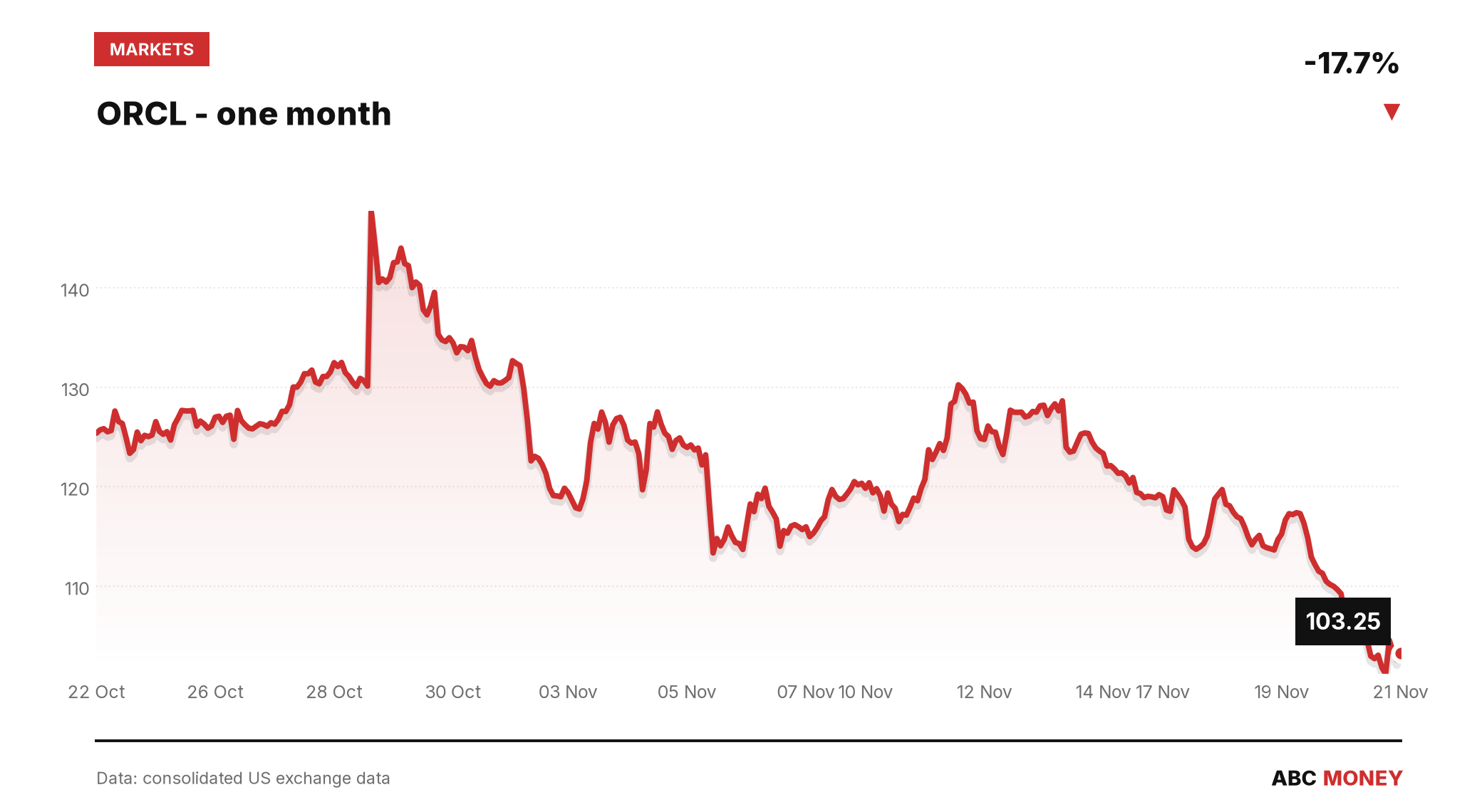
The reassurance lands at an uncomfortable moment for anyone who bought into that November share sale. Oracle stock closed Friday at $101.17 – about 12.8% below the $116.00 price at which the new shares were sold just days earlier, according to FourWeekMBA‘s reporting. Shares did rise as much as 3.3% in after-hours trading on the fully-funded announcement itself, Reuters reported, but that bounce has not been enough to erase the broader slide: the stock last traded at $103.30, up a modest 0.56% over 24 hours but down 22.15% over the prior 20 trading days, with volume running at 1.53 times its 20-day average.
That 20-day range – a high of $132.69 against a low of $101.18 – captures just how much ground Oracle has given up since the AI infrastructure story turned from a tailwind into a financing worry for the stock.
None of that shows up as a surge in bearish positioning, for what it’s worth. Daily short-sale volume data from FINRA put Oracle’s short-sale ratio – the share of daily trading volume attributable to short sales, a proxy for how aggressively traders are betting against the stock – at between roughly 0.25 and 0.39 across the ten sessions surrounding the announcement. That’s an unremarkable range, with no spike coinciding with the news, suggesting the market’s scepticism has expressed itself through selling existing holdings rather than a fresh wave of short bets.
Why the funding question matters beyond Oracle
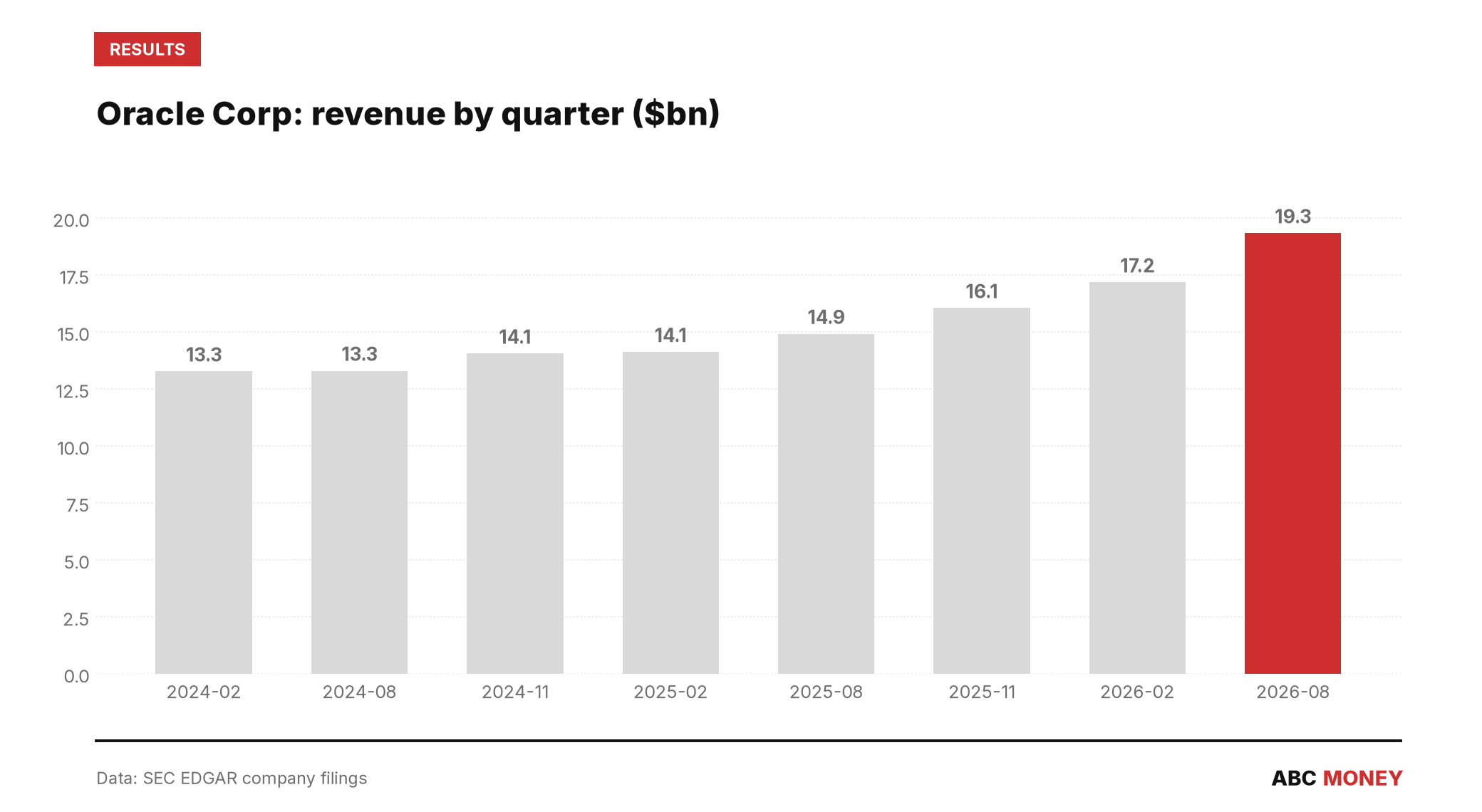
Oracle’s declaration speaks to a bigger debate playing out across the AI infrastructure trade: the gap between what hyperscalers have contracted to deliver and what they can actually afford to build, a tension flagged by analysts covering the sector more broadly. OpenAI’s spending commitments with cloud providers have been widely described as a major driver of technology-sector capital expenditure over the past year, with Oracle repeatedly cited as one of the principal beneficiaries of that spending.
That context is partly why Oracle felt the need to say, explicitly and publicly, that the money is now in place rather than still being arranged. Whether investors take the company at its word, or keep marking the stock down until free cash flow actually starts covering the bill in 2029, is now a matter for the market to settle one earnings report at a time.
This article is for information only and is not investment advice or a recommendation to buy or sell any asset. Markets move quickly; figures are correct as sourced at the time of writing. Always do your own research before making financial decisions.