Home Depot Confirms Richard McPhail as New CEO From Nov 23
Home Depot's new CEO is Richard McPhail, effective 23 November 2026 - formalising a leadership plan set in motion back in August.
In this article 3 sections
The Home Depot (NYSE: HD) has made it official: Richard McPhail will become Home Depot’s new CEO from 23 November 2026, the retailer said in a release that also elevated Ann-Marie Campbell to president and chief operating officer and named Jordan Broggi as executive vice president and chief financial officer. Ted Decker remains chair of the board. The appointments were confirmed in Home Depot’s own statement and reported the same morning by CNBC.
For readers who haven’t followed this closely, the headline understates how little actually changed on the ground. McPhail and Campbell have effectively been running the company since 12 August 2026, when Decker took a medical leave of absence and the pair were installed as interim leaders, a move CNBC reported at the time. Wednesday’s announcement converts an interim arrangement into a permanent one. The genuinely new piece of information is Broggi’s step up to CFO – a fresh appointment rather than a rubber stamp on an existing job-share.
Why the succession reads as settled, not scrambled
Boards that formalise an interim structure three months after installing it are usually signalling confidence rather than crisis. Decker stays on as chair, which keeps institutional continuity at the top table even as he steps back from day-to-day management. That combination – new CEO from the internal bench, a finance chief freshly appointed, the outgoing boss retained in a governance role – is closer to a textbook handover than an emergency reshuffle, and it lands on the back of a quarter that gave the new management team little to apologise for.
Home Depot’s fiscal second quarter, covering the three months to 2 August 2026, produced revenue of $47.86bn and diluted earnings per share of $4.79, according to the 10-Q filed with the SEC in August. That was the strongest top line of the eight quarters in the company’s recent filing history, ahead of the $45.28bn booked in the equivalent quarter a year earlier. Revenue has been choppy on a quarter-to-quarter basis – $36.4bn, $43.2bn, $40.2bn and so on through the cycle – reflecting the seasonal pattern of a business that does most of its volume in the warmer months, but the direction of travel into the leadership change has been upward rather than wobbling.
A rate backdrop that still weighs on the business
None of that changes the macro headwind McPhail inherits. The 10-year US Treasury yield stood at 5.15% as of 13 November 2026, according to Federal Reserve data, a level that keeps mortgage rates elevated and continues to discourage the home sales and big-ticket renovation projects that drive Home Depot’s higher-margin categories. Unemployment ticked down to 4.1% in October from 4.2% the month before, per the same Federal Reserve data series, which is a modest positive for discretionary spending, but it’s the cost of borrowing rather than the jobs market that has shaped the housing-turnover slump weighing on the sector for the better part of two years.
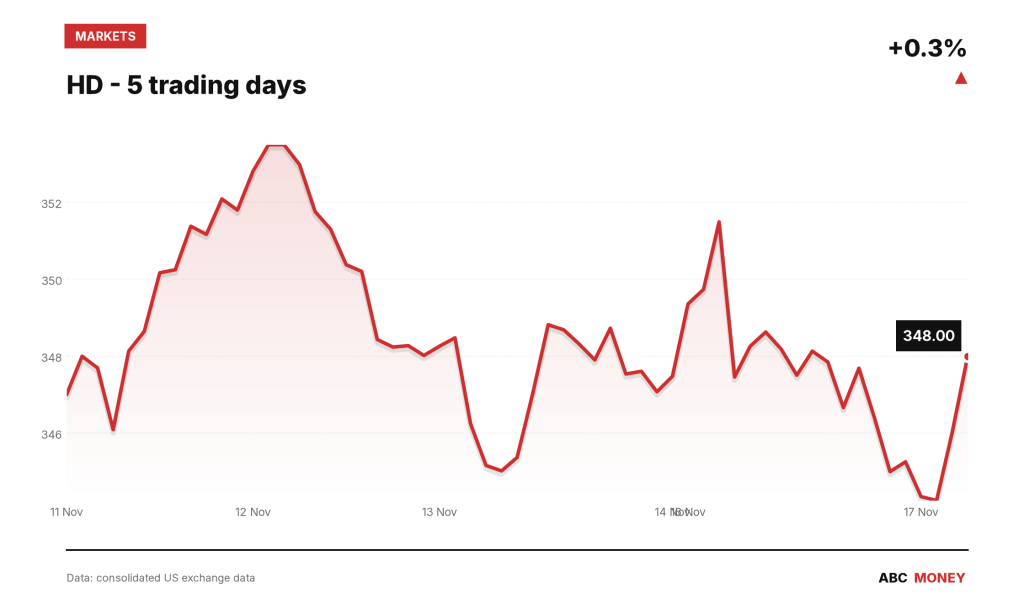
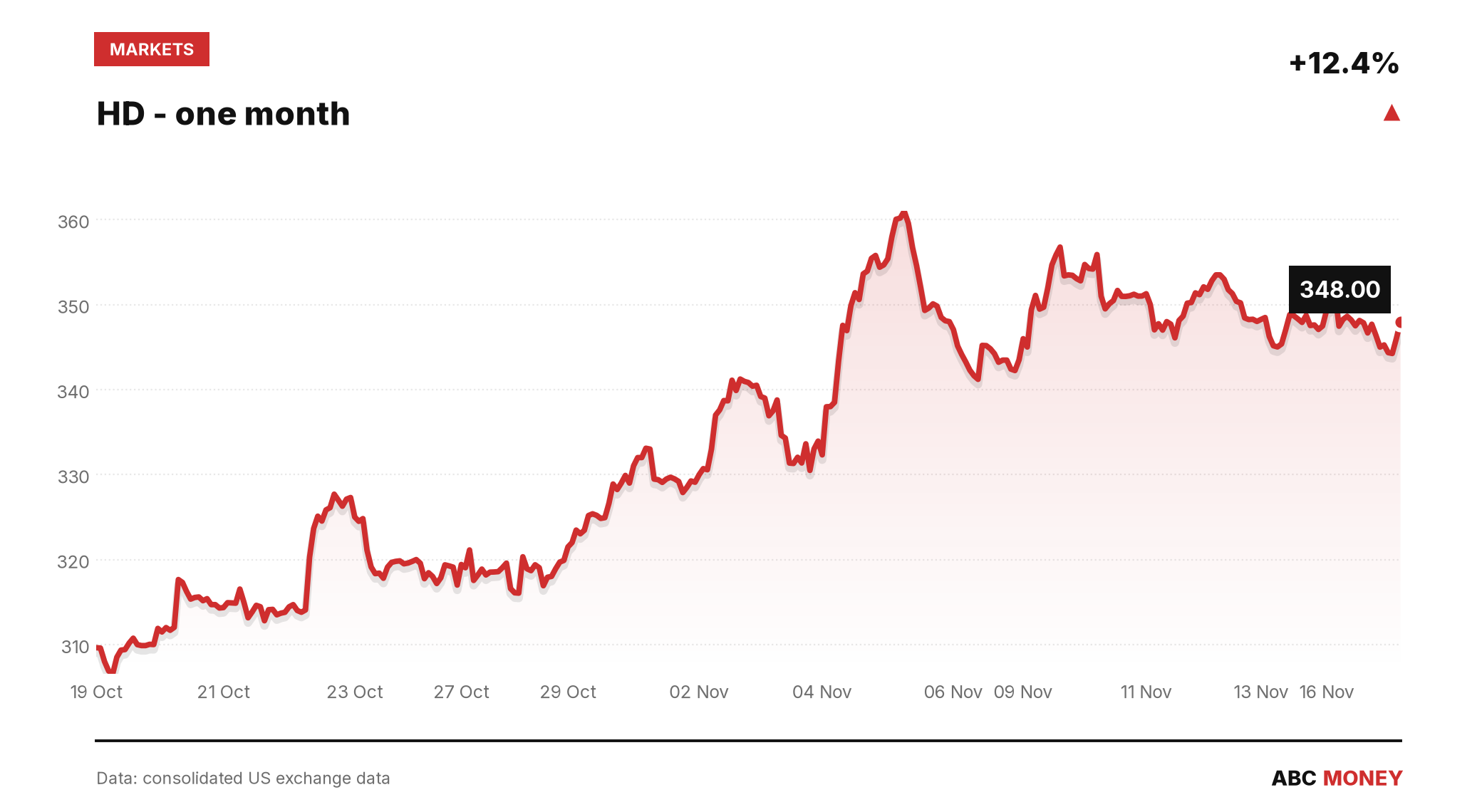
The stock’s reaction to Wednesday’s news was not celebratory. HD closed at $338.00, down 2.79% on the day, even though shares remain up 5.25% over the preceding 20 trading sessions and well within a trading range that has run from $316.05 to $361.00 over the past month. Trading volume was roughly in line with its 20-day average, suggesting the drop reflected broader positioning around the earnings release bundled into the same announcement rather than a verdict on McPhail specifically.
There was some evidence of nerves building beforehand. FINRA’s daily short-sale data – which tracks the share of trading volume executed by sellers betting a stock will fall – showed Home Depot’s short-volume ratio climbing from 0.324 on 3 November to a peak of 0.607 on 9 November, before easing back to 0.413 by 16 November, according to FINRA’s published figures. That pattern is consistent with traders positioning ahead of a results release that was always going to carry extra weight given the leadership question hanging over it, though short-volume data alone can’t tell you whether those bets paid off.
What McPhail inherits
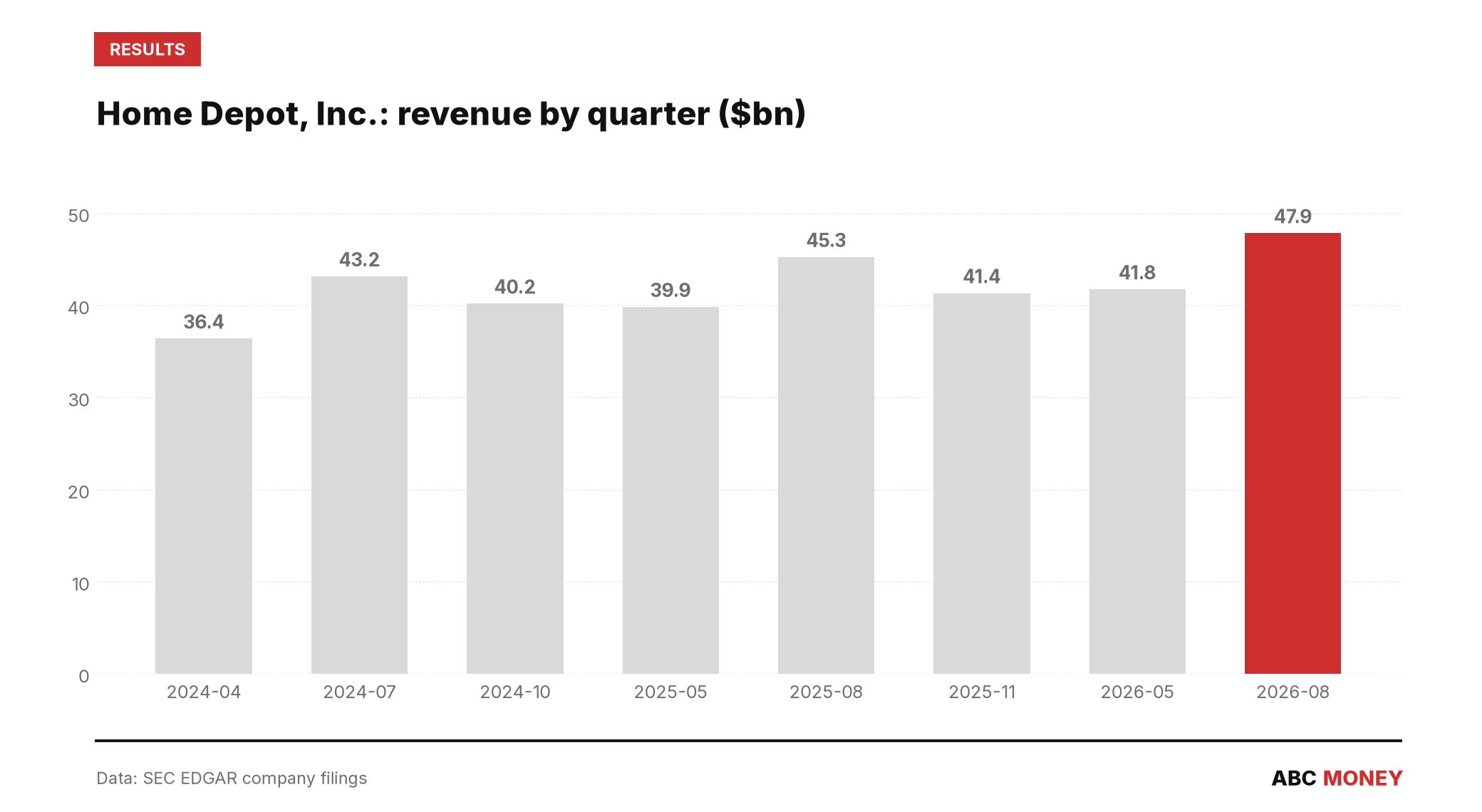
The incoming chief executive takes the reins of a company that has, by its own description, positioned itself as “the world’s largest home improvement retailer” in the release announcing his appointment – a scale that gives him more room than most new CEOs to absorb a soft housing market without an existential threat to the business. His more immediate task is to show investors that Broggi’s finance team and Campbell’s operating leadership can keep translating that scale into the kind of revenue growth seen in the second quarter, even as the Federal Reserve’s rate path continues to dictate how many Americans are willing to take on a kitchen renovation or a house move. The transition takes effect on 23 November 2026; the next scheduled test of the new leadership’s credibility will be the quarter McPhail reports as CEO in full, rather than as the understudy who has already been doing the job since August.
This article is for information only and is not investment advice or a recommendation to buy or sell any asset. Markets move quickly; figures are correct as sourced at the time of writing. Always do your own research before making financial decisions.