Texas Pacific Land’s $3bn EagleRock acquisition explained
Texas Pacific Land's acquisition of EagleRock Land, an all-stock deal worth ~$3bn, lands as the stock sits 22% off its monthly high.
In this article 3 sections
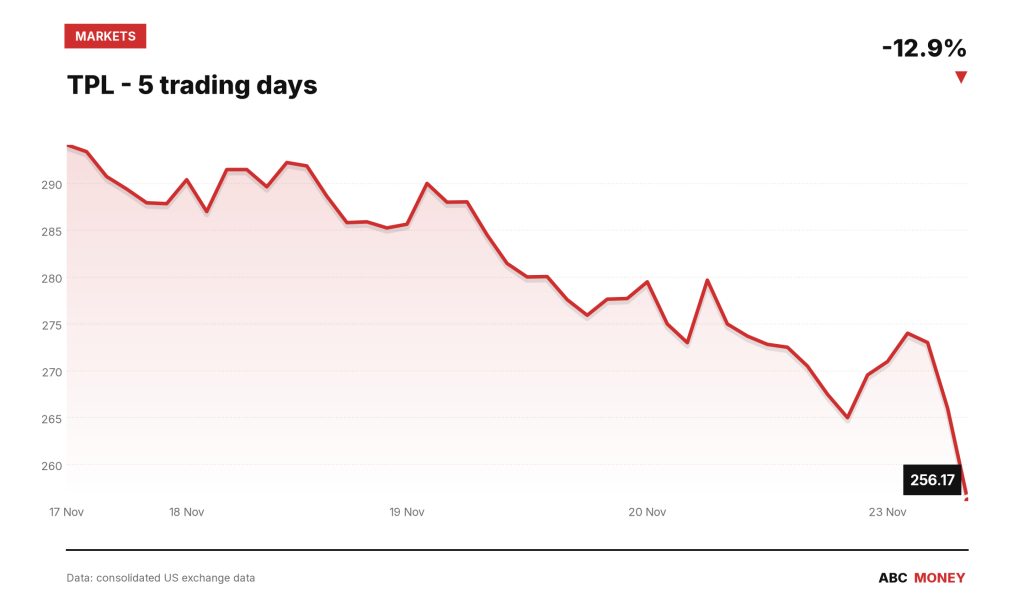
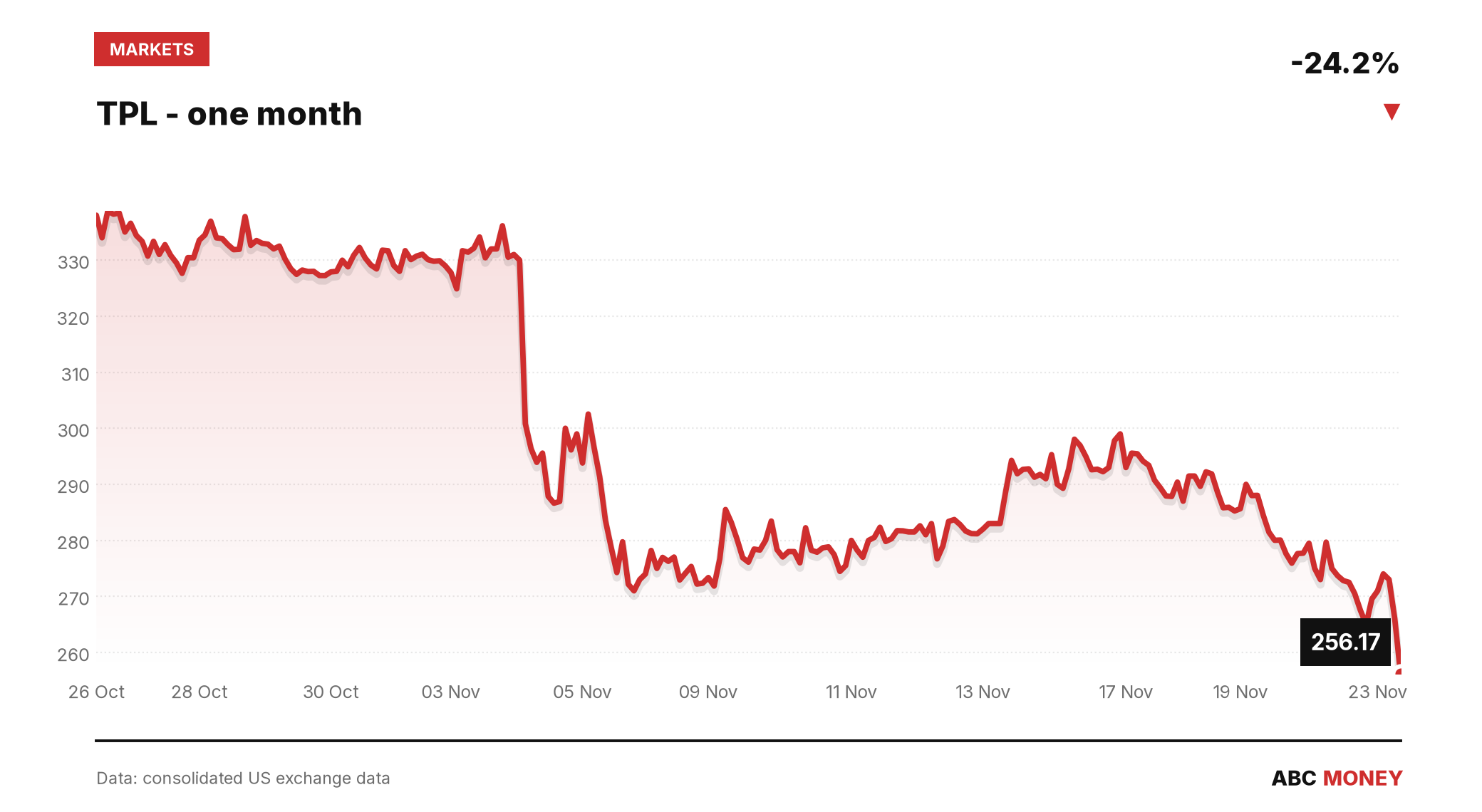
Texas Pacific Land’s acquisition of EagleRock Land, LLC has been struck in an all-stock deal that values the target at roughly $3.0bn, the company confirmed, as it looks to deepen its hold on land, water and royalty rights across the Permian Basin. The agreement, reported by fiscal.ai and MarketBeat, is the largest move Texas Pacific Land (TPL) has made in years, and it arrives at an awkward moment for the stock, which has shed more than a fifth of its value over the past month.
The mechanics of the Texas Pacific Land acquisition
Under the terms, each Class A share of EagleRock converts into TPL stock at an exchange ratio of 0.0831, via a new holding company, New Titan Holdings, which will be renamed Texas Pacific Land Corporation once the merger closes, according to BOE Report. The transaction is expected to close in the first half of 2027, subject to the usual regulatory and shareholder approvals, the same report says.
Management expects roughly $45m in annual run-rate cost synergies and says the deal would be accretive to TPL’s estimated 2027 free cash flow per share before those synergies are even counted, according to Seeking Alpha. The same reporting notes plans to lean on the combined balance sheet to lift share buybacks and grow the regular dividend once the integration is done — a signal that TPL intends to keep returning cash even as it digests a sizeable purchase.
Why EagleRock, and why now
EagleRock brings fee acreage and water infrastructure relationships with large Permian operators, and the combined group is expected to control close to 1.0 million fee surface acres alongside a 105,000-acre water dedication, Seeking Alpha reports. EagleRock itself is a genuine, recently listed Permian land and water business trading under the ticker EROK, having filed for an NYSE Texas listing, per TradingView — not, as some skimmed headlines might suggest, an obscure private vehicle. EagleRock’s own shares jumped around 15% on the announcement, a more enthusiastic reaction than TPL’s, which is typical of the target company in an all-stock tie-up where the acquirer is diluting itself to pay.
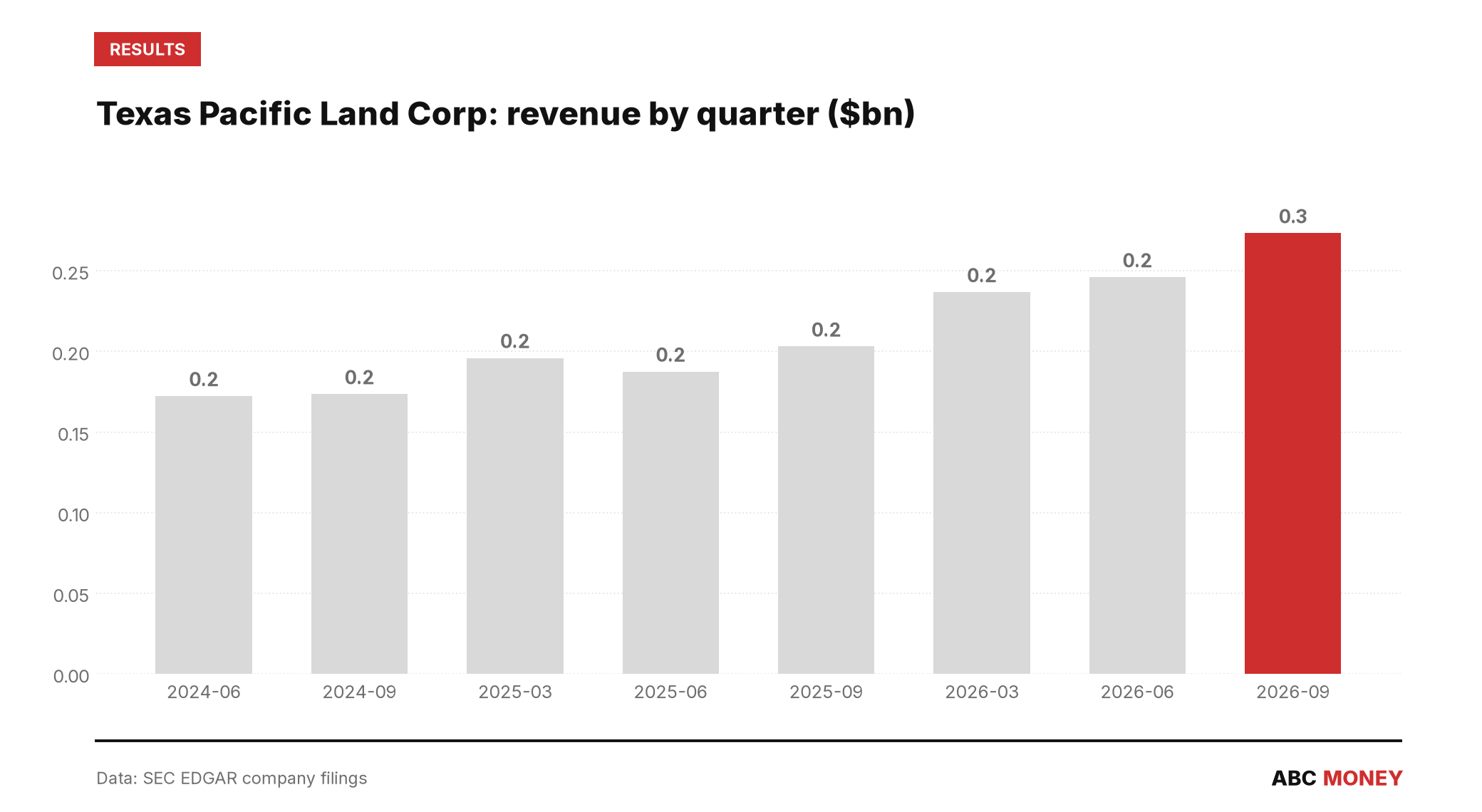
The rationale fits a pattern TPL’s numbers already support. Quarterly revenue has climbed from $172.3m in the second quarter of 2024 to $273.4m in the third quarter of 2026, while net income over the same stretch rose from $114.6m to $167.4m, according to SEC filings. That is the high-margin, cash-generative profile management is pointing to when it talks about “maintaining” financial strength through the deal rather than straining it.
A stock that was already under pressure
Here is the part that complicates the tidy growth story. GuruFocus reported an early 3.6% pop in TPL shares on the morning the deal was announced, but by the time of a later intraday snapshot the stock had turned and was down 3.61% on the day, changing hands around $257.85 — a fresh 20-day low, and 22.04% below where it traded 20 sessions earlier. Trading volume ran about 27% above the 20-day average, suggesting the reversal wasn’t a quiet drift but an actively traded repricing.
That slide didn’t start with the EagleRock news. TPL had already fallen 13.4% on 4 November and a further 3.7% on 20 November, part of a near-22% one-month decline heading into the announcement, GuruFocus noted — even as its GF Value model flagged the shares as roughly 37% undervalued against a fair-value estimate of $422.92. Daily short-sale volume ratios, which measure the share of trading volume attributable to short sales, ran persistently high through the first three weeks of November, sitting between 0.73 and 0.82 for much of that stretch according to FINRA data, before easing to 0.53 on 20 November. Elevated short-side activity into a major announcement doesn’t prove anyone knew what was coming, but it does suggest the market had already turned sceptical on TPL’s standalone valuation well before EagleRock was on the table.
Put together, the acquisition itself checks out cleanly on its stated terms — an all-stock deal, a defined exchange ratio, a specific close window and quantified synergy target. What’s less settled is whether investors read an all-stock purchase of this size, done by a company whose own shares were already sliding, as dilution dressed up as growth. That question should get a clearer answer as the merger proxy materials are filed ahead of the shareholder vote and the first synergy updates arrive after the deal is expected to close in the first half of 2027.
This article is for information only and is not investment advice or a recommendation to buy or sell any asset. Markets move quickly; figures are correct as sourced at the time of writing. Always do your own research before making financial decisions.