
Contributed content: this article was written by a third-party contributor and does not necessarily reflect the views of ABC Money. Editorial and Advertising Policy
Possessing extensive experience in both research and patient care, Dr. Philip Schoenfeld, MD, spent four years as chief of the gastroenterology section at John D. Dingell VA Medical Center in Detroit, Michigan. Dr. Philip Schoenfeld, MD, has also contributed to the broader discussion of how research and technology can affect gastroenterology and improve gastrointestinal care.
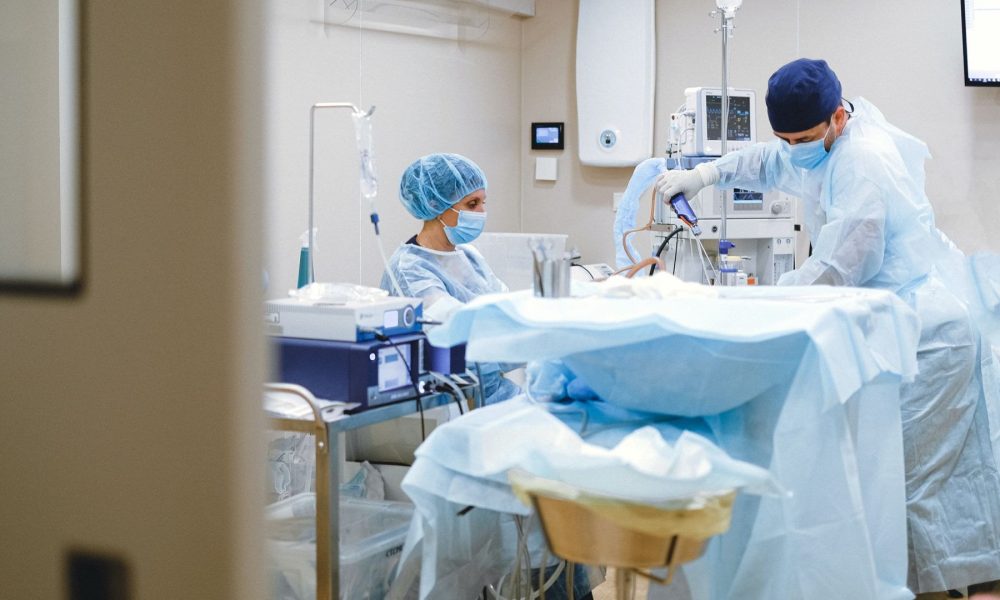
Colonoscopy remains an important tool for detecting colorectal cancer and removing precancerous polyps, but advances in imaging and artificial intelligence are changing how the procedure is performed. Traditional colonoscopy relies on a flexible camera to provide a detailed view of the colon lining. During the examination, physicians can identify suspicious tissue and remove many polyps before they have an opportunity to become cancerous. Newer technologies are designed to make these examinations more thorough by improving visualization and helping physicians identify subtle abnormalities that might otherwise be difficult to recognize.
One of the most closely studied developments is computer-aided detection, often called AI-assisted colonoscopy. These systems analyze the video feed during a procedure and can alert the endoscopist when an area appears consistent with a polyp. Research suggests that computer-aided detection can increase the adenoma detection rate, an important quality measure in colonoscopy. The technology is intended to support the physician rather than replace clinical judgment.
Image-enhancement technologies represent another area of development. Specialized imaging modes can alter the way light interacts with the intestinal lining, making certain patterns, borders, or vascular structures easier to see. These tools may help physicians characterize lesions and distinguish potentially concerning tissue from normal mucosa. Their usefulness depends on the technology available and the experience of the clinician using it.
Colonoscopy is also becoming more focused on quality measurement. Finding and removing a polyp is only part of a successful examination. Physicians consider measures such as how often adenomas are detected, how thoroughly the colon is examined, and how quickly the colonoscope is withdrawn during the inspection phase. Monitoring these measures can help practices identify opportunities to improve patient care and reduce the likelihood that significant lesions will be missed.
Emerging approaches are also examining whether colonoscopy can become more personalized. Artificial intelligence (AI) may eventually assist with predicting which lesions are more likely to contain advanced pathology, potentially helping physicians make more informed decisions about procedures. Researchers are also studying technologies that could provide additional information about tissue without requiring removal in every situation. These applications remain an evolving area of research, and their clinical role will depend on further validation.
Despite these advances, technology cannot compensate for inadequate preparation or poor examination technique. Patients still play an important role by following bowel-preparation instructions carefully, since residual stool can obscure the intestinal lining. A clear examination gives the physician the best possible opportunity to identify abnormalities and determine whether additional evaluation is needed.
The future of colonoscopy is likely to involve a combination of experienced clinical judgment and increasingly sophisticated technology. AI-assisted detection, enhanced imaging, and more detailed quality measurement may help physicians find important lesions more consistently. As these approaches continue to be evaluated, evidence-based adoption will be essential to ensuring that new technology translates into meaningful improvements in colorectal cancer prevention.


 Bitcoin
  Ethereum
  Tether
  BNB
BNB  USDC
USDC  XRP
XRP  Solana
  TRON
TRON  Lido Staked Ether
  Cardano
  Gram (prev. Toncoin)
  Avalanche