Meta Eyes $300 Muse Charm Price, But Won’t Confirm It
Reports put the Muse Charm price at $300 with free Verizon 5G, but Meta won't confirm the figure - here's what's solid and what isn't.
In this article 3 sections
Reports putting the Muse Charm price at $300 have spread across the tech press this week, yet Meta Platforms (NASDAQ: META) has pointedly declined to confirm the figure. The gadget – a keychain-sized AI companion unveiled at Meta Connect in September without a price – would reportedly come bundled with 12 months of free 5G data through a partnership with Verizon, according to Reuters, citing The Information.
That detail matters because the entire story, repeated almost word-for-word by outlet after outlet, traces back to a single unnamed-source report. TechCrunch confirms the $300 figure is “per The Information’s reporting” but notes Meta has not put its own name to it. When The Verge put the same number to the company, a Meta spokesperson, Tyler Yee, gave what amounted to a non-denial – acknowledging nothing and ruling nothing out, as relayed by Unite.AI. That is the correction worth making here: this is what is being reported, not what Meta has announced.
What the device is supposed to do
Muse Charm is designed as a physical front door to Meta’s AI assistant, Muse, which launched on 8 September and reportedly passed 10 million users across the US and Canada within weeks. The device reportedly carries a built-in 5G modem and a fingerprint sensor that lets a wearer tap in for voice access to Muse without pulling out a phone – though it cannot place calls itself, according to BigGo Finance. Mark Zuckerberg described the concept at Connect as “a joyful little device for talking to your Muse that fits on your keychain,” per the same report, without naming a price at the time.
The $300 figure, if it holds, would position Muse Charm well above Friend, a rival AI wearable currently selling for $250, TechCrunch notes – an aggressive stance for a category that has so far struggled to prove consumers want to pay for AI jewellery rather than get it free inside a phone.
A hardware bet with internal targets attached
The stakes for Meta go beyond one gadget’s sticker price. The company is said to be targeting 10 million total wearable sales in the second half of 2026 and has reportedly pushed back a separate smartwatch launch from 2026 into 2027 to clear the runway for Muse Charm, according to TradingView News. That reshuffle suggests Meta sees the keychain device, not the watch, as the near-term vehicle for getting Muse onto people physically rather than just inside an app – a bet on habit-forming hardware that Ray-Ban Meta glasses have already partly validated, even as the company’s broader device lineup still operates at a loss within its Reality Labs unit.
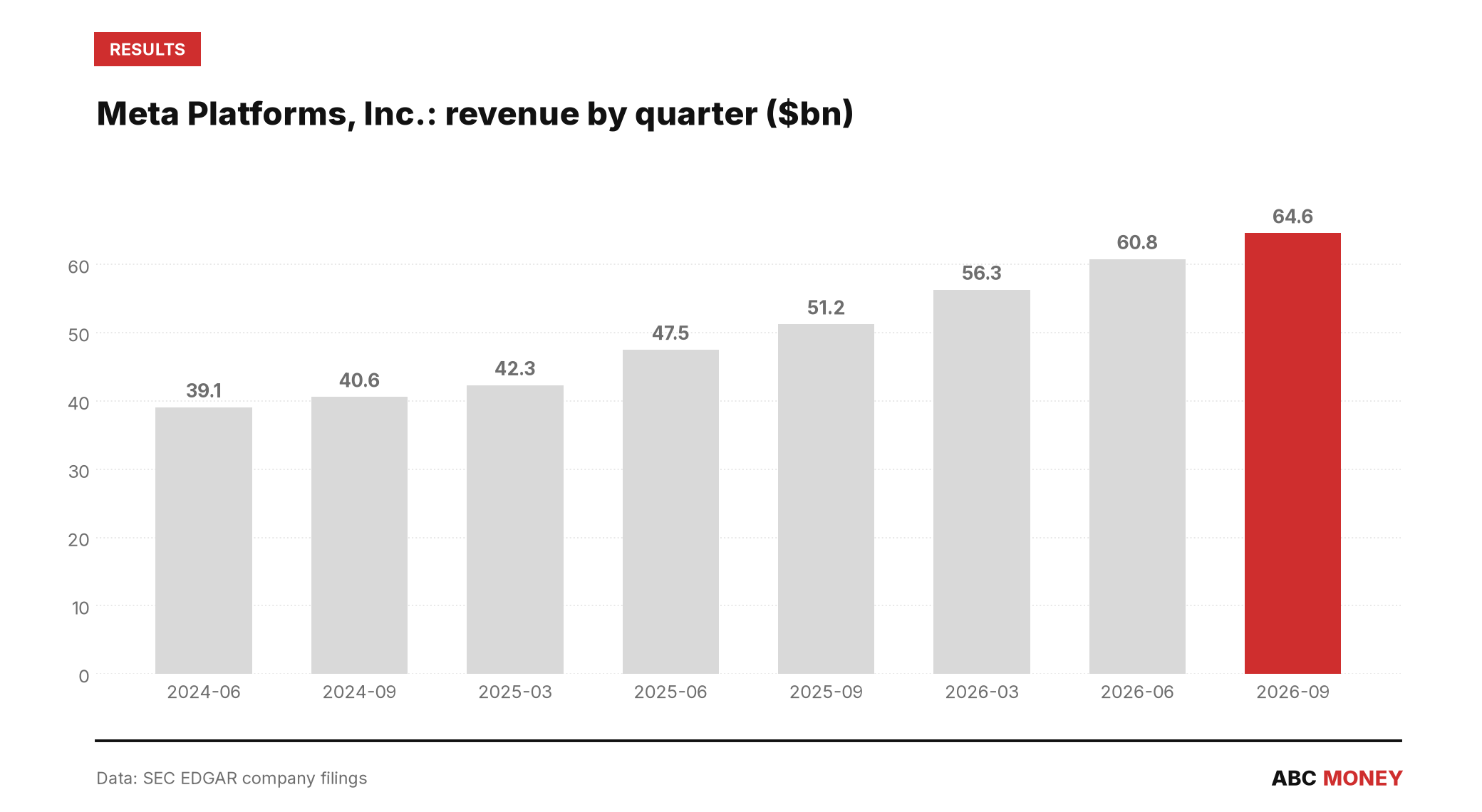
Scale-wise, the hardware push is a rounding error next to Meta’s core business. The company reported quarterly revenue of $64.6bn for the three months to 30 September 2026, per its 10-Q filing with the US Securities and Exchange Commission (SEC) – a figure that puts a few million $300 keychains into perspective even if every unit sells.
The stock slide is a separate story
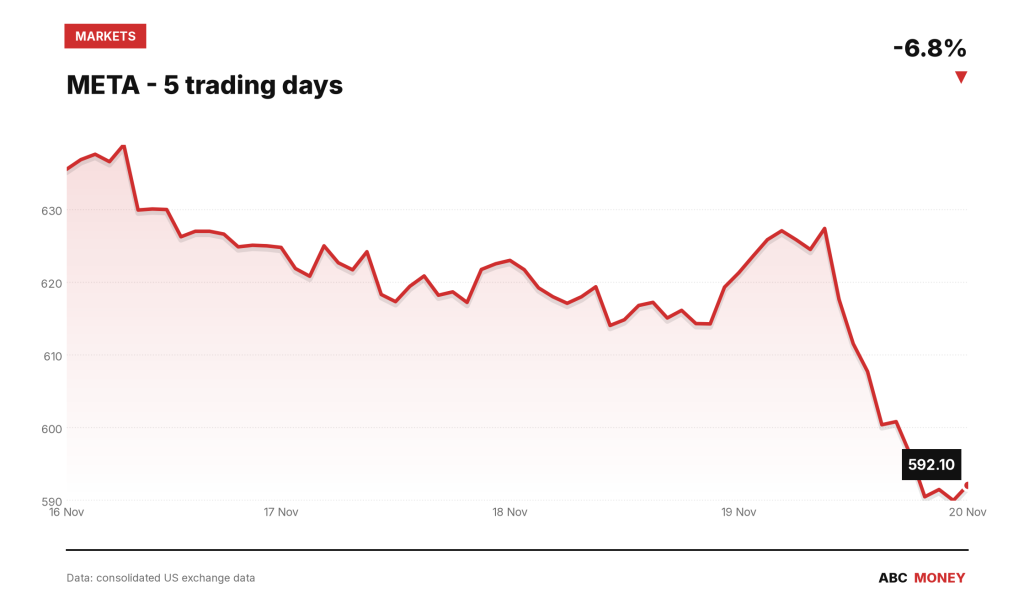
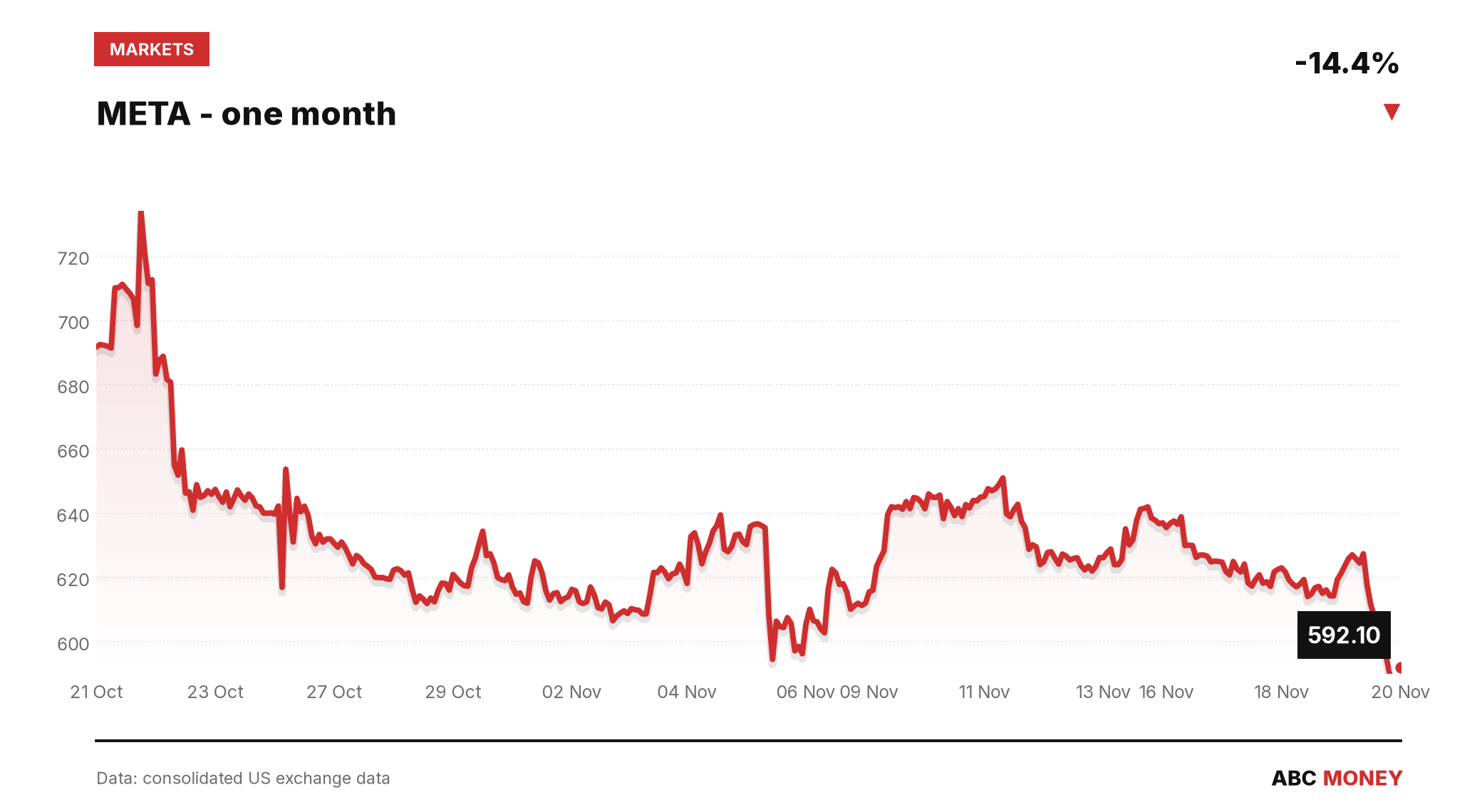
Meta shares closed at $589.99, down 3.52% on the day and roughly 4.38% over the prior 20 trading sessions, with trading volume running about a third above the 20-day average, according to consolidated US exchange data. It would be tempting to tie that move to the Muse Charm leak, but the pattern predates it: shares were already down roughly 12% over the preceding month as investors weighed Meta’s rising debt load tied to its AI-spending plans, a decline that independent reporting from stockanalysis.com attributes to capital-expenditure and legal-charge concerns rather than to any single product headline. Separately, eleven Meta insiders – including chief financial officer Susan Li and board members such as Dina Powell and Patrick Collison – filed Form 4 ownership disclosures with the SEC on 18 November, the day before the pricing report broke. The filings in the public record disclose the transactions but not share totals, and nothing ties their timing to the device news; insiders file on scheduled windows for all manner of reasons, and routine vesting-linked sales are common in any given week.
For now, the honest summary is narrower than the headlines suggest: multiple outlets agree on what The Information is reported to have said, Meta has said nothing on the record to back it up, and the stock move everyone is watching has, according to the reporting available, nothing to do with a $300 keychain at all. If Meta does put a number on Muse Charm itself – in an earnings call, a product page, or a formal announcement – that will be the point at which “reportedly” can finally drop out of the sentence.
This article is for information only and is not investment advice or a recommendation to buy or sell any asset. Markets move quickly; figures are correct as sourced at the time of writing. Always do your own research before making financial decisions.