Nike Dividend Freeze Breaks 24-Year Run of Annual Raises
Nike's dividend freeze at $0.41 a share ends a 24-year run of annual increases, landing days after a bruising investor day and a falling share price.
In this article 3 sections
Nike’s board has kept its quarterly dividend exactly where it was, and that stillness is the story. The dividend declaration from NIKE, Inc. (NYSE: NKE) sets a payout of $0.41 per share on its Class A and Class B common stock, payable 4 January 2027 to shareholders on the register as of 1 December 2026. Nothing in those numbers is new or surprising. What’s notable is what didn’t happen: Nike didn’t raise it.
This is the first time in a quarter of a century that Nike has let a dividend declaration pass without nudging the payout higher. A year earlier, the same November announcement lifted the quarterly dividend from $0.40 to $0.41 – a 3% rise that Nike’s own investor relations team flagged at the time as the 24th consecutive year of dividend increases. This year, the figure is identical to last quarter’s: a flat dividend rather than another step up.
A Nike dividend freeze with a clear trigger
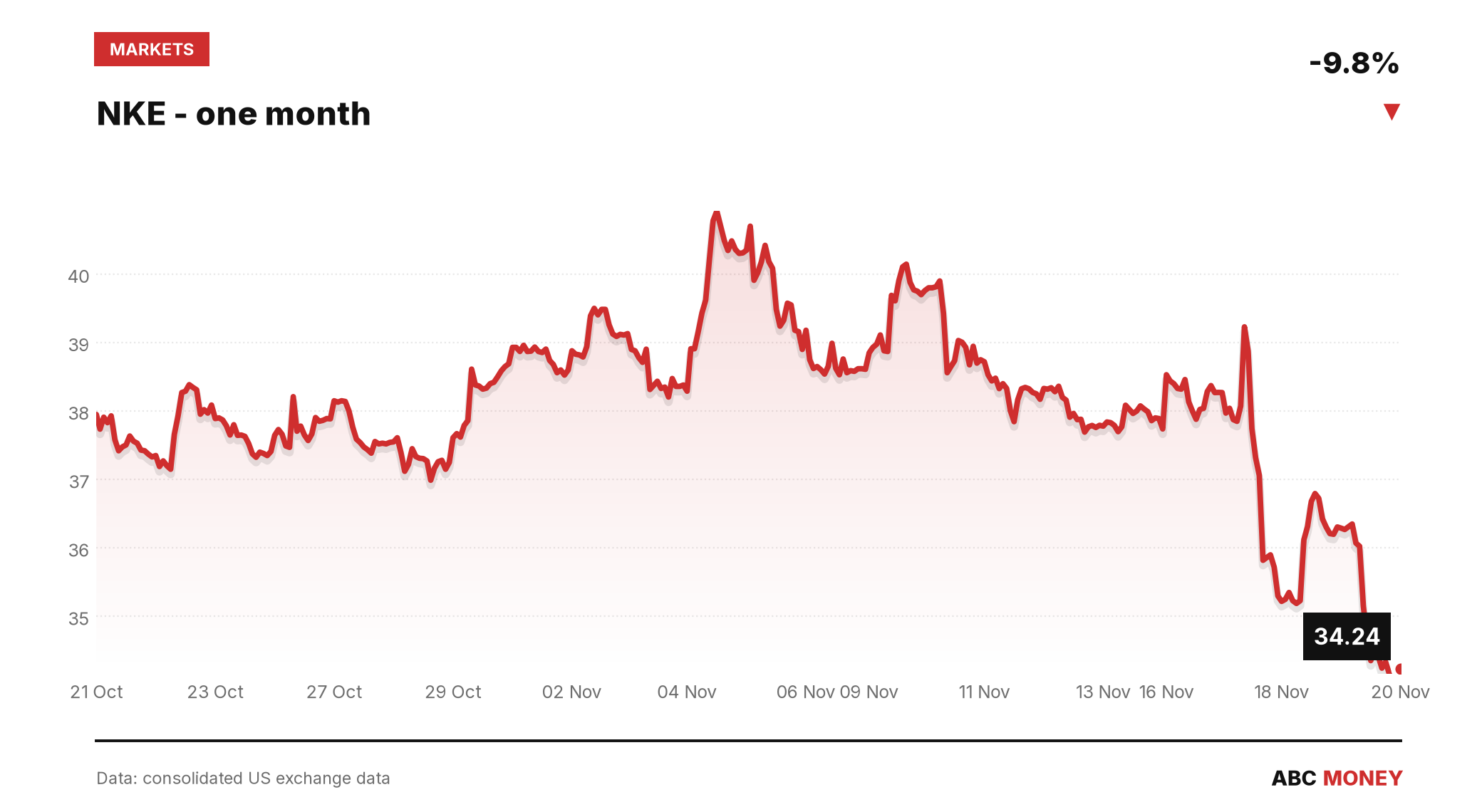
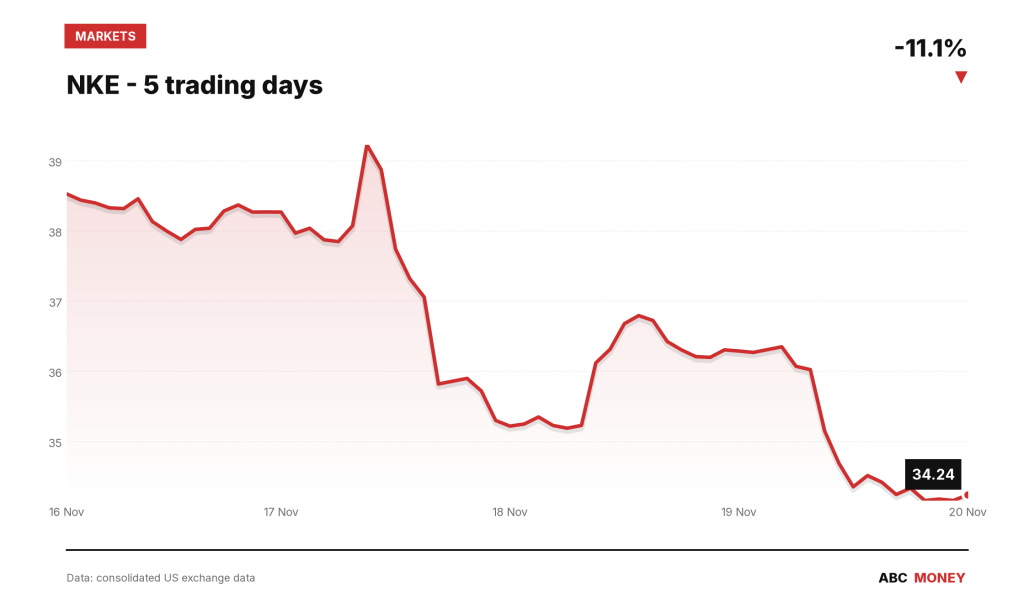
The timing is hard to separate from what happened two days earlier. Nike shares fell 6.3% on 17 November 2026 to close at $35.85 after an investor day presentation on the company’s turnaround plan drew sharp scrutiny, as reported by Fool.com. By the time of the dividend announcement, the stock had slid further still, changing hands at $34.24 – down 12.05% over the preceding 20 trading sessions and trading on volume running 34% above its 20-day average. A board weighing whether to extend a raise streak into a falling share price and a wobbling growth story had every reason to choose caution over habit.
The earnings backdrop supports that caution. Nike’s diluted earnings per share have slid from $0.77 in the quarter ended February 2024 to $0.48 in the quarter ended August 2026, according to 10-Q filings with the SEC. Quarterly revenue has moved the same way, from $12.43bn in that same early-2024 quarter to $11.21bn most recently. Holding the dividend flat against a shrinking earnings base still raises the share of profit being paid out as dividends – even without a headline increase, the burden on Nike’s bottom line has grown heavier simply because the bottom line itself has shrunk.
Yield no longer clears the risk-free bar
There’s a second, quieter shift buried in the arithmetic. Annualising the $0.41 quarterly payment against Nike’s $34.24 share price gives a dividend yield of roughly 4.79%. The 10-year US Treasury yield stood at 5.07% as of 18 November 2026, according to data from the Federal Reserve Bank of St. Louis. A year or two ago, with Nike’s shares trading markedly higher and the dividend smaller in proportion, that comparison would have looked very different. Today, an investor holding Nike for income alone is accepting a lower running yield than they could get from lending to the US government with essentially no credit risk – a trade that only makes sense if you’re betting on capital appreciation to do the rest of the work.
None of this shows up as panic in the options or short-selling markets. Daily short-sale volume ratios tracked by FINRA in the fortnight before the announcement ran in a fairly ordinary band of roughly 0.37 to 0.55 – the proportion of daily trading volume attributable to short sales – showing no unusual spike in bearish positioning timed to the dividend news itself. The market’s reaction to Nike’s troubles has, so far, played out in the share price rather than in a rush to bet against it.
What the freeze does and doesn’t mean
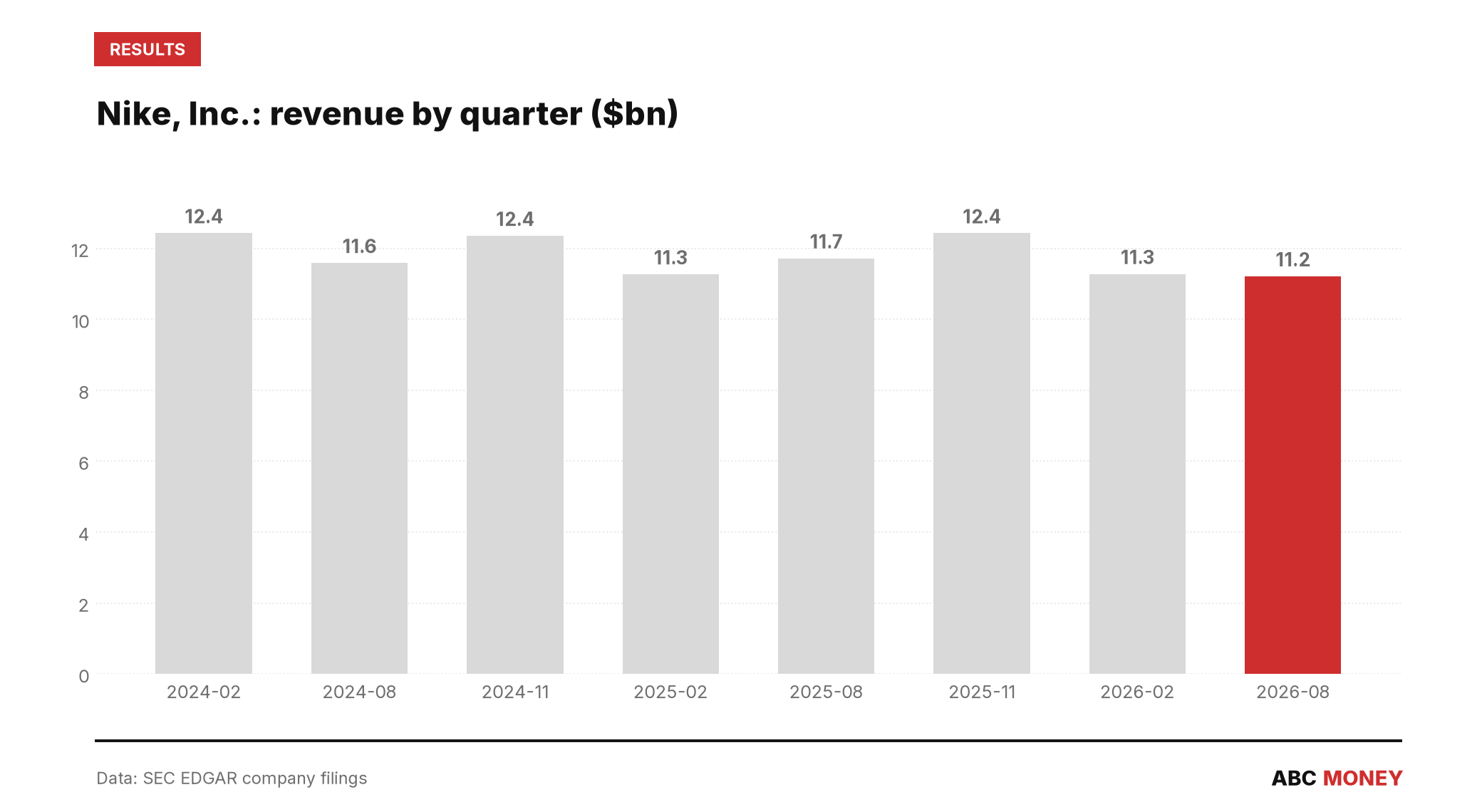
To be clear about what this announcement is not: it is not a dividend cut, and Nike has given no indication the payment itself is at risk. The $0.41 remains fully intact, and the January payment date and December record date are unchanged from the mechanics shareholders have seen quarter after quarter. What has changed is the pattern underneath it. Nike’s decision to hold rather than raise arrives in the same fortnight as an investor-day strategy update that unsettled the market and an 8-K filing covering that same guidance, filed with the SEC on 17 November 2026. Investors watching the shares into the new year will be looking for whether the turnaround plan outlined at that investor day starts showing up in the revenue and margin figures Nike reports next – the numbers that will determine whether this pause in the raise streak turns out to be a one-year breather or the start of something longer.
This article is for information only and is not investment advice or a recommendation to buy or sell any asset. Markets move quickly; figures are correct as sourced at the time of writing. Always do your own research before making financial decisions.